What happens when a motorcycle manufacturer decides to challenge the status quo in the supersport segment? Can a machine born out of ambition truly redefine an entire class of motorcycles? The 2006 Triumph Daytona 675 burst onto the scene not just as another contender but as a paradigm shift, setting new standards with a bold combination of innovation, precision engineering, and visceral riding experience. It was more than a motorcycle; it was a manifesto of what a middleweight sportbike could—and arguably should—be.
Emerging at a time when Japanese manufacturers had long dominated the supersport market with their inline-four powerhouses, Triumph dared to bring something refreshingly different: a 675cc inline-three engine that provided a unique blend of characteristics. Unlike the typically heavier inline-four machines or the torquey but less high-revving twin-cylinder bikes, the Daytona 675’s triple-cylinder configuration struck an alluring balance. It delivered a scintillating midrange torque surge combined with an exhilarating top-end scream that captivated riders looking for both agility and outright excitement.
Underneath its sleek and aggressive exterior lies a meticulously crafted chassis that complements its potent powerplant. The aluminum beam frame, precision-tuned suspension components, and cutting-edge ergonomics were engineered to instill confidence and nimbleness. The Daytona 675’s geometry and weight distribution allowed riders to carve through corners with astonishing ease, inviting both seasoned veterans and ambitious newcomers to push their limits on the asphalt.
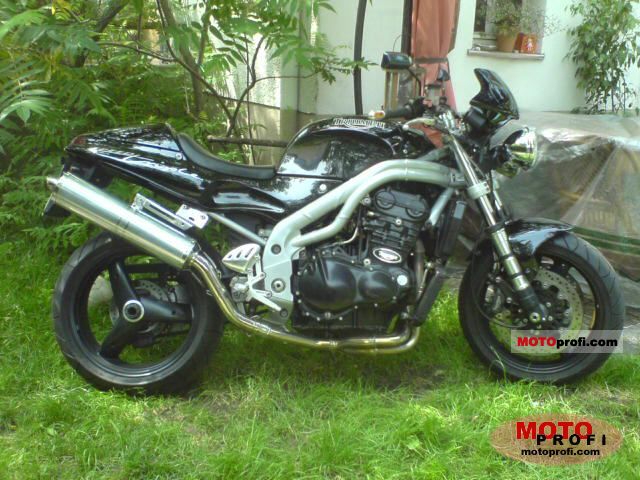
But what truly set the 2006 model apart was its unapologetic marriage of style and substance. The sculpted fairings not only enhanced aerodynamics but encapsulated the bike’s vibrant personality. The aggressive twin headlamps, upward-swept tail section, and contoured tank gave the bike an unmistakable silhouette—one that felt both modern and timeless. This was a motorcycle that didn’t just perform well; it looked the part with an almost feral resolve to dominate the supersport category.
Performance numbers spoke volumes, too. With approximately 123 horsepower at its peak and a dry weight just under 370 pounds, the Daytona 675 had an enviable power-to-weight ratio that translated into blistering acceleration and a top-end that could rival many of its liter-class competitors. Its six-speed gearbox was crisp and precise, allowing for rapid shifts and maintaining a seamless connection between rider and machine. Equally important was the bike’s strong braking system, complete with dual front discs that provided ample stopping power and feedback.
Was Triumph stretching the limits too far by offering such cutting-edge performance and exotic features in a relatively affordable package? Some purists might have raised an eyebrow, questioning whether a triple-cylinder engine could truly compete with the established four-cylinder monsters. Yet, the Daytona 675 proved such skepticism unwarranted. The bike became synonymous with thrilling performance, remarkable versatility, and an intoxicating exhaust note that echoed its racing pedigree.
The 2006 Triumph Daytona 675 was not merely a superbike; it was a technological statement and a deeply evocative machine that redefined expectations. It demonstrated that innovation need not be tethered to tradition and that audacity could eclipse convention in the realm of sport biking. Offering a compelling alternative to the status quo, it beckoned riders to reconsider what a supersport motorcycle could offer: not just raw speed but a holistic, accessible, and enjoyable experience.
One could argue that the introduction of the Daytona 675 also challenged manufacturers to rethink their approach to lightweight sport motorcycles. Triumph’s commitment to refining its triple-cylinder formula in subsequent years underscored the bike’s profound impact, inspiring a follow-up generation that continued to captivate enthusiasts worldwide. It carved a niche that was distinctive yet competitive, proving that courage in engineering and design could change the game.
Maybe the real challenge posed by the 2006 Daytona 675 isn’t just about horsepower figures or lap times. Instead, it invites riders to ponder the delicate balance between precision, passion, and innovation. How often does a single motorcycle recalibrate your expectations and rekindle your sense of adventure simultaneously? With the Daytona 675, the answer is clear: quite rarely, but when it happens, it resonates deeply.
In retrospect, the 2006 Triumph Daytona 675 remains a pivotal chapter in the supersport narrative. It shifted paradigms, blurred conventional boundaries, and reaffirmed that reimagining tradition can lead to extraordinary advancements. For those who crave a rider’s motorcycle with a distinctive voice and a challenging spirit, this iconic machine continues to embody the thrilling potential of motorcycling in its purest form.