When precise measurement conversions become necessary, understanding how to effortlessly convert millimeters to inches is invaluable. This guide specifically unpacks the conversion of 173 millimeters into inches, unraveling the nuances and applications to facilitate accurate measurement across various disciplines. Whether dealing with engineering projects, crafting, or day-to-day measurements, mastering this conversion assures clarity and precision.
Millimeters and inches belong to two fundamentally different measurement systems—metric and imperial respectively. The millimeter, abbreviated as mm, is part of the International System of Units (SI), widely used globally for its decimal-based simplicity. Inches, denoted as in or ″, are primarily used in the United States, the United Kingdom, and a few other countries. Each inch is composed of 25.4 millimeters exactly, a fixed conversion factor that forms the cornerstone for any calculation between these units.
To convert 173 millimeters to inches, the fundamental mathematical operation involves dividing the millimeter value by 25.4. Expressed as a formula, it is:
Inches = Millimeters ÷ 25.4
Using this formula, 173 mm divided by 25.4 yields approximately 6.811 inches. This value, 6.811 in, represents the exact length equivalent in imperial measurement. However, the use of decimals in inches can vary depending on context, leading to alternative representations such as fractions or rounded measurements.
The reader will often encounter different formats when interpreting inches, which necessitates understanding their conversion nuances. For instance, 6.811 inches can be expressed as 6 inches and a fractional part of an inch. With fractional conversions, this decimal part (0.811) can be multiplied by 16 (as 1 inch = 16 sixteenths) to identify the nearest fraction for practical use. Multiplying 0.811 by 16 results in approximately 13 sixteenths, so 173 mm can reliably equate to about 6 and 13/16 inches in common fractional notation.
This distinction is particularly pertinent in woodworking, construction, or tailoring, where fractions provide easier communication on physical measurements. Metric-to-fractional conversions simplify the visualization of physical lengths, avoiding the frequent use of cumbersome decimals. In precision-driven environments, however, decimal inches may be preferred for their mathematical exactitude, especially when numerical software or precise machining tools are involved.
Another essential aspect involves recognizing the significance of tolerances in conversion and measurement. While 173 mm equals approximately 6.811 inches, actual applications might accept slight deviations depending on the acceptable tolerances for a given task. Engineering blueprints or manufacturing specifications often delineate these limits. Understanding how to use the conversion effectively while respecting these tolerances avoids errors and maintains consistency.
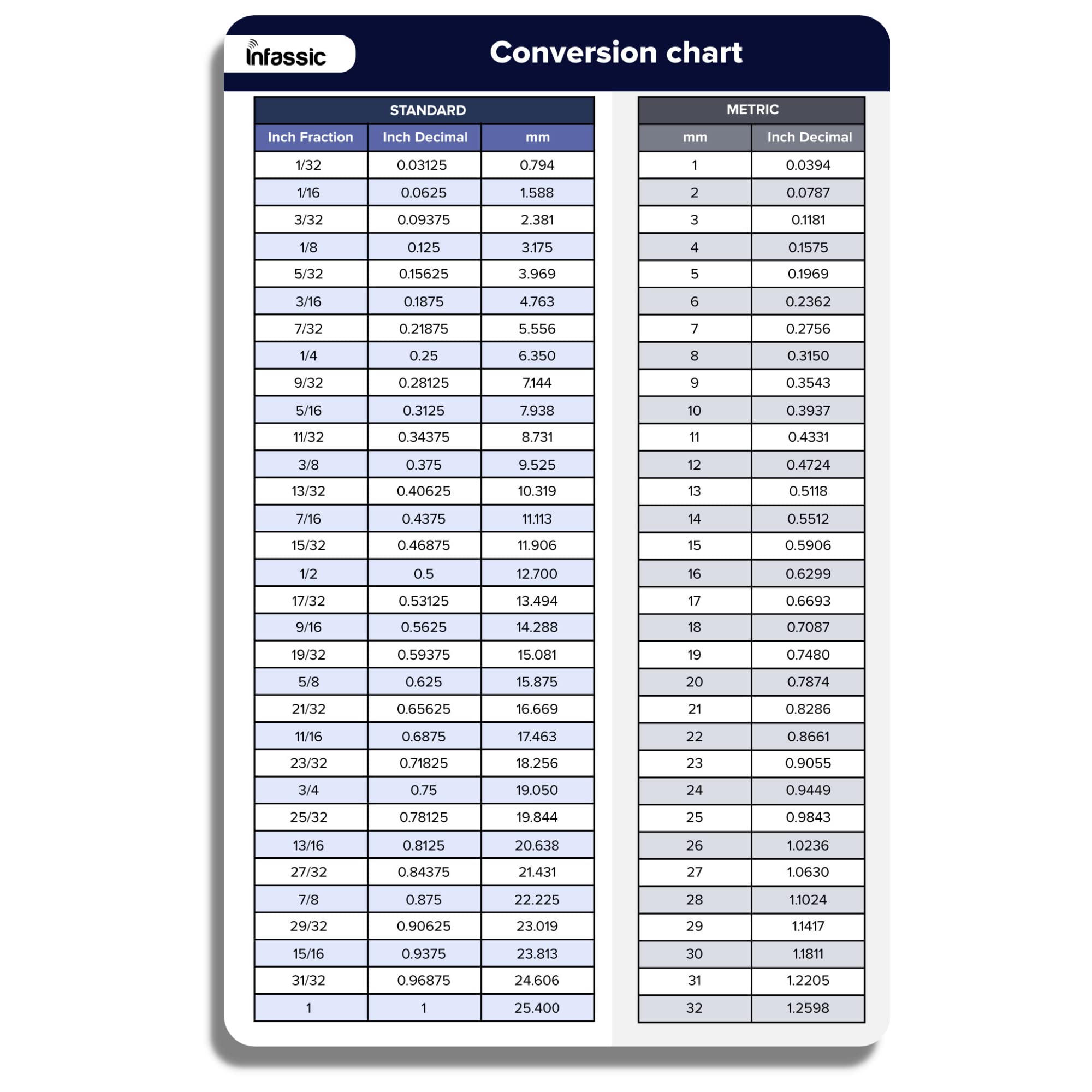
Tools and resources to aid in these conversions are plentiful. Digital calipers, conversion calculators, and downloadable charts can automate or simplify this process, eliminating manual calculation errors. For example, ready-to-print conversion charts often present side-by-side comparisons of mm to inches, highlighting key values like 173 mm. Such visual aids are highly effective for quick reference in real-time projects or learning environments, reducing cognitive load.
Moreover, software solutions and mobile applications now furnish instant conversion functionalities. They support the user by allowing input in millimeters and instantly outputting the value in inches, often including options to view results in decimal form or rounded fractions. For professionals who routinely transition between metric and imperial systems, such digital tools are indispensable, enhancing productivity and precision.
The importance of knowing how to convert 173 mm to inches transcends technical fields. Everyday scenarios like international shopping, furniture dimensioning, or even hobbies such as model making benefit from possessing a conversion framework. Understanding measurement standards prevents misinterpretation, helps ensure compatibility, and fosters informed decision-making.
Given the global coexistence of different measurement systems, familiarity with conversions like 173 mm to inches offers a communicative and operational advantage. It aids in bridging the gap between regions using metric or imperial units, streamlining exchanges ranging from architectural plans to manufacturing orders. The skill underscores adaptability in an interconnected world where standardization remains incomplete.
In summary, converting 173 millimeters to inches involves more than a simple arithmetic operation—it requires contextual understanding of how measurements are used, interpreted, and conveyed. The conversion equals roughly 6.811 inches or 6 and 13/16 inches, depending on decimal or fractional preference. Awareness of these nuances supports accurate translation between units, benefiting various professional and everyday applications.
By incorporating both the mathematical framework and practical usage tips into one comprehensive guide, this conversion becomes straightforward. Whether utilizing digital tools, printed charts, or manual calculations, mastery over the conversion process enhances accuracy and confidence. Such knowledge empowers users to navigate measurements seamlessly across industries, reinforcing precision and effective communication.