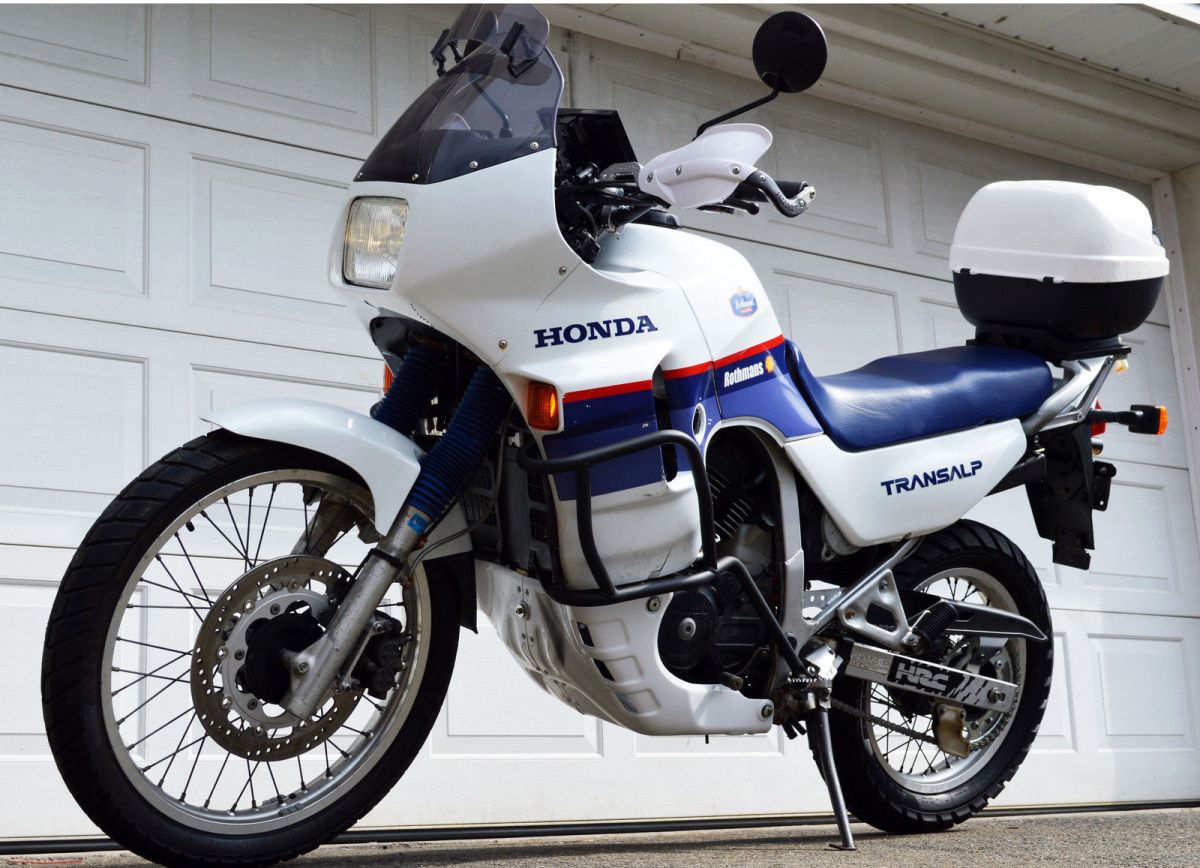
In the vast tapestry of motorcycling history, few machines have woven the threads of adventure and practicality as seamlessly as the 1989 Honda Transalp 600. Often regarded as a prescient glimpse into the future of adventure biking, the Transalp was a beacon that illuminated paths less traveled, marrying rugged capability with refined engineering. It emerged not merely as a motorcycle but as a herald of a new chapter—an odyssey machine that dared to traverse both the asphalt and the untamed wilds with equal poise.
The 1989 Honda Transalp 600 is akin to a seasoned voyager whose presence commands respect without ostentation. Its design philosophy was grounded in versatility, bridging the divide between street-worthy smoothness and off-road resilience. The sculpted lines of its chassis spoke of aerodynamic intent, yet the frame was fortified, robust enough to shoulder the burdens of dirt trails and mountain roads alike. This balance was not accidental; Honda’s engineers orchestrated a symphony where power met endurance, and form met function in seamless unity.
At the heart of the Transalp 600 lies its venerable V-twin engine, a mechanical heartbeat that pulsed with both vigor and reliability. The 583cc liquid-cooled unit offered spirited torque delivery coupled with a refined throttle response, ensuring that riders could navigate urban traffic snarls or conquer gravel backroads with equal aplomb. This engine was neither raw nor labored but rather an exemplar of mechanical harmony, humming a steady cadence that invited exploration without hesitation.
What truly set the 1989 Transalp apart was its pioneering spirit—a motorcycle crafted before the word “adventure bike” became a ubiquitous part of motorcycling lexicon. It anticipated the desires of explorers who sought more than just a means of transport but a trusted companion capable of relentless endurance. The suspension system, with its long-travel front forks and a sturdy rear monoshock, was primed to absorb the vicissitudes of rough terrains, offering riders a cushion of comfort where lesser machines faltered. It was a promise of resilience and reliability etched in metal and springs.
Visualize this adventure steed clad in its utilitarian yet elegant armor. The fuel tank, generously contoured, extended the promise of long-haul journeys, eclipsing the limitations of conventional commuter motorcycles. Yet, despite its substantial presence, the Transalp maintained an approachable ergonomics package. The seating position was purposeful—upright, commanding, yet ergonomic—allowing for hours of ride comfort that was nearly meditative. The handlebars invited a relaxed grip, steering the rider’s gaze toward horizons far beyond immediate destinations.
The instrument cluster, while modest, reflected a functional purity. Clear analog gauges melded with a minimalist aesthetic to deliver essential information without distraction. Each element was selected to enhance the rider’s experience, not overshadow it. Even the headlight array bore a dual mandate: sharp illumination to pierce the dusk and an unmistakable visage that signaled the Transalp’s readiness for the unknown.
Technological refinement was not sacrificed at the altar of adventure. Instead, Honda embedded a judicious mix of innovation that accentuated the Transalp’s usability and durability. The balanced chassis geometry provided nimble handling, rendering the bike surprisingly agile in cityscapes while grounded enough to tackle curving mountain roads. Tire profiles were carefully chosen to complement this dual nature—grippy on pavement, gritty on dirt.
In the broader spectrum of motorcycling evolution, the 1989 Transalp 600 served as a silent revolution—one that subtly urged riders to look beyond the beaten path and embrace a seamless fusion of utility and escapism. This motorcycle was not just a machine; it was a vessel of possibility, inviting enthusiasts to redefine their journeys and expand their motorized horizons.
Its cultural resonance extended beyond mere mechanics or specifications. The Transalp became a symbol of freedom’s nuanced interplay with responsibility—a vehicle that understood the call of distant landscapes but also the need for reliability in every twist of the throttle. It was a manifestation of the adventurous spirit tempered by Honda’s hallmark precision. The Transalp 600 never shouted its virtues; rather, it whispered them eloquently to those who listened with an open heart and a restless soul.
Over three decades later, the legacy of the 1989 Honda Transalp 600 endures, not merely as a nostalgic relic but as a testament to visionary craftsmanship. It occupies a singular place in the pantheon of motorcycles—less a relic and more a timeless emissary of a riding philosophy that prized balance, endurance, and discovery. Its silhouette against a dawning horizon remains an enduring metaphor for journeys both external and internal, affirming that true adventure is not merely about the destination but the wisdom gained along the way.