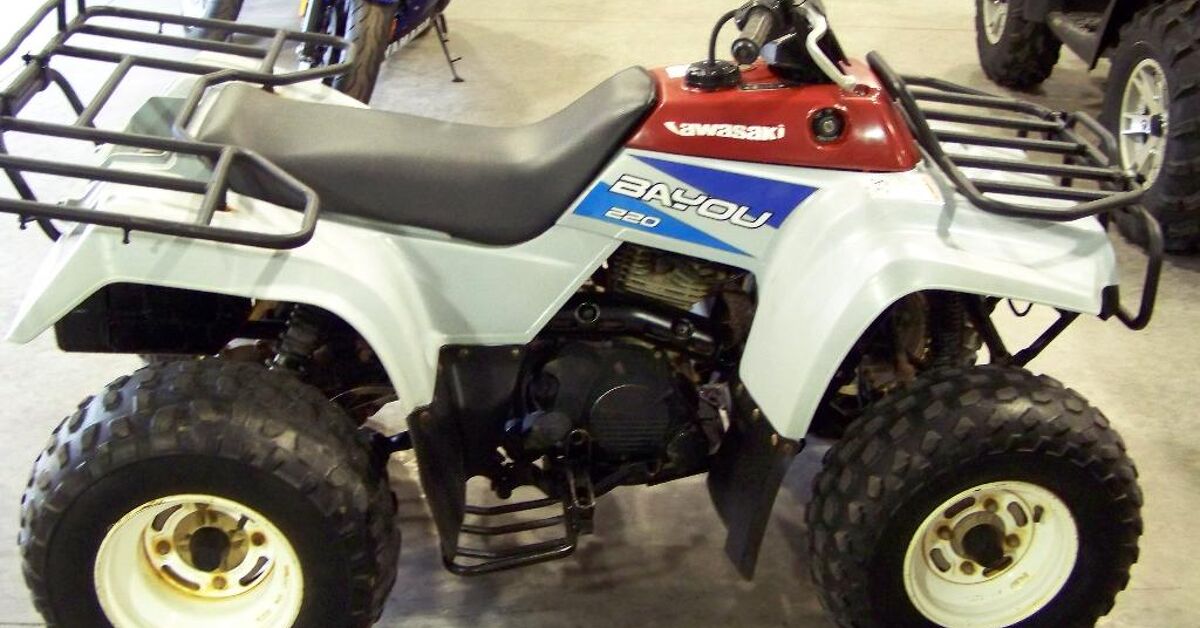
Have you ever wondered if there exists an all-terrain vehicle that combines rugged durability with a nostalgic charm—one that can effortlessly navigate the densest woods without faltering? Enter the 1992 Kawasaki Bayou 220, a veritable stalwart in the world of utility ATVs that challenges even the most adventurous riders to push boundaries. This iconic four-wheeler, though born in the early ’90s, has persisted as a reliable partner in off-road escapades, offering unmatched versatility and a tenacity that refuses to quit.
At first glance, the Bayou 220 may seem unassuming with its modest 220cc engine, but don’t let its size deceive you. This ATV thrives where many modern machines might give up. Its single-cylinder, air-cooled, four-stroke engine generates a consistent and manageable powerband that is ideally suited for maneuvering through rugged terrain, thick underbrush, and tricky trails. Unlike high-revving sport models, the Bayou 220’s engine delivers torque in a subdued yet potent manner, enabling riders to maintain control in challenging conditions without sacrificing reliability.
What truly distinguishes the Bayou 220 from its contemporaries is its robust construction. The frame exudes a sense of solidity that can only be attributed to thoughtful engineering and Kawasaki’s commitment to durability. Its steel chassis withstands impacts and the constant abuse from branches, rocks, and mud, while the suspension system—which includes front independent double A-arms and a rear swingarm with a mono-shock—strikes an effective balance between rigidity and comfort. Whether on rugged inclines or bumpy forest floors, the Bayou absorbs shocks gracefully, ensuring the rider remains stable and secure.
Delving deeper, the design philosophy behind the Bayou 220 is deeply utilitarian. This is an ATV built with purpose. Its low seat height is perfectly calibrated to offer excellent control and stability, catering to riders of varying experience levels. The handlebars provide an ergonomic grip, aiding precise steering, especially in tight quarters where quick reflexes are paramount. Moreover, the ATV’s manageable weight allows for nimble handling, a significant advantage when negotiating obstacles in wooded landscapes or narrow trails.
Could an ATV from 1992 pose a challenge to modern-day machines in terms of maintenance and parts availability? Surprisingly, the Bayou 220 enjoys enduring popularity among enthusiasts who appreciate its simple yet effective mechanical design. Its carbureted engine is straightforward to service, meaning owners often find themselves less reliant on complex diagnostics and more engaged in hands-on maintenance. This factor alone endears the Bayou to DIY mechanics and riders who value repairability over technological complexity.
One should also consider the versatility embedded in the Bayou’s DNA. Not just a recreational toy, it’s a working horse that can haul equipment, tow small trailers, or be outfitted with add-ons like racks and skid plates to augment its functionality. The ATV’s sturdy front and rear racks are capable of accommodating useful gear, making it an indispensable tool for farmers, hunters, or outdoor professionals who need dependable transport in off-road environments.
Beyond utility, this veteran ATV offers a distinctive riding experience that many modern vehicles struggle to reproduce. Its air-cooled engine, free of electronic interference, produces a satisfying mechanical thrum that echoes the essence of classic off-roading. The rider is attuned to every nuance of the terrain, every subtle shift in weight and traction, cultivating an intimate connection with nature that electronic aids often dilute.
Of course, the 1992 Bayou 220 is not without its challengers. Newer models boast fuel injection systems, enhanced suspension setups, and digital instrumentation that provide conveniences absent from this nostalgic machine. Yet, it is precisely these raw, analog attributes that evoke a certain rugged charm. The Bayou turns the ride into an intimate journey, where the rider’s skill and attentiveness shape the adventure, rather than relying on advanced technology.
What about performance in the woods? In its natural habitat, the Bayou 220 excels. It is nimble enough to weave through tight tree lines, stable enough to traverse uneven ground, and hardy enough to power through mud, sand, or snow. Its four-wheel-drive system, engaged with a simple lever, adds an extra layer of traction and control when the going gets tough. The Bayou’s relatively low center of gravity further prevents tip-overs, inviting confidence even in less experienced riders venturing into untamed landscapes.
Fuel efficiency is another highlight, often overlooked in the conversation about older ATVs. The Bayou 220 consumes less gas than many of its larger, more modern counterparts, enabling longer outings without frequent refueling stops—a practical advantage when remote locales are the destination. Its simple carburetor, though requiring periodic tuning, delivers predictable fuel delivery that experienced riders appreciate for both economy and performance.
Environmental challenges aside, the ease of modifications and upgrades remains a tempting facet of the Bayou 220’s appeal. Aftermarket parts abound—for exhaust systems, tires, lighting, and protective guards—allowing owners to tailor their machines precisely to meet the demands of their preferred activities. Whether enhancing trail performance or bolstering durability for work-related tasks, the Bayou adapts well, proving its worth through continued customization potential.
In retrospect, the 1992 Kawasaki Bayou 220 isn’t merely an ATV; it’s a testament to enduring engineering and practical design that resonates with a world often enamored by fleeting trends and high-tech gimmicks. It embodies an invitation: to slow down, engage physically and mentally with the vehicle and the environment, and enjoy an off-road experience that rewards patience and skill.
As pivotal as it was for its time, the Bayou’s timeless character challenges riders today to ask themselves—is there value in simplicity? Can the unyielding demands of the forest be met by a machine that refuses to quit? The 1992 Kawasaki Bayou 220 answers this with a resounding yes, making it an unbeatable companion for those who seek durability, versatility, and an authentic connection to the wildlands.