There’s something almost mythic about the way a motorcycle transcends its mechanical purpose and becomes a canvas for human expression. Few figures embody this transformation as vividly as Jay Leno, whose fascination with the Orange County Choppers (OCC) workshop turned a simple bike build into a cultural phenomenon. The Leno Episode isn’t just a story of metal and machinery—it’s a narrative of craftsmanship, obsession, and the unspoken bond between creator and machine. What begins as a commission evolves into a symphony of precision, where every weld, every curve, and every bolt tells a story of dedication that resonates far beyond the garage.
The Genesis of a Legend: Why Jay Leno Chose OCC
Jay Leno’s interest in custom motorcycles wasn’t born from mere admiration—it was forged in the fires of authenticity. The comedian-turned-gearhead had long been a patron of bespoke builds, but his collaboration with OCC marked a turning point. The choice wasn’t arbitrary; it was a deliberate alignment with a workshop that had redefined the art of chopper construction. OCC’s reputation for pushing boundaries, their unapologetic flair for the dramatic, and their refusal to conform to industry norms made them the perfect partners for a project that would demand nothing less than perfection. Leno wasn’t just commissioning a bike—he was investing in a legacy, one that would be scrutinized by enthusiasts and casual observers alike.
The allure of OCC’s work lay in its audacity. Their choppers weren’t just vehicles; they were statements. Each line, each angle, each exaggerated feature was a deliberate provocation to convention. For Leno, this wasn’t just about riding—it was about making a statement. The partnership was as much about the bike’s future as it was about the present, a fusion of two worlds where humor, rebellion, and mechanical mastery collided.
The Anatomy of a Dream: Dissecting the Build
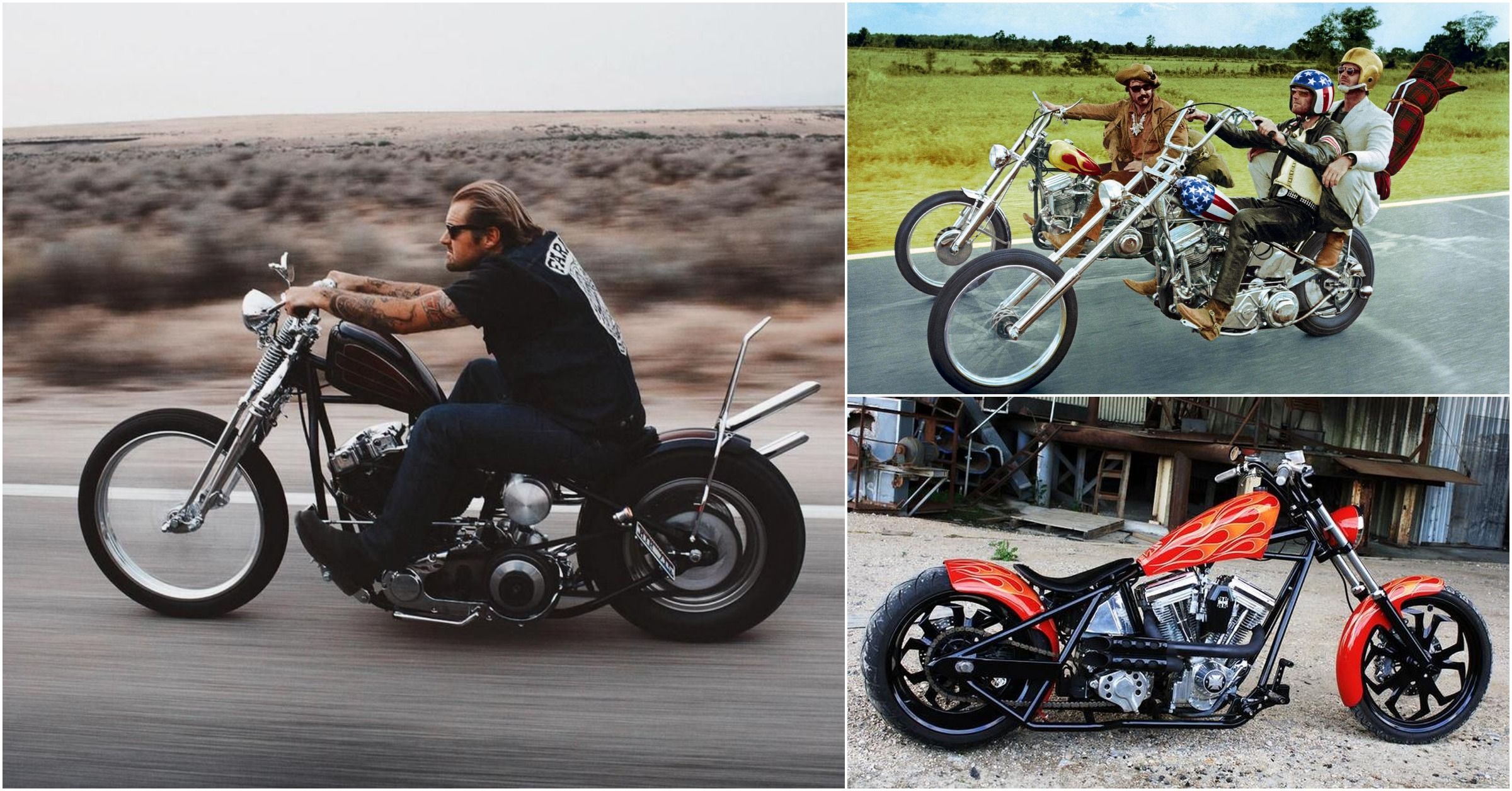
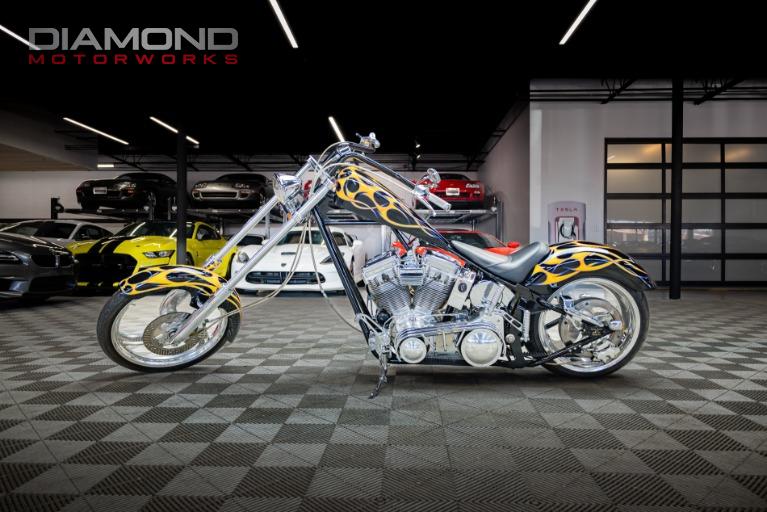
To understand the Leno Episode, one must dissect the anatomy of the bike itself—a rolling testament to what happens when vision meets execution. The frame, a skeletal masterpiece of chromoly steel, wasn’t just welded; it was sculpted. Every tube was chosen not just for its strength but for its ability to bend to the whims of the designer’s imagination. The rake angle, a staggering 42 degrees, wasn’t a technical flourish—it was a deliberate challenge to the rider’s comfort, a nod to the chopper’s rebellious roots. The forks, elongated and exaggerated, stretched the bike’s silhouette into something almost otherworldly, as if the machine itself was reaching for the sky.
The engine, a monstrous 110-cubic-inch S&S V-twin, wasn’t just a powerplant—it was the heart of the beast. Its polished fins glinted under the workshop lights, a reminder that brute force could be beautiful. The exhaust, a serpentine marvel of stainless steel, coiled around the frame like a living thing, its growl a promise of the symphony it would unleash on the open road. Even the smallest details—the custom leather seat, the hand-stitched gas tank, the meticulously routed wiring—were not afterthoughts but deliberate strokes in a larger composition. This wasn’t a bike; it was a rolling sculpture, a mobile shrine to the art of customization.
The Unseen Labor: The Human Element Behind the Machine
Behind every gleaming bolt and every flawless weld lies the invisible labor of human hands—hands that worked through sleepless nights, hands that trembled with the weight of responsibility, hands that refused to accept anything less than perfection. The OCC team wasn’t just building a bike; they were fulfilling a dream, one that had been nurtured in the mind of a man who saw motorcycles as more than transportation. They were translating Leno’s vision into reality, a process that demanded patience, creativity, and an almost spiritual devotion to the craft.
There’s a quiet intensity to the workshop environment, a place where raw materials are transformed into something extraordinary. The air hums with the drone of power tools, the scent of metal and oil lingers like incense, and the walls are adorned with blueprints that are as much works of art as they are technical documents. The team’s dedication wasn’t just professional—it was personal. Each member brought their own expertise, their own quirks, their own obsessions, and together they wove them into the fabric of the bike. The result was more than a machine; it was a collaborative masterpiece, a fusion of individual talents into something greater than the sum of its parts.
The Cultural Ripple: Why the Leno Episode Resonated
The fascination with the Leno Episode extends far beyond the motorcycle community. It’s a story that taps into something primal—the human desire to create, to innovate, and to leave a mark on the world. In an era where mass production dominates, the Leno bike stands as a defiant celebration of individuality. It’s a reminder that true artistry isn’t found in assembly lines but in the sweat and toil of those who dare to dream differently.
There’s also an undeniable element of spectacle. The bike wasn’t just a means of transportation; it was a conversation starter, a centerpiece, a rolling advertisement for the power of customization. It invited onlookers to pause, to admire, to question. What does this machine represent? What drove its creators to push the boundaries of convention? The answers lie not just in the bike’s design but in the cultural moment it captured—a moment where individuality was celebrated, where craftsmanship was revered, and where the line between art and engineering blurred into obscurity.
The Legacy of the Build: More Than Just a Bike
The Leno Episode didn’t just produce a motorcycle—it created a legacy. The bike became a symbol of what’s possible when passion meets precision, a tangible proof that dreams can be forged in steel and chrome. It inspired countless enthusiasts to pick up tools, to experiment, to push their own boundaries. It proved that a motorcycle could be more than a machine; it could be a statement, a work of art, a piece of history.
Years after its completion, the Leno bike remains a touchstone for those who understand the deeper significance of custom builds. It’s a reminder that the most extraordinary creations often begin with a simple idea—and a willingness to see it through to the end. The bike’s legacy isn’t just in its design or its performance; it’s in the way it challenged perceptions, sparked conversations, and left an indelible mark on the world of motorcycling.
The Deeper Allure: Why We’re Drawn to Stories Like This
At its core, the Leno Episode speaks to a universal truth: we are drawn to stories of transformation. Whether it’s a machine, a person, or an idea, we’re captivated by the journey from raw potential to realized greatness. There’s something deeply satisfying about witnessing the alchemy of creation—the way disparate elements come together to form something extraordinary.
But there’s also a darker, more introspective layer to our fascination. The Leno bike, with its exaggerated lines and unapologetic boldness, mirrors the human desire to stand out, to be seen, to defy the ordinary. In a world that often feels homogenizing, the bike is a rebellion—a declaration that individuality matters. It’s a reminder that true artistry isn’t about fitting in; it’s about breaking free.
Perhaps that’s why stories like this resonate so deeply. They’re not just about motorcycles. They’re about the human spirit—the relentless drive to create, to innovate, and to leave a mark on the world. The Leno Episode is more than a chapter in the history of custom bikes; it’s a testament to the power of passion, the beauty of craftsmanship, and the enduring allure of the extraordinary.
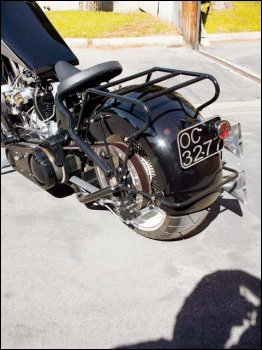
The frame of the Leno bike, a masterclass in chromoly steelwork, twists and turns with a grace that belies its raw power. Every weld is a testament to the builder’s precision, every curve a deliberate stroke in a larger composition.
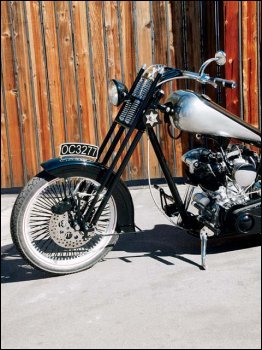
The workshop, a cathedral of creation, hums with the energy of possibility. Here, raw materials are transformed into something extraordinary, where every tool and every hand plays a role in the alchemy of customization.
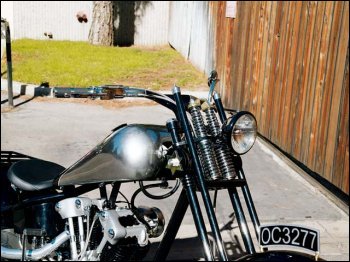
The moment the engine roars to life, the bike ceases to be a static object—it becomes a living, breathing entity. The road stretches ahead, and the machine, now an extension of the rider, embarks on a journey of pure exhilaration.