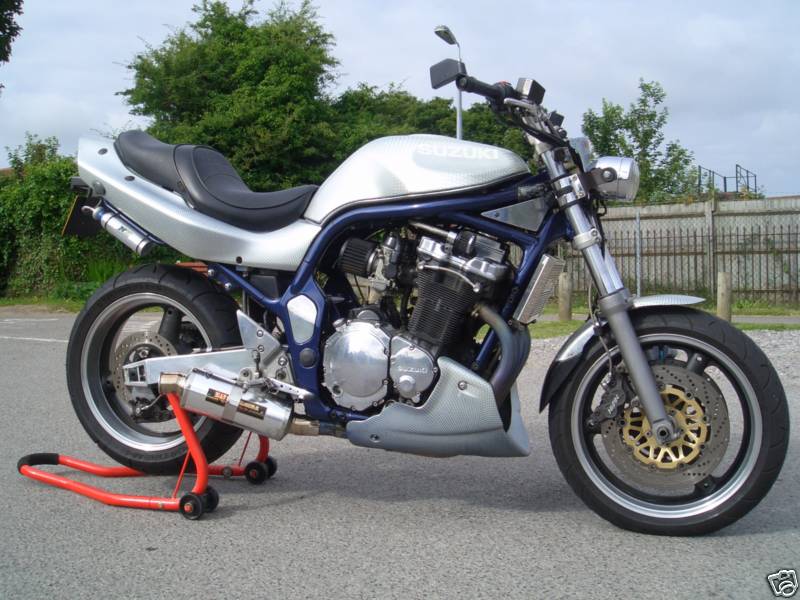
Can a motorcycle truly disguise its powerhouse nature beneath an unassuming exterior? The 1997 Suzuki Bandit 1200, often hailed as the original street sleeper, boldly answers this question with an emphatic yes. Far from the flamboyance typical of superbikes, the Bandit 1200 blends subtlety with raw performance, challenging conventional expectations and inviting riders into a world where restrained aesthetics cloak untamed power.
At first glance, the 1997 Bandit 1200 presents itself with remarkable modesty. Its design language is straightforward—no flamboyant fairings or aggressive silhouettes, just clean lines and functional styling. Yet, behind this unpretentious facade lies a formidable heart engineered to captivate. The Bandit was conceived not as a fancy showpiece but as a no-nonsense weapon for the street, capable of delivering exhilarating performance without demanding the eye-catching flashiness favored by many contemporaries.
Under the hood, the Bandit 1200 boasts an air-cooled, inline-four engine displacing 1,157 cc. This powerplant serves as the beating core of the bike, generating a ripe blend of torque and horsepower that imbues the machine with the ability to surreptitiously outpace many competitors on urban streets and twisty backroads. Its power delivery is linear yet potent, resulting in a riding experience that is both manageable for the experienced and approachable for newcomers seeking to harness substantial performance.
But what truly cements its status as the quintessential street sleeper is the paradox between its aggressive engine output and its low-key looks. One could easily mistake the 1997 Bandit 1200 for a mere commuter bike or a standard motorcycle designed for routine errands. This deceptively simple appearance often blinds onlookers to its capacity for spirited sprints and cornering prowess. Such dichotomy raises an intriguing challenge: can a rider fully maximize the Bandit’s potential without succumbing to the temptation of customizing it into something more ostentatious, thereby betraying its sleeper identity?
Complementing the robust engine, the Bandit’s chassis architecture plays a vital role in defining its ride quality. Built around a robust steel frame with a hybrid arrangement that marries rigidity and flexibility, the motorcycle strikes a delicate balance. It is stiff enough to maintain composure at high speeds and through tight corners but forgiving enough to offer comfort on longer rides. The suspension setup, comprising telescopic front forks and dual rear shocks, might appear rudimentary in comparison to more modern tech, but it remains sufficiently adept at taming urban irregularities and rural undulations alike.
When it comes to handling, the Bandit 1200 exhibits a commendable agility that defies its substantial frame and weight. Its wheelbase and steering geometry have been calibrated to offer nimble maneuverability through congested traffic and challenging road conditions. This capability makes the Bandit not only a robust highway cruiser capable of sustained speed but also an agile companion for weaving through city streets—another hallmark of the street sleeper concept.
Moreover, the ergonomics of the Bandit comfortably accommodate a wide spectrum of rider physiques. The upright seating position, moderately wide handlebars, and broad saddle contribute to a riding posture that prioritizes control and comfort simultaneously. This pragmatic approach to rider interface ensures that the Bandit can serve as a dependable daily rider without inducing fatigue, even during extended journeys.
Performance is not the sole characteristic that defines this motorcycle’s legacy. The 1997 Suzuki Bandit 1200 also embodies an ethos of versatility. Its adaptability extends beyond mere function; with minimal aftermarket modifications, it can transition effortlessly between spirited street performance and practical daily transportation. Owners have historically embraced this malleability, transforming Bandits into everything from tourers to light sportbikes, all while retaining the core essence of the original machine.
The Bandit 1200’s fuel system, featuring Suzuki’s then-advanced carburetor technology, ensures responsive throttle feedback and efficient fuel use. In an era preceding the widespread adoption of fuel injection, this implementation exhibits a thoughtful compromise between simplicity and effectiveness. It renders the Bandit dependable and avoids some of the complexity that can plague other high-performance bikes of the same vintage.
One cannot overlook the cultural footprint of the 1997 Bandit 1200 either. This model emerged during a time when Japanese manufacturers were intensely competing for supremacy in the mid-sized sport and naked bike segments. Suzuki’s approach with the Bandit was to eschew radical innovation in favor of proven engineering and solid performance metrics. This strategy paid off handsomely, carving out a dedicated niche of riders who appreciated the bike’s pragmatic blend of power, usability, and understated style.
The street sleeper phenomenon exemplified by the Bandit 1200 poses an intriguing question to the modern biking enthusiast: is flash truly necessary to experience thrilling performance? In an age dominated by highly stylized motorcycles laden with electronic aids and overt aggression, the Bandit’s legacy serves as a reminder that substance often transcends style. Can the same level of excitement and engagement be found beneath a plain veneer?
As time has passed, the Bandit 1200’s simplicity and effectiveness have only enhanced its appeal among collectors and everyday riders seeking a genuine connection to motorcycling’s golden era. Its enduring reputation as a reliable, powerful, and adaptable machine affirms that it was much more than just a passing fad; it was a thoughtfully engineered motorcycle that set the stage for future generations of naked bikes and streetfighters.
In closing, the 1997 Suzuki Bandit 1200 is a compelling example of the street sleeper ethos realized. It challenges preconceived notions about what a high-performance motorcycle should look like and dares the rider to find exhilaration in its understated presence. For those who appreciate the art of balance—between power and restraint, simplicity and sophistication—the Bandit holds a timeless allure, beckoning curious riders to uncover the spirited soul hidden beneath its modest exterior.