The Vincent Black Shadow of 1952 is not merely a motorcycle; it is an emblematic titan in the chronicles of motorcycling history. Commonly revered as the fastest production motorcycle of its era, it transcended the boundaries of mechanical engineering to capture the imagination of enthusiasts and critics alike. This fascination, persistent and profound, arises from a confluence of factors — exceptional design, revolutionary performance, and an alluring mystique that the Black Shadow continues to emanate decades after its inception.
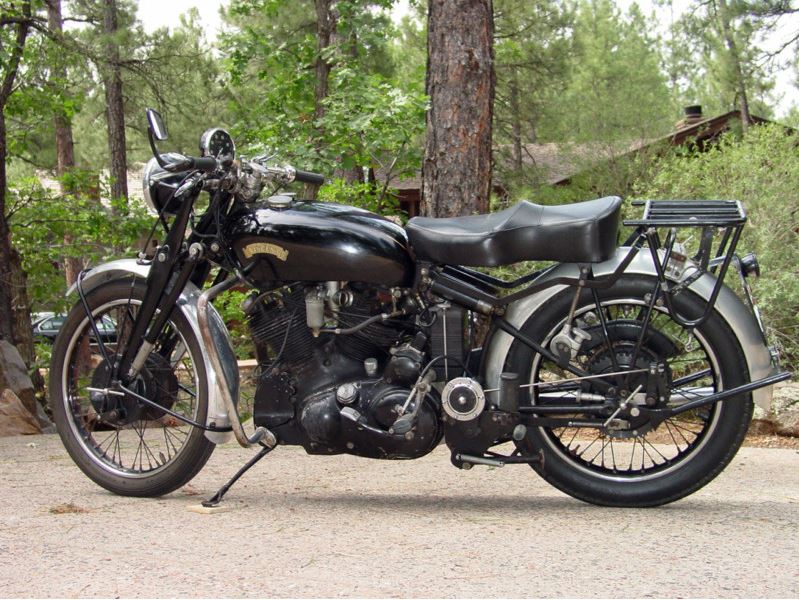
At first glance, the Vincent Black Shadow’s sleek silhouette speaks volumes about its pedigree. The motorcycle exudes an aura of purposeful sophistication, blending aesthetics with engineering prowess. Unlike its contemporaries, which often emphasized either raw power or ornamental appeal, the Black Shadow harmonized both with consummate elegance. Its black engine contrasted strikingly with the polished alloy components, a deliberate visual signature that quickly became synonymous with exclusivity and audacity. The deep gloss of its paintwork wasn’t just aesthetic flourish— it was symbolic of the bike’s almost mythical status among motorcycles, a status propelled not just by the machine itself but by what it represented: speed, innovation, and the defiant spirit of post-war Britain.
The quintessential measurement of the Black Shadow’s significance lies in its performance metrics, which were nothing short of groundbreaking at the time. Powered by a 998cc V-twin engine, it delivered an unprecedented 55 brake horsepower, catapulting the motorcycle to a top speed of 125 mph—a figure that left many competitors in the dust. In an era when the average motorbike struggled to break the 70 mph barrier, the Black Shadow was a revelation. This exceptional velocity was not merely the product of brute engine power but was intricately linked to engineering intelligence. The Vincent engineers, led by Philip Vincent himself, employed advanced metallurgy and design innovations such as a cantilever rear suspension and a unique frame construction that combined strength with surprising agility. These elements collectively contributed to the motorcycle’s ability to maintain stability and control at high speeds, amplifying the rider’s confidence and the machine’s overall performance envelope.

The fascination with the Black Shadow also extends beyond its physical specifications—there is an intangible allure tied to its cultural and psychological impact. Post-World War II, a world caught between optimism and uncertainty sought icons of progress and exhilaration. The Black Shadow symbolized that promise. It was the embodiment of speed not just as a measure of velocity, but as a metaphor for forward momentum, technological triumph, and individual freedom. Riders who commanded the Black Shadow often spoke of a near transcendental connection with the machine—an experience that transcended mechanics and edged into the realm of passion and identity. This deeper bond contributes to the motorcycle’s enduring mythos, elevating it beyond a mere mode of transportation.
Furthermore, the Black Shadow’s design philosophy represented a radical departure from convention. Vincent was among the first to challenge the dichotomy between sport and street motorcycles. Where most manufacturers either built utilitarian machines or pure racing bikes, the Black Shadow blurred these distinctions with a street-legal design that did not compromise on speed or sophistication. This duality made it highly desirable among a diverse range of motorcyclists—from commuters seeking reliability to thrill-seekers desiring supremacy on the open road. The motorcycle’s unique engineering, characterized by innovations such as the unit construction of engine and gearbox and an advanced oil cooling system, epitomized an integrated approach in design that engineers today still admire.
The machine’s reputation was also fortified by legendary anecdotes and racing lore. Its dominance on the racing circuit, particularly on roads and tracks that were far from the standardized surfaces of modern times, endowed it with a heroic status. Stories of riders pushing the Black Shadow to its limits, conquering hilly terrains and twisting roads, bolster the romanticism that envelops the model. These tales contribute a layer of human endeavor and valor to the mechanical titan, further deepening the motorcycle’s intrigue for aficionados.
In terms of legacy, the Vincent Black Shadow set a benchmark— one that inspired succeeding generations of motorcycle engineers and designers. Its influence is traceable in the way modern superbikes merge engineering ingenuity with rider-centric performance. The Black Shadow acted as a catalyst that accelerated technological progress in motorcycling. It challenged the accepted norms of what motorcycles could achieve, instigating a paradigm shift in design aesthetics and performance expectations. Even in a contemporary landscape filled with high-powered superbikes, the Black Shadow commands reverence for having laid the foundational ethos of the sportbike genre.
The motorcycle’s appeal also lies in its rarity and exclusivity. Production of the Black Shadow was limited, and surviving examples are treasured relics that often fetch premium valuations in collector circles. This scarcity compounds its allure and mystique, making the ownership experience itself a kind of pilgrimage—a connection to an epoch where craftsmanship and ambition converged in a singular, breathtaking machine.
To comprehend the enduring enigma of the Vincent Black Shadow is to appreciate that its standing as the “world’s fastest bike back then” is merely the surface layer of its captivation. Beneath the gleaming black frame and mechanical genius lies a story of human aspiration, cultural significance, and technological audacity. The Black Shadow was not just a temporal superbike, but a symbol of an age when speed was both a tangible feat and an emblem of freedom, defiance, and innovation.
In reflection, the Vincent Black Shadow of 1952 remains much more than an engineering marvel. It embodies a timeless fascination that continues to inspire reverence and curiosity. Its legacy endures not simply because it was the fastest bike of its time, but because it represented an audacious leap toward the future—a future where the boundaries of speed, design, and spirit were continuously redefined. As modern riders chart new courses with contemporary machines, the shadow cast by this legendary motorcycle looms large, a testament to the age when speed met soul in perfect harmony.