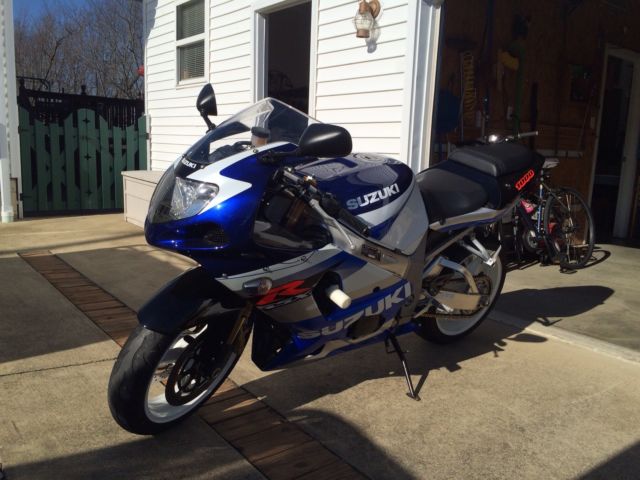
The 2002 Suzuki GSX-R1000 occupies a revered place within the annals of superbike history, celebrated not just for its raw performance but for the transformative impact it had upon its introduction. For enthusiasts and casual observers alike, the question persists: “Is the 2002 GSX-R1000 even faster than the original GSX-R1000?” This query, while seemingly straightforward, deserves a more nuanced exploration, reaching beyond mere statistics. The fascination with this motorcycle stems not only from its measurable capabilities but from the intricate interplay of engineering mastery, rider psychology, and the zeitgeist of its era.
At first glance, the 2002 GSX-R1000 appears to be a direct successor building upon the laurels of Suzuki’s groundbreaking first-generation GSX-R1000, which appeared in 2001. The immediate observation points toward enhanced acceleration and refined handling, suggesting an evolution rather than a revolution. However, these marginal performance improvements disguise a deeper sophistication: a machine carefully balanced to satisfy intense competition demands while preserving rider confidence and accessibility.
The original GSX-R1000 entered the market with an aura of raw, untamed aggression. Powered by a 999cc inline-four engine, it delivered an impressive horsepower thrust coupled with an aggressive chassis setup. But it was often criticized for its somewhat unforgiving nature, exacting a toll on newcomers and seasoned riders alike. In contrast, the 2002 iteration embraced subtle yet impactful refinements—revisions in suspension geometry, frame rigidity enhancements, and engine tuning—crafted to mitigate these handling quirks. The result was a motorcycle that felt not only faster on paper but more incisive on the road, allowing riders to exploit the performance envelope with greater assurance.
This progression underlines a pivotal aspect of the GSX-R1000’s enduring charm: the delicate balance between unbridled power and precise control. Speed figures alone fail to tell the full story. The ‘feel’ of acceleration, the instantaneous feedback through the handlebars, the chassis communication—all contribute immeasurably to the sensation of speed and mastery. The 2002 model’s enhancements position it within an elite league where human-machine synergy reaches near perfection, enabling riders to transcend typical performance barriers.
Beyond tangible metrics, the allure of the 2002 GSX-R1000 stems from its embodiment of a broader cultural and technical evolution. At the dawn of the new millennium, superbike manufacturers grappled with integrating cutting-edge technology while preserving the visceral connection between rider and machine. Suzuki’s engineers approached this challenge with a philosophy that prized real-world usability alongside track prowess. This approach contrasts starkly with the ‘bigger is better’ ethos seen in some contemporaries, reflecting a maturation in superbike development—optimizing the experiential aspect rather than pursuing raw horsepower alone.
Consider, for instance, the influence of electronic advancements and material science progressions evident in the 2002 model. While not as electronic-laden as modern counterparts, this GSX-R1000 utilized improved components such as lightweight aluminum frames and revised suspension elements to reduce unsprung weight and enhance rigidity. These changes translate directly to sharper cornering, improved stability at high speeds, and reduced rider fatigue during aggressive riding sessions. Every technical detail harmonizes to create a sensation that belies mere numbers—an impression of velocity and agility that feels almost telepathic.
In parallel, the motorcycle’s iconic design language feeds into the mythology surrounding its speed. The aggressive yet purposeful fairing shape was sculpted not only for aerodynamic efficiency but to evoke an emotional response, stirring anticipation before the throttle is opened. The symbiotic relationship between aesthetics and performance confirms that speed is as much perceived as it is measured. This phenomenon amplifies the GSX-R1000’s mystique, entrenching it as a cultural symbol as much as a mechanical marvel.
One must also acknowledge the influence of rider mindset on the perception of speed. The 2002 GSX-R1000 serves as a conduit for adrenaline and precision; it rewards those who approach it with respect and passion. The direct, unfiltered connection to the machine heightens awareness and sharpens reflexes, effectively magnifying the rider’s experience of velocity. This interaction fosters a psychological feedback loop where the bike appears faster, not solely by virtue of technology but through the intimacy of control it offers.
Furthermore, the exclusivity of ownership and the storied lineage imbue this model with an intangible value. For collectors and aficionados, a finely preserved example with low mileage and a single-owner history—such as one boasting a mere 8,408 original miles—becomes more than transportation; it transforms into a rolling testament to an era when two-wheeled innovation met rider ambition head-on. This tangibility, coupled with the motorcycle’s accessible performance envelope, keeps the GSX-R1000 relevant and revered nearly two decades after its debut.
Ultimately, the question of whether the 2002 GSX-R1000 is even faster than the original transcends binary answers. The incremental technical enhancements certainly contribute to measurable performance gains, but the motorcycle’s true speed lies in the holistic experience it delivers. It embodies a symphony of engineering, art, and emotion, crafting an impression of velocity that outstrips raw numbers. This is why the GSX-R1000 continues to captivate riders and critics alike—it manifests the thrill of speed in a form both accessible and aspirational, echoing the enduring human fascination with pushing boundaries.
In summation, the 2002 GSX-R1000 is more than an iteration of a legendary machine; it is a milestone in superbike evolution. Its perceived speed is as much a product of refined mechanics as it is of the profound, almost instinctual connection it fosters between rider and road. The fascination with this model is multifaceted, rooted in technical sophistication, cultural resonance, and the primal joy of speed—qualities that remain as potent today as they were upon its inception. For those who understand, it is not merely faster than the original; it is the original’s destined refinement, elevated and immortalized in two wheels.