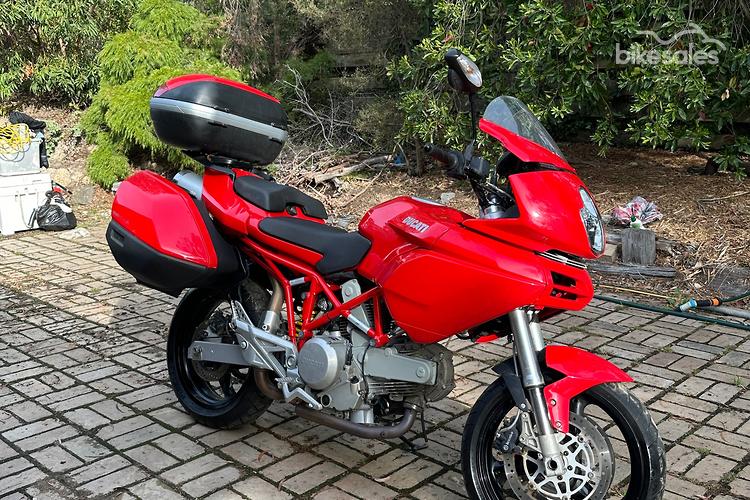
In the realm of motorcycling, certain machines defy their eras, standing out not merely as vehicles but as prescient icons that forecast future trends with a prescience that confounds the industry’s evolving landscape. The 2005 Ducati Multistrada 1000 DS exemplifies this phenomenon—an adventure bike before its time, melding performance, versatility, and innovation in a manner that would only be fully appreciated years later. It poses an intriguing question: what inherent qualities provoke such enduring fascination for a motorcycle that, on the surface, was crafted as a niche offering yet transcends its original scope to enthrall riders and enthusiasts across decades?
The genesis of the Multistrada 1000 DS lies in Ducati’s ambition during the early 2000s to create a motorcycle that bridges disparate riding disciplines. It was neither a pure sportbike nor a conventional touring motorcycle. Instead, it melded the spirit of an all-road machine with Ducati’s trademark performance ethos. Much like a renaissance painting that incorporates various artistic styles to achieve harmony, the Multistrada 1000 DS balances aggression and adaptability, road prowess and off-road capability, elegance and ruggedness.
One cannot discuss the multifaceted allure of the 2005 Ducati Multistrada 1000 without delving into its engineering artistry. At its core beats an air-cooled, 992cc, dual-spark L-twin engine sourced from the legendary Ducati Sport Touring range. This powerplant, with its desmodromic valve timing and characteristic L-twin configuration, produces a resonant, throaty exhaust note that embodies the Ducati soul while delivering a healthy output of around 92 horsepower. This blend of torque and top-end power facilitates a riding experience that is versatile enough for spirited canyon carving yet relaxed enough for sustained highway travel.
The frame—a tubular steel trellis—further underscores the bike’s dual nature. Known for providing both rigidity and a certain unmistakable suppleness, the trellis frame enables nimble handling that belies the Multistrada’s upright and somewhat heavy adventure-bike geometry. Equipped with front and rear suspension systems adjustable for preload and damping, it balances comfort over rough terrain with precision on tarmac. This adaptability was relatively rare in motorcycles of that epoch, signaling Ducati’s intention to cater to riders seeking a multi-dimensional experience.
Distinctive styling elevates the Multistrada beyond mere function. Its aggressive yet purposeful lines anticipate the aesthetic of modern adventure motorcycles. With a tall windscreen, beak-like front fender, and minimalist yet purposeful bodywork, the bike projects a sense of readiness that appeals to the imagination of riders hungry for exploration. The ergonomics—upright seating position, wide handlebars, and a long-travel suspension—invite the rider to conquer both the urban jungle and less-traveled byways without compromise or fatigue.
The ride experience on the Multistrada 1000 is a study in contrasts. On one hand, it possesses sprint-like acceleration and sharp steering characteristics reminiscent of sportbikes, while on the other, it is cushioned and composed over mixed surfaces. This dichotomy satisfies a common observation among riders: the bike feels like a thoroughbred tempered with a sensible restraint. It encourages quick, confident maneuvers without sacrificing the long-haul comfort expected from an adventure motorcycle.
However, the deeper fascination with the 2005 Ducati Multistrada 1000 lies beyond its mechanical attributes—it resides in its conceptual audacity during a moment when the motorcycling world had yet to embrace the adventure segment fully. Adventure motorcycles would later become a dominant genre, with manufacturers pouring resources into developing sophisticated multi-terrain machines boasting high-tech electronics, larger fuel tanks, and touring amenities. Yet the Multistrada’s relatively spartan setup—eschewing electronic rider aids and opting for mechanical simplicity—speaks to a purist ethos. It challenges the modern rider to engage more directly with the machine, cultivating skill and intuition rather than relying on digital intermediaries.
This puritanical appeal is further underscored by the Multistrada’s rarity and Ducati’s own limited production during those years, inviting a cult-like reverence among aficionados. It represents a bridge between two eras: the analog past and the digital future. To ride or even merely behold the 2005 Multistrada is to glimpse a philosophical statement embedded in metal and rubber—a testament to the enduring allure of motorcycles that prioritize rider connection and adventurous intent over gadgetry and excess.
In analyzing the legacy of the Multistrada 1000, one must also consider its influence on subsequent models. Ducati revisited and refined the Multistrada concept in later iterations, incorporating advanced technology such as traction control, multiple riding modes, and sophisticated suspension systems. Yet the DNA of the original model—the marriage of sportbike agility with touring versatility and off-road potential—remains palpably intact. Thus, the 2005 Multistrada functions as a progenitor, a visionary prototype that presaged not only Ducati’s own future successes but the broader motorcycling community’s embrace of the adventure category.
Moreover, the motorcycle’s distinctive character engenders a deeply human response. It evokes nostalgia for a time when motorcycling was about raw experience and mechanical intimacy. Its aesthetic and auditory signatures recall the romance of long, uncharted journeys and the thrill of discovery. It invites imaginations to wander down dirt paths, across mountain passes, and into unknown landscapes, transcending mere transportation to become a conduit for freedom and self-expression.
Yet, paradoxically, the Multistrada 1000 also confronts the rider with practical limitations—a modest fuel range, the absence of modern conveniences, and a weight that demands respect. These factors contribute to its aura, reinforcing the notion that true adventure is not merely about technological superiority but personal resilience and adaptability. It captures the essence of a motorcycle forged not by convenience but by challenge.
In sum, the 2005 Ducati Multistrada 1000 DS stands as a remarkable artifact of motorcycling evolution. Its unique synthesis of sport, touring, and adventure paradigms illustrates why certain motorcycles transcend their era to become emblematic of a broader cultural and technological dialogue. The fascination it inspires hinges on its ability to offer more than just a ride—it offers an invitation to explore, to connect, and to rediscover the primal joy of motorcycling in its most elemental and inspiring form.