There’s a moment in every chopper builder’s journey when the frame isn’t just a part of the motorcycle—it becomes the soul of the machine. It’s the silent architect of attitude, the unspoken language of rebellion, the backbone of a rolling manifesto. The hardtail frame, stripped of suspension complexity yet brimming with raw potential, is where customization begins its most intimate dance with identity. This isn’t just about bolting parts together; it’s about forging a statement that roars down the boulevard before the engine even fires. If you’ve ever stared at a bare frame in your garage and felt the hum of possibility, you’re not just building a bike—you’re sculpting a legacy. And the right hardtail frame? It’s the difference between a machine that looks good and one that makes people stop, stare, and whisper, “Damn, who built that?”
The Hardtail Renaissance: Why Simplicity is the Ultimate Sophistication
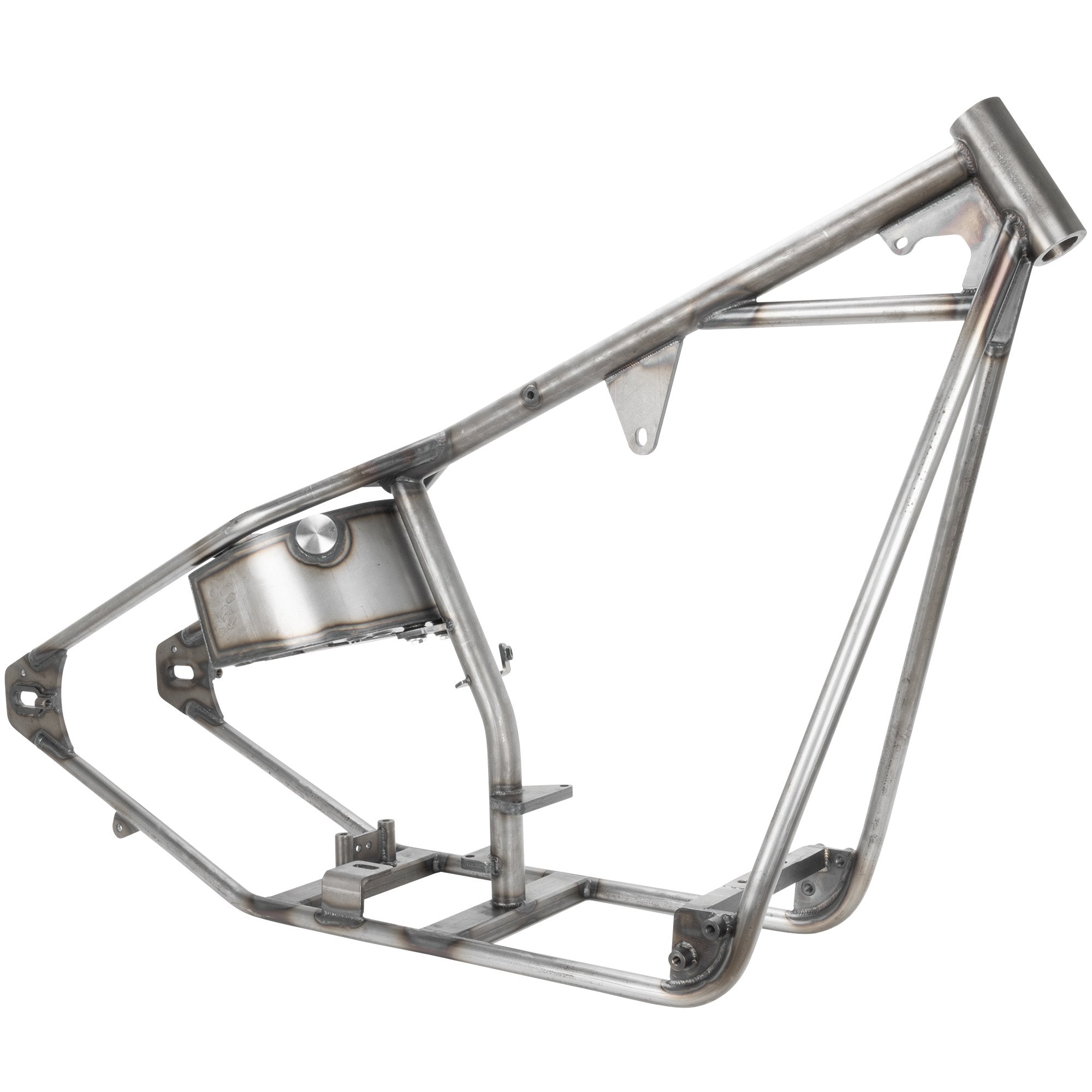
In a world obsessed with over-engineered marvels, the hardtail frame stands as a defiant ode to purity. No rear suspension. No hidden complexities. Just raw steel, geometry, and the unfiltered voice of the rider. This isn’t regression—it’s revolution. The hardtail’s minimalism forces clarity. Every weld, every angle, every curve tells a story. It’s the canvas where the builder’s vision isn’t diluted by suspension linkages or hidden dampers, but amplified by the unapologetic presence of the frame itself. When you choose a hardtail, you’re not just selecting a component; you’re embracing a philosophy. One that values raw expression over polished conformity. The result? A motorcycle that doesn’t just move—it commands attention.
Consider the way a hardtail frame interacts with the road. Without the cushioning of rear suspension, every imperfection in the pavement becomes part of the ride’s character. It’s tactile. It’s alive. It’s a conversation between man and machine, where the frame’s rigidity becomes a conduit for the rider’s intent. This isn’t for the faint of heart. It’s for those who crave the unfiltered truth of the road, where the bike’s soul is as exposed as the rider’s passion.
Steel vs. Aluminum: The Material Divide That Defines Your Ride
Not all hardtail frames are forged from the same metal. The choice between steel and aluminum isn’t just technical—it’s deeply personal. Steel, the traditional titan of motorcycle frames, offers unparalleled strength, durability, and a weight that grounds the bike in tradition. It bends but rarely breaks. It welds with a forgiving hand. It carries the legacy of countless custom builds, from vintage chopper legends to modern-day rebels. If you’re chasing that classic Harley growl and the timeless aesthetic of a bygone era, steel is your ally. It’s the material of choice for builders who want their frames to age like fine whiskey—gaining character with every mile.
But aluminum? It’s the disruptor. Lighter than steel by nearly half, it transforms the hardtail into a nimble, responsive beast. The reduced weight sharpens handling, making the bike feel almost alive in your hands. It’s the choice of builders who prioritize agility and modern performance without sacrificing the hardtail’s raw essence. Aluminum frames often feature sleek, angular designs that scream contemporary cool, appealing to those who want their chopper to turn heads as much as it turns corners. The trade-off? Less forgiveness under stress. Aluminum doesn’t bend—it snaps. But for the right builder, that’s not a flaw; it’s a feature. It demands precision, respect, and a deep understanding of the machine’s limits. Choose wisely, because the material you pick will dictate not just how your bike rides, but how it feels to build it.
Geometry That Speaks: Crafting the Perfect Rake and Stretch
The frame’s geometry isn’t just numbers on a spec sheet—it’s the silent choreographer of your ride’s personality. The rake, or the angle of the steering head, and the stretch, or the lengthening of the frame’s backbone, are the tools that shape how your chopper moves, handles, and even looks. A steeper rake (think 35 degrees or more) will give your bike a stretched, aggressive stance, perfect for those who want to command the road with an air of dominance. It’s the geometry of choice for builders chasing that elongated, low-slung silhouette that turns heads at every stoplight.
But geometry isn’t just about aesthetics. It’s about physics. A longer stretch paired with a steeper rake can make the bike more stable at high speeds, while a shorter stretch with a shallower rake will lend itself to quicker, more responsive handling. The key is balance. Too much stretch, and your bike becomes a sluggish beast, struggling to turn and feeling unwieldy. Too little, and it loses that commanding presence, becoming just another bike in the crowd. The best builders treat geometry like a conversation—each adjustment a word, each ride a sentence, and the final build a story written in steel and chrome.
The Art of the Weld: Where Craftsmanship Meets Character
A hardtail frame isn’t just assembled—it’s born. The welds are the frame’s fingerprints, each one a testament to the builder’s skill and passion. TIG welding, with its precise, clean lines, is the gold standard for those who demand perfection. It’s the choice of builders who see their frames as works of art, where every bead of weld is a brushstroke in a larger masterpiece. But don’t underestimate MIG welding. It’s the workhorse of the custom world, offering speed and strength without sacrificing too much in the way of aesthetics. The key is consistency. A poorly executed weld isn’t just ugly—it’s a liability. It’s a weak point waiting to betray the rider in the most critical moment.
Then there’s the question of finish. Raw, unpolished steel tells a story of grit and authenticity. It’s the look of a bike that’s been ridden hard and loved harder. But polished chrome? It’s the language of luxury, a frame that gleams like a promise of the miles to come. The choice isn’t just about style—it’s about attitude. A raw frame says, “I’m here to ride.” A polished one whispers, “I’m here to be seen.” The best builders know that the welds and the finish aren’t just details—they’re the soul of the frame, the difference between a bike that’s built and one that’s revered.

Compatibility: The Unsung Hero of Custom Builds
Even the most stunning hardtail frame is useless if it doesn’t play well with the rest of your build. Compatibility isn’t just about bolt patterns and measurements—it’s about harmony. The frame’s dimensions must align with your engine, transmission, and rear wheel setup. A misaligned frame can turn what should be a smooth ride into a nightmare of vibrations and handling issues. It’s the difference between a bike that feels like an extension of your body and one that feels like a constant battle.
Consider the engine. A Harley Davidson Evolution engine, for example, has specific mounting requirements that must be met for a seamless fit. The same goes for transmissions—whether you’re running a classic four-speed or a modern six-speed, the frame must accommodate it without forcing compromises. And don’t forget the rear wheel. The frame’s stretch and rake will determine how the wheel sits in relation to the engine and swingarm, affecting everything from chain alignment to ground clearance. The best builders treat compatibility like a puzzle, where every piece must fit perfectly to create a cohesive whole. Skip this step, and your dream bike could become a costly mistake.
From Blueprint to Reality: The Builder’s Dilemma
Choosing the right hardtail frame isn’t just about specs and materials—it’s about vision. It’s the moment when the abstract becomes tangible, when the sketches on a napkin transform into a steel skeleton waiting to be brought to life. But vision alone isn’t enough. You need a builder who understands not just how to weld steel, but how to interpret your dreams. Do they prioritize tradition or innovation? Are they more concerned with aesthetics or performance? The right builder will challenge your ideas, push your boundaries, and ultimately, help you create something that’s uniquely yours.
And then there’s the budget. Hardtail frames range from affordable off-the-shelf options to bespoke creations that cost as much as a small car. But price isn’t everything. A $500 frame from a reputable builder might outperform a $2,000 off-the-shelf model if it’s the right fit for your vision. The key is to invest in quality where it matters most—whether that’s the frame itself, the builder’s expertise, or the materials used. Remember, you’re not just buying a part. You’re buying the foundation of a legacy.
The Road Ahead: Why the Hardtail Frame is More Than Just a Choice
The hardtail frame isn’t just a component—it’s a declaration. It’s a statement that says, “I value authenticity over convenience. I embrace simplicity without sacrificing power. I build not just a motorcycle, but a piece of myself.” In a world where everything is mass-produced and disposable, the hardtail frame is a rebellion. It’s a return to the roots of customization, where every decision is deliberate, every weld is intentional, and every ride is an experience.
So, if you’re standing in your garage, staring at a pile of parts and a blank canvas of a frame, ask yourself: What do you want your motorcycle to say? Do you want it to whisper elegance or shout rebellion? Do you want it to blend in or stand out? The right hardtail frame won’t just answer those questions—it will make you fall in love with the process all over again. Because when you finally hit the road, when the engine roars to life and the wheels hit the pavement, you’ll know: this isn’t just a bike. It’s your masterpiece.