Ever stared at a gleaming chopper triple tree, its polished surfaces whispering tales of speed and precision, only to wonder: How on earth did they drill those holes so perfectly? The answer? A drill press—specifically, the right one for the job. Fabricating triple trees isn’t just about raw power; it’s about finesse, consistency, and the kind of control that turns a wobbly weld into a masterpiece. But here’s the kicker: not all drill presses are built for the gritty, high-stakes world of motorcycle fabrication. So, how do you pick the one that won’t betray you when the going gets tough?
The Anatomy of a Triple Tree: Why Precision Isn’t Optional
Triple trees are the unsung heroes of a motorcycle’s front end, the silent arbiters of steering geometry and stability. A misaligned hole here, a slightly off-center bore there, and suddenly your ride feels like it’s wobbling through a hurricane. The drill press you choose must deliver repeatable accuracy—think within a thousandth of an inch—because even the tiniest deviation can throw off the entire alignment. Look for a press with a rack-and-pinion quill feed, which ensures smooth, controlled plunging without the jerky resistance of a simple rack system. And don’t overlook the spindle runout; anything over 0.0005 inches is a red flag.
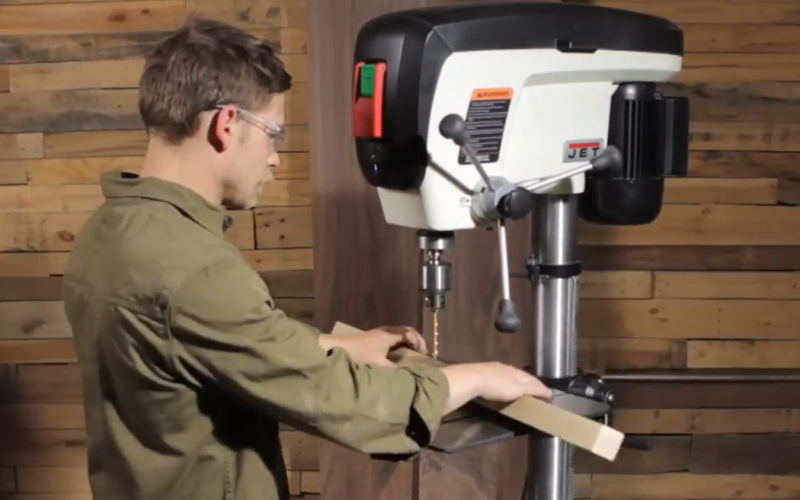

Power vs. Precision: The Eternal Tug-of-War
You might think a drill press with a 1-horsepower motor is overkill for aluminum, but here’s the twist: torque is your friend. Aluminum may be soft, but triple trees often require drilling through hardened steel bushings or even stainless steel inserts. A press with variable speed control (ideally ranging from 200 to 3,000 RPM) lets you dial in the perfect speed for the material—slow for steel, fast for aluminum. And while we’re at it, consider a geared-head drill press over a belt-driven model. Geared heads deliver consistent torque at low speeds, which is crucial when you’re wrestling with stubborn alloys.
Tabletop vs. Floor-Standing: The Space vs. Stability Dilemma
If your workshop is more “cozy” than “cathedral,” a heavy-duty benchtop drill press might be your best bet. Models like the Jet JDP-20MF or the Laguna DrillMaster 20-1550 pack serious power into a compact footprint, with cast-iron construction that minimizes vibration. But if you’re fabricating triple trees at scale—or your arms are tired from wrestling with a 20-pound triple tree—then a floor-standing beast like the Jet J-2530 is where it’s at. The extra height and weight mean less wobble, and the larger table gives you room to clamp down your workpiece without resorting to a Rube Goldberg setup of clamps and blocks.

The Clamping Conundrum: How to Keep Your Triple Tree from Doing the Salsa
Ever tried drilling a hole while your workpiece is doing the cha-cha? It’s not fun. The key to stability is three-point clamping—secure the triple tree at the base, the top, and the side to prevent any movement. Magnetic bases are a game-changer for quick adjustments, but for the ultimate in rigidity, nothing beats a T-slot table paired with heavy-duty clamps. And here’s a pro tip: use soft jaws or sacrificial aluminum blocks to protect the finish of your triple tree. Scratches are the enemy of aesthetics.
Accessories: The Secret Weapons of Triple Tree Fabrication
No drill press is an island—it’s only as good as its accessories. Start with a precision-ground drill bit set in sizes that match your triple tree’s requirements. For hardened steel, cobalt or titanium-coated bits are non-negotiable. Next, a laser guide attachment can be a lifesaver for aligning holes, especially when you’re working with complex geometries. And don’t forget a vacuum system—aluminum shavings and steel dust are a toxic cocktail for your lungs and your lungs alone.
The Human Factor: Why Your Skills Matter More Than the Machine
Even the fanciest drill press is just a tool—what turns it into a triple tree masterpiece is you. Take the time to dial in your setup before you fire up the motor. Mark your hole locations with a center punch to prevent drill bit wander. Use a depth stop to ensure every hole is identical. And for the love of all things holy, double-check your measurements before you drill. One wrong move, and you’ll be staring at a triple tree that looks like it survived a bar fight.
Budget Breakdown: How Much Should You Really Spend?
You can find a decent benchtop drill press for under $300, but if you’re serious about fabrication, expect to invest $800 to $1,500 for a machine that won’t quit on you. The Jet JDP-25MF and the Grizzly G7943 are solid mid-range options, while the Laguna DrillMaster 20-1550 and the Jet J-2530 are the gold standard for those who demand industrial-grade performance. Remember: skimping on a drill press is like skimping on a helmet—eventually, you’ll pay the price.
Final Thoughts: The Drill Press That Won’t Let You Down
Choosing the best drill press for fabricating chopper triple trees isn’t just about specs—it’s about finding a machine that feels like an extension of your hands. Look for precision, power, and stability. Prioritize accessories that make your life easier. And above all, respect the process. A triple tree isn’t just a piece of metal; it’s the first step toward a ride that turns heads and commands respect. So, go ahead—pick your press, clamp down your workpiece, and let the chips fly. Your chopper’s future self will thank you.