The saga of Cody Rhodes’ departure from WWE is not merely a footnote in the annals of sports entertainment—it is a tectonic shift, a seismic tremor that sent ripples through the squared circle and beyond. To understand why the “American Nightmare” left the stage, one must dissect the layers of ambition, betrayal, and unfulfilled promises that defined his tenure. This is not just a story of a wrestler walking away; it is a narrative of fractured dreams, uncharted territories, and the relentless pursuit of legacy.
The Illusion of Stability: A House Built on Shifting Sands
WWE, for all its grandeur, is a house of cards—glittering, towering, but inherently unstable. Cody Rhodes, once the golden boy of the company, found himself standing on a foundation that was anything but solid. The illusion of permanence in WWE is a carefully crafted mirage, where contracts are as binding as the sands of a desert storm. His departure was not a sudden whim but the culmination of years of disillusionment, where the promise of creative freedom clashed with the cold reality of corporate machinations.
Imagine, if you will, a ship’s captain who has spent years navigating treacherous waters, only to realize the compass was rigged. That was Cody’s reality. The creative control he was promised—a cornerstone of his return—was eroded by the whims of a system that prioritizes spectacle over substance. The WWE machine, vast and hungry, devours individuality, leaving only the hollowed-out husks of those who dare to resist.
The Betrayal of Trust: A Broken Covenant
Trust, once broken, is a wound that never fully heals. Cody Rhodes’ relationship with WWE was a covenant, a sacred pact between performer and promoter. Yet, like a serpent in Eden, the company whispered promises it had no intention of keeping. His push for the top of the card was met with resistance, his storylines hijacked by the demands of the moment. The betrayal was not just personal—it was professional, a dagger twisted in the back of a man who had bled for the brand.
Consider the plight of a knight who returns from war, only to find his king has already crowned another in his absence. That was Cody’s fate. The WWE Universe, the fans who had rallied behind him, were left wondering: *Where is the Cody we were promised?* The answer, it seems, was nowhere. The betrayal was not just in the actions but in the silence—the deafening absence of accountability.
The Call of the Unknown: Chasing the Horizon
Every great hero must eventually face the call of the unknown. For Cody Rhodes, that call came in the form of AEW—a league that, despite its youth, offered something WWE could not: a blank canvas. The allure of reinvention, of crafting a narrative without the shackles of corporate oversight, was too potent to ignore. WWE had become a gilded cage, and Cody chose the wild frontier instead.
Think of it as a bird leaving a gilded aviary, trading the safety of captivity for the vast, unpredictable skies. AEW was not just an alternative—it was a revolution. Here, Cody could be the architect of his own destiny, the author of his own legend. The risk was immense, but so was the reward. In leaving, he did not abandon WWE; he redefined the very notion of what a wrestling career could be.
The Weight of Legacy: More Than Just a Contract
A man’s legacy is not measured in dollars or contracts but in the indelible mark he leaves on the world. Cody Rhodes understood this. His departure was not an act of defiance but an assertion of self-worth. He was not merely a performer; he was a storyteller, a visionary. WWE had reduced him to a cog in its machine, but the world outside saw him as something more—a titan in the making.
Picture a sculptor chiseling away at a block of marble, only to have the gallery snatch it away before the masterpiece is complete. That was Cody’s plight. His legacy was not yet etched in stone, and WWE’s refusal to let him finish his work was a crime against artistry. By leaving, he ensured that his story would not be truncated, that his vision would not be diluted by the demands of a committee.
The Fan’s Dilemma: Where Does Loyalty Lie?
The WWE fan is a creature of paradox—devoted yet skeptical, passionate yet jaded. Cody’s departure forced them to confront a question they had long avoided: *Where does my loyalty truly lie?* Is it with the spectacle, the pageantry, the endless cycle of storylines? Or is it with the performers, the artists who pour their souls into the ring, only to be discarded when the next shiny object comes along?
This is the crux of the modern wrestling fan’s dilemma. Cody Rhodes represented something raw, something real. His departure was a mirror held up to the industry, reflecting its flaws in stark, unflattering detail. The fans who followed him to AEW were not traitors; they were seekers of truth in an age of manufactured reality.
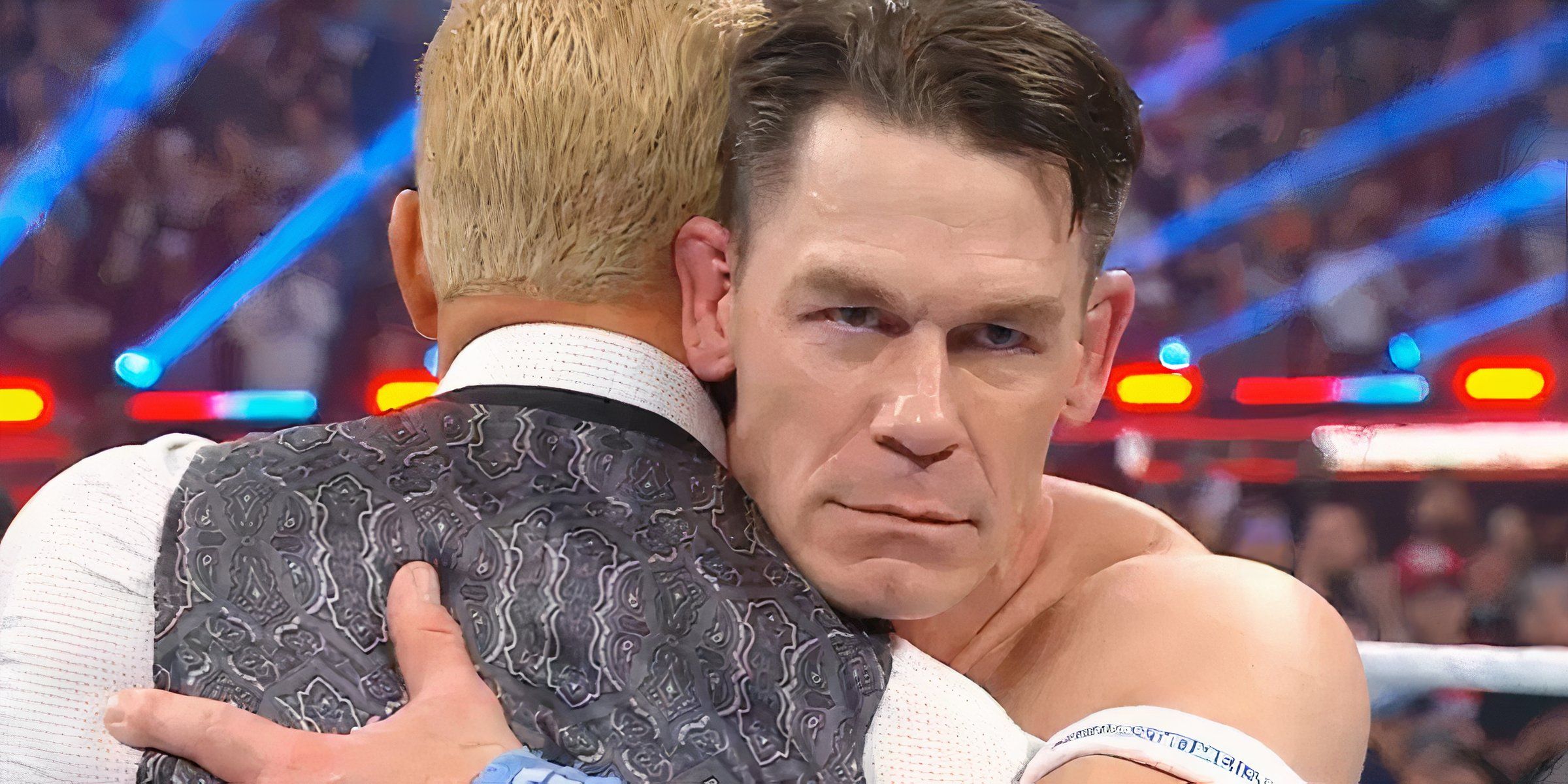
The Unwritten Future: A Blank Page Awaits
What comes next for Cody Rhodes is a question that hangs in the air like the scent of rain before a storm. The wrestling world has changed. The old rules no longer apply. He is no longer the underdog, the perpetual bridesmaid. He is the architect of his own fate, the captain of his own ship. The future is unwritten, and that is both terrifying and exhilarating.
Imagine standing at the edge of a cliff, the wind howling in your ears, the ground beneath you uncertain. That is Cody’s reality now. But it is also the reality of every pioneer who dares to challenge the status quo. The wrestling world will never be the same, and neither will Cody Rhodes. His departure was not an ending—it was a beginning.
The Falling Out was not just about Cody leaving WWE. It was about the industry itself fracturing, revealing the cracks in its foundation. It was about the fans waking up to the illusion. And most of all, it was about the unyielding spirit of a man who chose legacy over convenience, art over commerce, and truth over spectacle.