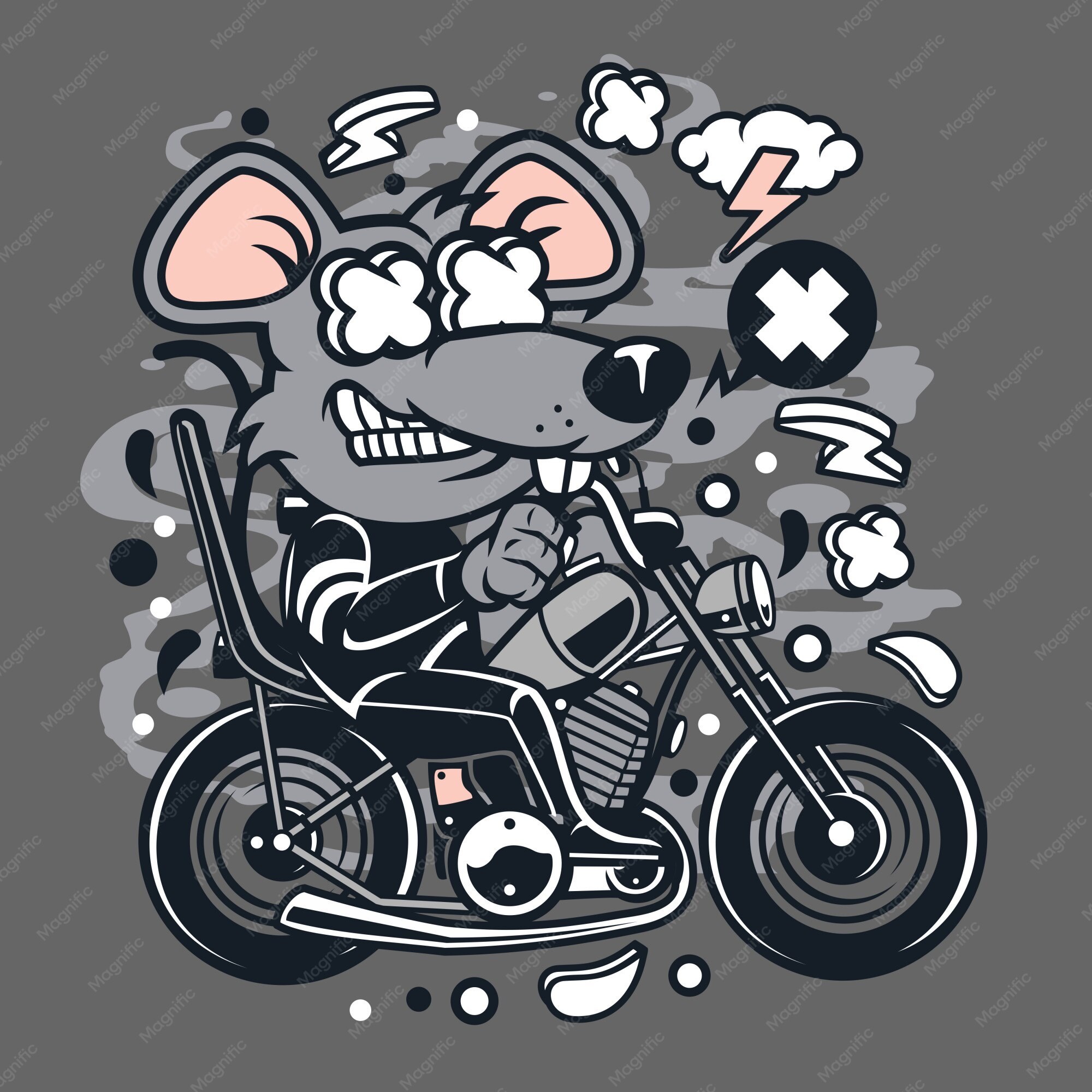
The Rat Chopper isn’t just a motorcycle—it’s a rolling manifesto of rebellion, a two-wheeled odyssey through the raw underbelly of custom bike culture. Born from the marriage of necessity and defiance, these machines strip away the polished veneer of showroom perfection, revealing instead a visceral celebration of rust, grit, and unapologetic engineering. Whether it’s the skeletal simplicity of a stripped-down frame or the menacing growl of an overbuilt engine, the Rat Chopper embodies the spirit of those who dare to ride differently. This isn’t about aesthetics for aesthetics’ sake; it’s about stripping life down to its most elemental components and rebuilding it with purpose. For the uninitiated, the Rat Chopper might look like a relic of mechanical neglect, but to its riders, it’s a masterpiece of intentional decay—a rolling testament to the beauty of imperfection.
The Philosophy Behind the Rust: Why Rat Choppers Captivate the Imagination
At its core, the Rat Chopper is a rebellion against conformity. While mainstream motorcycle culture often chases sleek lines and mirror-like finishes, the Rat Chopper thrives in the shadows, where patina tells a story and every scratch is a badge of honor. This philosophy isn’t born from laziness—it’s a deliberate choice to reject the disposable nature of modern consumerism. A Rat Chopper is a machine that has lived, fought, and endured, its weathered surfaces bearing the scars of countless miles and questionable decisions. It’s the antithesis of the “garage queen,” a bike that’s meant to be ridden until the engine coughs its last, not polished until it gleams under showroom lights. The allure lies in its authenticity; here, rust isn’t a flaw—it’s a feature, a visual shorthand for a life well-lived on the road.
Consider the cultural roots of the Rat Chopper. Emerging from the DIY ethos of the 1960s and 70s, it was a response to the high cost of new bikes and the restrictive nature of factory designs. Riders took to the streets with wrenches and welding torches, transforming cast-off frames into machines that reflected their personalities. The Rat Chopper became a symbol of freedom, a middle finger to the establishment, and a canvas for self-expression. Today, that spirit endures. Modern Rat Choppers might incorporate cutting-edge components, but their soul remains rooted in the same rebellious DNA. They’re not just bikes; they’re rolling pieces of art that challenge the viewer to look beyond the surface and see the passion, the sweat, and the sheer stubbornness that went into their creation.
Anatomy of a Rat: Key Components That Define the Aesthetic
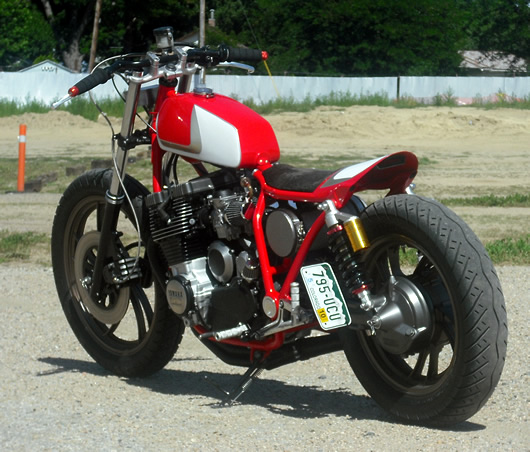
To truly understand a Rat Chopper, you must dissect its anatomy, where each component serves a purpose beyond mere functionality. The frame is the skeleton, often a modified or repurposed structure that’s been hacked, chopped, and welded into submission. Unlike the precision-engineered frames of modern motorcycles, a Rat Chopper’s frame tells a story—whether it’s the graceful arc of a hardtail design or the jagged edges of a cut-down rigid frame. The forks, too, play a crucial role. Telescopic forks are a rarity here; instead, you’ll find girder forks, springer forks, or even repurposed car suspension components, each lending a distinct character to the bike. These choices aren’t just stylistic—they’re a rejection of the one-size-fits-all approach to motorcycle design.
The engine is the heart of the Rat Chopper, and its placement is often a deliberate departure from convention. V-twin engines, particularly those from Harley-Davidson or Indian, are the most common, but their orientation and modifications vary wildly. Some builders angle them aggressively for a raked, aggressive stance, while others tuck them in tight for a more compact profile. Exhaust systems are another area where Rat Choppers shine—or rather, roar. The pipes are often hand-formed, with a preference for open, unbaffled designs that let the engine’s voice ring out unfiltered. The result is a symphony of mechanical cacophony, a sound that’s as much a part of the Rat Chopper’s identity as its visual aesthetic. Even the wheels are a statement. Wide, spoked rims with knobby tires or thin, vintage-style hoops with slicks—each choice speaks to the builder’s vision, whether it’s for off-road grit or pavement-shredding aggression.

The Art of Intentional Decay: Patina as a Design Element
Patina is the soul of the Rat Chopper. Where other bikes are meticulously restored to a factory-fresh shine, the Rat Chopper wears its age like a badge of honor. The term “patina” might evoke images of antique furniture or aged leather, but in the world of Rat Choppers, it’s a living, breathing quality that evolves with every mile. A frame that’s been left to rust naturally develops a deep, uneven patina, its surface a mosaic of orange, brown, and black hues. Paint that’s been chipped and scratched tells a story of adventures taken and roads traveled. Even the chrome components, if they exist at all, are often dulled to a soft sheen, their reflective surfaces muted by time and grime. This isn’t neglect—it’s a deliberate aesthetic choice, a rejection of the sterile, mass-produced look in favor of something far more authentic.
The beauty of patina lies in its unpredictability. No two Rat Choppers will ever look the same, even if they’re built from identical frames. The environment plays a role—humidity accelerates rust, while dry climates preserve the metal longer. The rider’s habits matter too. A bike that’s ridden daily in rain and mud will develop a different patina than one that’s stored in a garage and only taken out for weekend cruises. Some builders even go so far as to accelerate the aging process, using vinegar or chemical treatments to create rust patterns that would take years to develop naturally. The result is a machine that feels alive, a partner in crime that grows more characterful with each passing season. To the uninitiated, it might look like a pile of scrap; to the initiated, it’s a priceless work of art.
From Rat to Masterpiece: Customization and Personalization
While the Rat Chopper is defined by its raw, unpolished aesthetic, that doesn’t mean it’s devoid of customization. In fact, the opposite is true. The beauty of the Rat Chopper lies in its adaptability, its ability to be shaped by the hands of its builder into something entirely unique. Some builders start with a stock frame and modify it incrementally, adding just enough to make it their own. Others begin with a blank slate, welding together parts from different eras and manufacturers to create something entirely new. The key is restraint. A Rat Chopper isn’t about cramming in as many aftermarket parts as possible; it’s about making deliberate choices that enhance the bike’s character without overwhelming it.
Customization can take many forms. Some builders focus on the engine, boring out cylinders, porting heads, or swapping in a different camshaft to coax more power from an aging motor. Others turn their attention to the bike’s stance, adjusting the rake and trail to create a more aggressive or laid-back riding position. Seating is another area ripe for personalization. A Rat Chopper might feature a solo saddle with a springer seat post, a bench-style seat for two, or even a flat bench for a more minimalist look. Lighting is another opportunity to make a statement. While some builders opt for vintage-style bulbous headlights, others go for modern LED setups, often mounted in unconventional locations to create a custom look. Even the smallest details—like the shape of the handlebars, the style of the grips, or the color of the wiring—can be tweaked to reflect the builder’s personality.


Riding the Edge: The Rat Chopper Experience on the Open Road
Owning a Rat Chopper isn’t just about having a bike; it’s about embracing a lifestyle. These machines are built for the road, not the showroom. The riding experience is visceral, unfiltered, and often unpredictable. The lack of modern suspension means every bump and imperfection in the pavement is transmitted directly to the rider, creating a symbiotic connection between man and machine. The sound of the engine is another defining feature. Without the muffling effects of modern exhaust systems, the Rat Chopper’s V-twin growls like a caged beast, its exhaust note a mix of mechanical growl and popping backfires that turn heads wherever it goes. The riding position is another departure from the norm. Many Rat Choppers feature a stretched-out, feet-forward stance that encourages a relaxed, cruising posture, while others adopt a more aggressive, leaned-forward position for spirited riding.
The Rat Chopper’s handling is a study in contrasts. On one hand, the lack of modern suspension and the often-heavy weight of the bike can make it feel ponderous at low speeds. But on the open road, the bike comes alive. The long wheelbase and low center of gravity provide a sense of stability, while the torquey V-twin engine delivers effortless acceleration. The lack of electronic aids means the rider must be more engaged, reading the road and anticipating the bike’s behavior. It’s a return to the basics of motorcycling, where the rider and the machine are partners in a dance as old as the open road itself. For those who crave the thrill of the ride, the Rat Chopper offers an experience that’s as exhilarating as it is unforgettable.
Beyond the Bike: The Rat Chopper Community and Culture
The Rat Chopper isn’t just a machine—it’s a culture. The community of builders, riders, and enthusiasts who embrace this aesthetic is as diverse as the bikes themselves. Online forums, social media groups, and local meetups provide a space for like-minded individuals to share their builds, swap tips, and celebrate the art of the Rat Chopper. These communities are often tight-knit, with a strong emphasis on mentorship and collaboration. New builders are encouraged to experiment, to make mistakes, and to learn from the veterans who’ve been welding, grinding, and riding for decades. The culture is one of inclusivity, where the only requirement for entry is a passion for the raw, the real, and the unapologetically unique.
Events like Rat Show gatherings and custom bike expos provide a platform for builders to showcase their work and connect with fellow enthusiasts. These events are a feast for the senses, with the air thick with the smell of gasoline and hot metal, the sound of engines revving, and the sight of bikes that push the boundaries of what a motorcycle can be. Judges often evaluate builds based on creativity, craftsmanship, and adherence to the Rat Chopper ethos, but the real prize is the admiration of peers and the sense of accomplishment that comes from creating something truly one-of-a-kind. The Rat Chopper community is more than just a group of people who love bikes; it’s a family of rebels, artists, and dreamers who believe that the road is best traveled on a machine that’s as unique as the rider behind it.
The Future of the Rat: Evolution and Enduring Appeal
The Rat Chopper isn’t a relic of the past—it’s a living, evolving art form. While the core philosophy remains the same—raw, unfiltered, and unapologetically individual—the bikes themselves continue to push boundaries. Modern materials and technologies are finding their way into Rat builds, with builders experimenting with lightweight aluminum frames, carbon fiber components, and even electric powertrains. Yet, despite these innovations, the soul of the Rat Chopper remains unchanged. It’s still about the thrill of the ride, the joy of creation, and the unshakable belief that a motorcycle should be as much a reflection of its rider as it is a mode of transportation.
The enduring appeal of the Rat Chopper lies in its ability to adapt without losing its identity. It’s a blank canvas for self-expression, a machine that can be as minimalist or as extravagant as the builder desires. In a world where mass-produced motorcycles dominate the market, the Rat Chopper stands as a testament to the power of individuality. It’s a reminder that a motorcycle doesn’t need to be perfect to be extraordinary. Whether it’s a stripped-down, rusted-out beast or a meticulously crafted masterpiece, the Rat Chopper is a celebration of the raw, the real, and the unfiltered. It’s a call to arms for those who refuse to ride in the slow lane, who believe that the road is best traveled on a machine that’s as wild and unpredictable as the rider behind it.