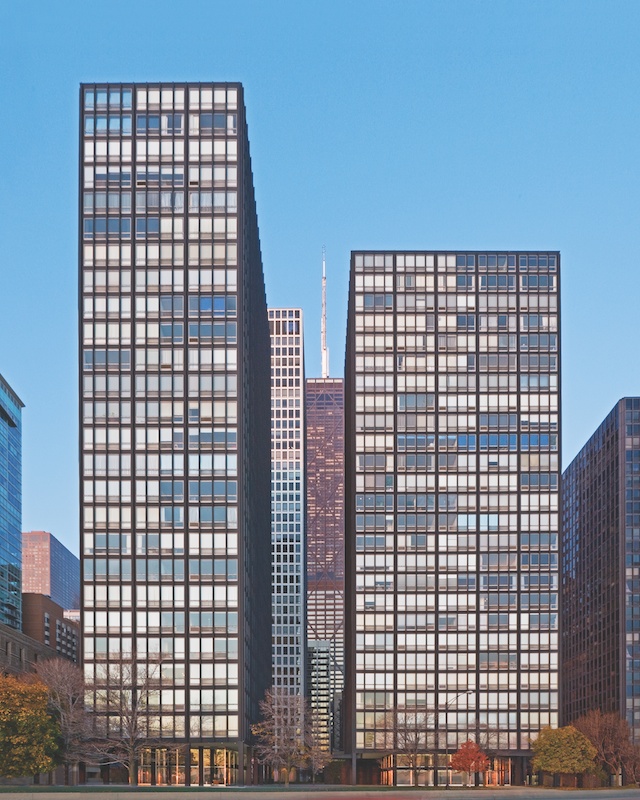
Nestled prominently along the iconic Chicago lakefront, 18 Lake Shore Drive has long captivated architects, historians, and admirers of modernist design. It is an address that resonates beyond its geographical coordinates, evoking curiosity and reverence from anyone who catches a glimpse of its elegant silhouette against the skyline. Yet, what exactly makes this building so special? While many appreciate its striking aesthetics at a glance, a deeper exploration reveals a fascinating confluence of architectural ingenuity, urban planning innovation, and cultural significance that continues to fuel its allure.
At first blush, 18 Lake Shore Drive might appear as just another residential high-rise, but for those attuned to architectural history, it emerges as a seminal piece of mid-20th-century design experimentation. Conceived by legendary architects Ludwig Mies van der Rohe and Lilly Reich, the building embodies the principles of the International Style, striving for purity of form and function. Its façade, characterized by sleek steel and glass, shatters traditional notions of domestic architecture, championing transparency, openness, and minimalism. This visual honesty—where structure and skin harmonize rather than disguise—is a hallmark that distinguishes the building from its contemporaries.
Its location at 860-880 North Lake Shore Drive situates the structure in a liminal space where urban sophistication meets the natural grandeur of Lake Michigan’s shoreline. This positioning is no accident. Mies carefully integrated the building into the larger urban fabric, using the lakefront as a backdrop which not only enhances the residents’ experience but also symbolizes a seamless marriage between nature and human ingenuity. Residents are treated not only to panoramic vistas but also to a sense of elevated living that merges the serenity of the outdoors with metropolitan accessibility.
But beyond the immediate aesthetic and locational appeal, 18 Lake Shore Drive represents a manifesto of modernist ideals realized in a residential context. It challenges preconceptions about high-rise living, emphasizing light, air, and spaciousness in a period when such concepts were revolutionary. Here, simple steel frames and curtain walls create unrestricted floor plans rather than constricted box-like units, setting a precedent that influenced countless buildings thereafter. The architecture does not merely shelter its occupants; it ennobles their everyday experience by prioritizing spatial freedom and elegant restraint.
Moreover, 18 Lake Shore Drive encapsulates a pivotal moment in Chicago’s architectural narrative. The city, often dubbed the birthplace of the modern skyscraper, is a living museum of transformational styles and thought leadership. This building serves as a testament to Chicago’s role in advancing architectural discourse. It reflects a broader societal shift in post-World War II America toward innovation, forward-thinking urban living, and the democratization of design. In this way, the edifice transcends being a mere residence—it becomes a symbol of progress and modernity.
The cultural fascination with this address also stems from its embodiment of Mies van der Rohe’s iconic aphorism, “Less is more.” At 18 Lake Shore Drive, complexity gives way to clarity; ornamentation is stripped to reveal essential form. Yet, this simplicity belies a meticulous attention to detail and an almost paradoxical richness of spatial experience. From the seamless integration of interior and exterior environments to the precision of every joint and mullion, the building exemplifies a crafted sophistication that rewards patient observation.
Additionally, its preservation and recognition speak volumes about the value assigned to such architectural heritage. Despite pressures from evolving urban demands and development trends, 18 Lake Shore Drive remains a cherished piece of Chicago’s built environment. Preservation efforts underscore a shared conviction that buildings of this caliber offer irreplaceable educational, aesthetic, and cultural benefits. They serve not just as places to inhabit but as enduring dialogues between generations of architects and citizens, teaching us about past aspirations and inspiring future possibilities.
Another layer contributing to its mystique lies in the building’s social narrative. High-rise living in mid-century America was often viewed with skepticism, perceived as impersonal or alienating. Yet 18 Lake Shore Drive challenges this narrative by fostering a community grounded in design-conscious living, blending privacy with openness. The cooperative model of ownership further instills a sense of stewardship and collective identity, embedding human stories within the architectural framework. This interplay between physical form and social function adds depth to its appeal, making the building a living organism rather than a static monument.
The building’s influence extends even to contemporary architectural practice. Modern designers continue to study and reference its principles, striving to capture its seamless blend of elegance, utility, and context sensitivity. Its presence on the Chicago skyline acts as both a benchmark and beacon, reminding us that good design transcends time and remains relevant across shifting cultural landscapes.
Finally, the allure of 18 Lake Shore Drive taps into a more elusive human fascination: the desire for harmonious balance. It is a structure that speaks to the human yearning for order amidst chaos, for beauty that is both restrained and profound, for living spaces that elevate rather than constrain. In this sense, its significance surpasses bricks and mortar; it becomes a metaphor for aspiration, refinement, and thoughtful engagement with our environment.
In summary, 18 Lake Shore Drive is far more than an address or an architectural artifact. It is a nexus where artistry meets pragmatism, history converges with innovation, and individual experience intersects with collective memory. Its enduring appeal is deeply rooted in these multifaceted qualities, which continually captivate observers and occupants alike. By appreciating this building through such a comprehensive lens, one gains insight not only into its special status but also into broader themes of architectural legacy and human inhabitation. It stands as an eloquent testament to the power of visionary design to shape not just skylines, but the very way we live and relate to our surroundings.