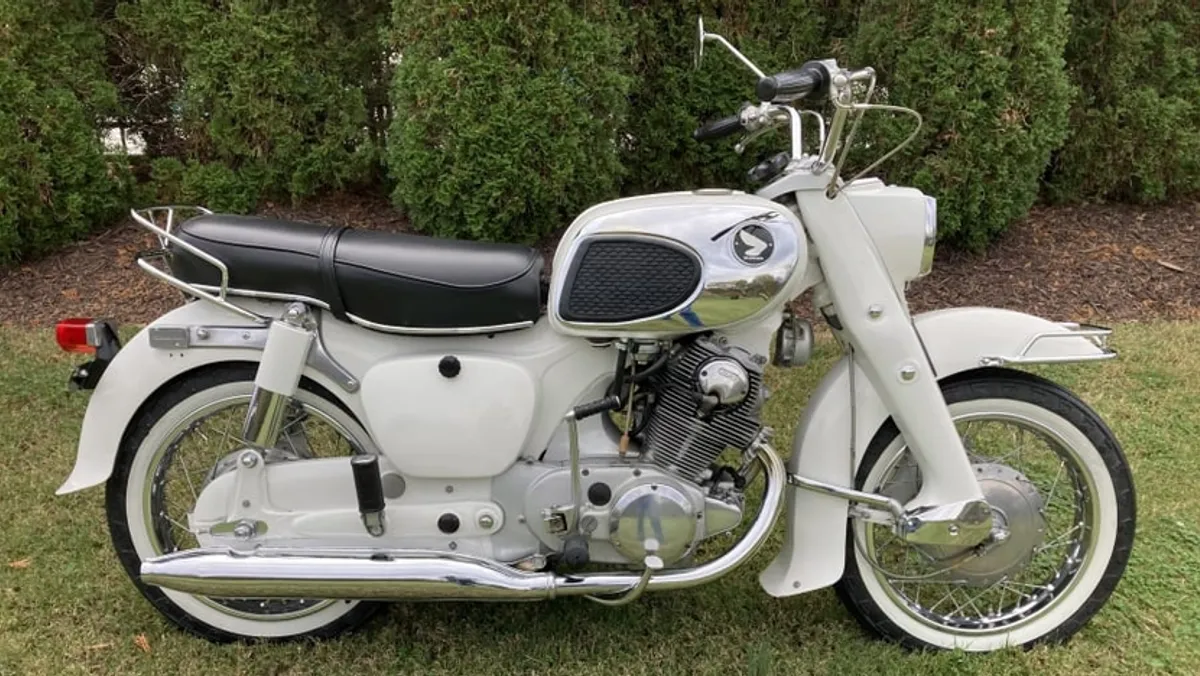
Few motorcycles encapsulate the spirit of the 1960s quite like the 1965 Honda Dream 305. This motorcycle is not merely a machine; it represents a pivotal moment in motorcycling history, a juncture where innovation, design, and cultural rebellion coalesced into something truly extraordinary. To encounter the Dream 305 is to glimpse a time when riding was not just about transportation, but an exalted experience—a harmonious balance of power, style, and engineering finesse that commands both respect and intrigue.
Born from Honda’s ambition to transcend the limitations of smaller displacement bikes, the Dream 305 was a bold declaration that the manufacturer could rival European and American motorcycling giants. It emerged with a distinctive aesthetic, combining sleek lines and practical engineering that promised a new perspective on what a mid-sized motorcycle could embody. The Dream 305 was not designed merely to compete; it was conceived to inspire a re-evaluation of motorcycling paradigms.
At its core, the 1965 Dream 305 boasts a robust 305 cc, parallel-twin, four-stroke engine that defied typical expectations for scooters and small motorcycles of its era. While its displacement might suggest modest performance, the Dream 305 reveals itself as a nimble yet commanding presence on the road, an elegant machine tailored for both the city commuter and the open road explorer. Reliability is ingrained in its DNA, with an engine capable of steady, smooth power delivery that magnifies the rider’s sense of connection to the machine.
The Dream 305’s engineering sophistication extends beyond the engine. Featuring a four-speed transmission, it offers fluid gear changes that enhance riding comfort and control. This attention to mechanical synergy results in a bike that feels responsive without being overbearing—allowing riders to savor both spirited acceleration and serene cruising. It is a motorcycle that whispers of freedom, all the while grounded in the assurance of precision craftsmanship.
Beyond its mechanical virtues, the Dream 305’s design language is equally compelling. With its teardrop fuel tank, twin exhaust pipes, and subtle chrome accents, it pays homage to the elegance of classic motorcycles without descending into ostentation. The upright seating position is ergonomic and inviting, encouraging longer rides and deeper exploration. Its frame, painted in the careful hues typical of mid-century aesthetic minimalism, complements the motorcycle’s overall posture—a testament to Honda’s mastery of form meeting function.
From a historical vantage point, the Dream 305 is emblematic of Honda’s strategy to infiltrate the Western motorcycle market during the 1960s. Its strategic displacement, allure, and pricing positioned it as an accessible entry point for a generation yearning for sophistication and dependability without sacrificing excitement. This motorcycle was not just a purchase; it was an initiation into a new way of experiencing motorcycling culture. Through its accessible power range and user-friendly handling, it bridged the gap between novice riders and weathered road veterans.
Exploring the riding experience of the Dream 305, one is immediately struck by its distinctive balance of poise and enthusiasm. It does not roar like the heavyweights, nor does it dart like a racing prototype; instead, it offers a nuanced riding experience, accentuated by its unmistakable hum and rhythmic pulse. The Dream 305 invites the rider into a subtle dialogue, where every twist of the throttle and every lean into a corner become moments of mindful engagement. It is in this dialogue that the motorcycle’s true character emerges—distinguished, approachable, and quietly commanding.
In the realm of collectibility and preservation, the Dream 305 stands as a beacon for enthusiasts who appreciate motorcycles that have aged with grace and dignity. Its parts remain serviceable, its design timeless, and its riding charm remarkably intact. Owning a 1965 Dream 305 is akin to stewarding a legacy—a tangible expression of an era when motorcycles were evolving from functional machines into icons of lifestyle and identity. Restorers and collectors alike cherish these bikes because they represent more than metal and mechanics; they represent an enduring narrative of innovation and passion.
Equipped with a VIN that traces back to its manufacturing lineage, each Dream 305 carries with it a unique story of craftsmanship and journey. These identifying marks are more than regulatory necessities; they are the threads that connect the past to the present, whispering tales of riders who embraced the Dream and shaped their destinies upon it.
What truly sets the 1965 Honda Dream 305 apart is not just its technical specifications or its place in history. It is the promise it holds—a promise of transformation in the rider’s perception. It challenges the assumption that bigger is inherently better and suggests that finesse, balance, and character hold their own intrinsic value. This motorcycle intrigues because it embodies a philosophy that still resonates: that excellence in engineering lies not solely in raw power, but in the symphony of design, function, and rider connection.
In retrospect, the 1965 Honda Dream 305 remains an icon that beckons motorcycle aficionados to rethink what defines true motorcycling legacy. It is a stirring reminder that sometimes, in the quest for greatness, subtlety and precision chart a path more compelling than sheer force. For those willing to look beyond the surface, the Dream 305 offers more than nostalgia—it offers renewed appreciation for the art and soul of motorcycling.
In the end, to ride or behold the 1965 Honda Dream 305 is to embark on an evocative journey through time—one where every mile is a piece of history and every glance is a portal to passion. It stands not just as a motorcycle, but as a timeless classic that continues to whisper its allure across generations.