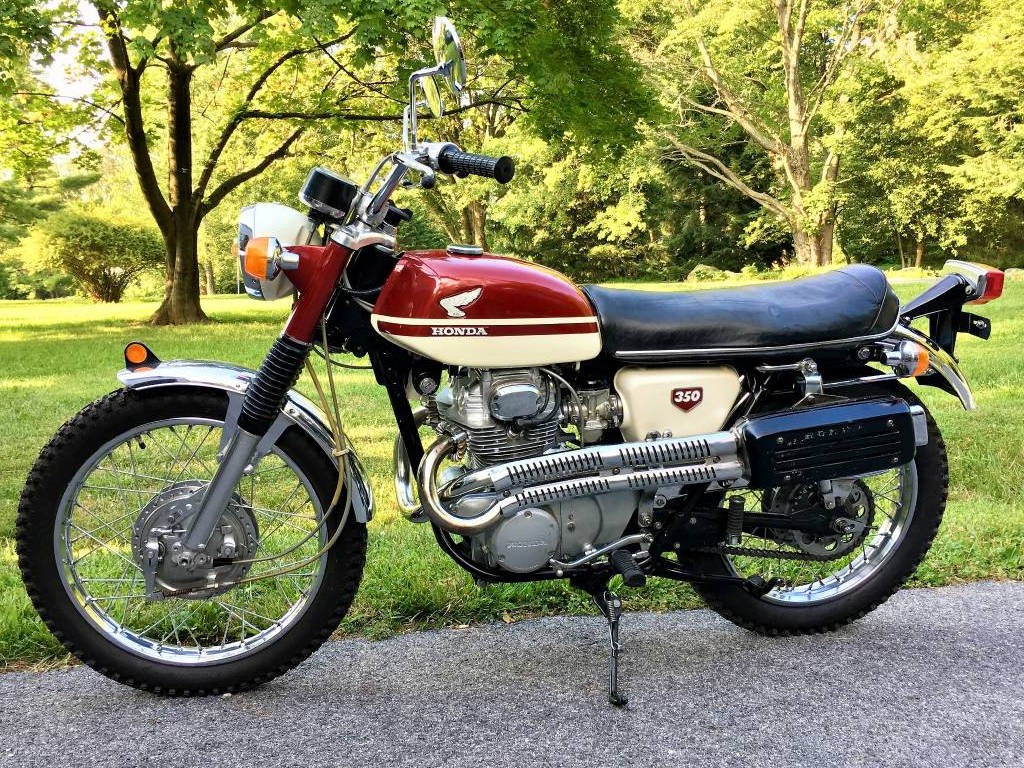
In the vast cosmos of classic motorcycles, few stars burn as brightly and consistently as the 1969–1973 Honda CB350 and its scrambler sibling, the CL350. These machines are not merely relics of a bygone era; they are living, breathing embodiments of an age when motorcycling was as much about spirit as it was about speed. Like a finely tuned time capsule, the CB350 and CL350 offer riders an intimate dance with history, wrapped in reliability and charm that continues to captivate enthusiasts decades after their final production.
To understand why riders still hold the CB350 and CL350 in such reverence, one must first appreciate the alchemy of engineering and design that Honda infused into these motorcycles. When they emerged onto the scene in the late 1960s, these models represented the epitome of balance—a harmonic fusion of performance, accessibility, and style that sat comfortably between the raw edge of sportbikes and the grinding reliability of commuter machines. The CB350, often hailed as a paragon of the standard motorcycle, possessed a spirit akin to a trusted companion: always ready, infinitely capable, and a joy to handle.
The heart of these bikes was their 325cc parallel twin, a marvel of simplicity and efficiency that generated a potent yet manageable power output. Unlike their larger, more intimidating counterparts, the CB350 and CL350 were approachable for novice riders, yet still spirited enough to satisfy seasoned veterans looking for a nimble and responsive ride. Their air-cooled, OHV engines delivered a smooth torque curve, which made acceleration feel like an elegant crescendo rather than a bludgeoning stomp, propelling these motorcycles as adept urban commuters and weekend adventurers alike.
Design played a pivotal role in searing these Hondas into the collective consciousness of riders everywhere. The CB350’s clean lines and minimalistic approach are a masterclass in understated cool. There’s an almost Zen-like simplicity to the symmetrical twin silences, gently curved fuel tank, and the iconic round headlamp. This design was not just about aesthetics but also about functional beauty—a timeless blueprint that ensured a low center of gravity and optimal ergonomics. Every detail, from the swept-back handlebars to the dual seat, was crafted with rider comfort in mind, marrying form and function with unwavering dedication.
The CL350, or “scrambler” variant, introduced a different kind of charisma—a rougher, more adventurous allure that teased the edges of off-road capability without venturing too far into the wilderness. Elevated exhaust pipes, knobby-style tires, and modest suspension tweaks allowed this model to transcend paved roads with spirited agility. It embodied the restless soul of the countercultural era: the promise of escapes to dirt trails and backroads, offering riders a taste of freedom just beyond the city limits. This dual-purpose versatility turned the CL350 into a motorcycle that felt at home in both gritty urban jungles and rustic landscapes.
But perhaps the most magnetic quality of the CB350 and CL350 lies in their indomitable reliability—a factor often romanticized yet deeply practical. These motorcycles are mechanical symphonies of robustness. Riders consistently praise their ability to withstand the relentless demands of daily use with remarkably low maintenance requirements. Their straightforward mechanical components invite a hands-on relationship; rather than alienating riders with complexity, the CB and CL encouraged them to become mechanics of their own destiny. This accessibility fostered a passionate community that treasured the machines not simply as motorcycles, but as projects and lifelong companions.
Complementing this was Honda’s groundbreaking introduction of the electric starter on the CB350, a feature that was revolutionary at the time for a twin-cylinder bike. This innovation not only broadened the bike’s appeal, adding convenience and instant gratification, but also mirrored the company’s philosophy of blending cutting-edge technology with everyday usability. For riders, this was akin to having a safety net woven into the very fabric of their riding experience—an assurance of hassle-free starts that softened the threshold for entry into motorcycling.
Over the years, these motorcycles have transcended their functional origins to assume roles as cultural icons. The CB350 and CL350 became canvases for customization, playgrounds for creativity where riders expressed individuality through meticulous modifications. Whether transformed into cafe racers, bobbers, or preserved as pristinely original specimens, each bike carries a soul enriched by its owner’s touch. This personal connection endures because the base architecture of the machines is so conducive to modification without sacrificing reliability or ride quality.
Furthermore, the enduring appeal is also fueled by the tangible nostalgia and romance that these motorcycles evoke. The CB350 and CL350 represent an era when riding was a tactile delight—where every vibration, every shift, every twist of the throttle was an unfiltered conversation between human and machine. Modern motorcycles, with their sophisticated electronics and mass-produced uniformity, often lack this intimate dialogue. For many, piloting a CB350 or CL350 is akin to reading a classic novel by the fireside; an experience rich with texture, character, and a slow-burn affection that grows with time.
It is also vital to highlight the vibrant community that surrounds these bikes, a network of enthusiasts, restorers, and historians who keep the flame alive through gatherings, forums, and enthusiast workshops. This camaraderie tailors a shared kinship among riders that transcends mere mechanics. The CB350 and CL350 are, in a way, passports to a tribe whose collective memory and passion ensure that these motorcycles are never relegated to mere artifacts but remain vibrant participants in contemporary motorcycling culture.
In the final analysis, the 1969–1973 Honda CB350 and CL350 stand as monuments to a philosophy that transcends time: that motorcycles can be more than mere transportation. They are expressions of freedom, reliability, and style wrapped in mechanical artistry. They beckon to riders not with the roar of a beast, but with the promise of a faithful steed—consistent, comfortable, and endlessly inviting.
For those who seek the charm of simplicity without surrendering excitement, the CB350 and CL350 continue to be destinations rather than detours in the broader landscape of motorcycling. They remind us that sometimes, the purest thrills come from machines that speak plainly yet profoundly, whispering stories of adventures past and the exhilarating promise of the road ahead.