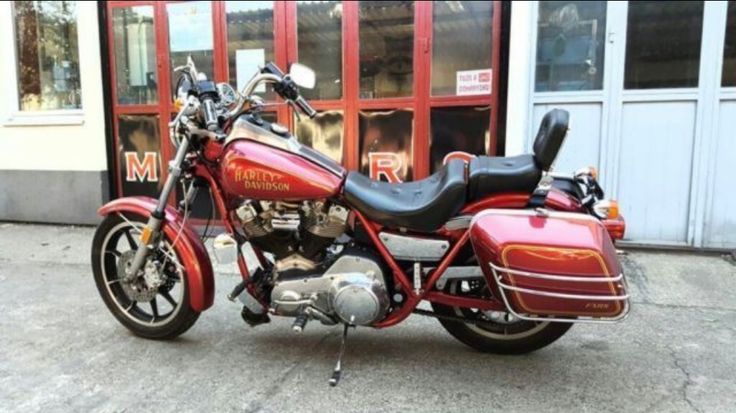
In the pantheon of motorcycle evolution, few frames have wielded as profound an influence as the 1982 Harley Davidson FXR. This frame, often regarded as the bedrock of Harley’s renaissance, stands not merely as a structural component but as a metaphorical backbone that transformed the brand’s legacy. The FXR chassis was the keystone in a bridge between tradition and innovation, marrying classic Harley aesthetics with engineering ingenuity. It heralded a new era—a symphony of precision, performance, and poise that forever altered the course of cruiser culture.
To comprehend the gravitas of the 1982 FXR, one must first appreciate the engineering landscape of its time. Harley Davidson, steeped in decades of iconic motorcycle craftsmanship, was confronted with an urgent need to reinvent. The 1970s had been a tumultuous decade for American motorcycle makers, beset by the encroachment of nimble and technologically advanced Japanese motorcycles. Amidst this backdrop, the FXR emerged as a masterstroke—an elegant response to a shifting paradigm.
The FXR’s frame was crafted with a finesse that distinguished it from its contemporaries. Unlike the earlier rigid frames and the often-criticized Softail design, the FXR employed a sophisticated perimeter-style frame. This architecture eschewed the conventional single-tube backbone, opting instead for a dual-tube cradle that circumscribed the engine, synthesizing rigidity and flexibility. Such a design was not merely technical window-dressing; it was the very essence of stability, endowing the rider with an unparalleled sense of confidence and control. The FXR was a frame that didn’t just support the motorcycle—it articulated it.
This frame architecture forged a profound synergy with the engine, most notably the Evolution engine introduced in the early 1980s. The Evolution powerplant, known for its enhanced reliability and smoother performance, found an ideal companion in the FXR frame. The chassis’ inherent stiffness minimized flex, which, in turn, amplified the engine’s refined power output. The result was a motorcycle that felt alive—its heart and skeleton working in harmonious concert. Riders experienced a feedback loop of responsiveness, where the slightest input translated into precise and predictable behavior on the road.
Beyond mechanical prowess, the FXR was a canvas upon which Harley’s design ethos blossomed. The frame’s geometry and proportions granted the motorcycle an aggressive yet balanced stance—the visual embodiment of controlled power. It was sleek but muscular, an aesthetic dichotomy that appealed to a new generation of riders seeking performance without sacrificing classic Harley swagger. The frame fostered an ergonomic layout that allowed for a comfortable seat height and lean angles catering to both spirited cornering and long-distance cruising.
The “rideability” factor of the FXR cannot be overstated. Prior Harley models often carried the reputation of being cumbersome or unwieldy, especially when cornering or navigating tight spaces. This perception was flux, turned on its head by the FXR’s technological advancements. Its frame geometry harmonized with suspension improvements—such as offset dual shocks—to deliver nimbleness that belied its cruiser category. The FXR was a paradox: robust and muscular, yet agile and responsive. It was akin to a seasoned ballerina who could leap and pirouette with breathtaking grace while carrying the poise of raw strength.
The FXR’s impact radiated far beyond its individual model years. It set a blueprint for Harley-Davidson’s future frame designs. Though subsequent generations of motorcycles have gravitated toward the Softail or Dyna frames, aficionados and purists often revere the FXR as the quintessential frame—a benchmark for handling excellence and structural elegance. It occupies the rarefied space of both collector’s treasure and daily rider’s trusted companion, epitomizing versatility and timeless appeal.
In a similar vein, the 1982 Harley Davidson FXR became a harbinger of rebirth within the company itself. By delivering a ride quality and structural integrity previously unseen in the Harley lineup, it helped the brand regain its foothold amidst international competition. The FXR was neither a mere technical footnote nor a transient experiment; it was the cornerstone of Harley’s revival narrative. Motorcyclists across the globe recognized it as an embodiment of enduring American craftsmanship, imbued with a spirit that was both rebellious and refined.
Moreover, the FXR’s unique appeal extends to its customizable nature. The frame’s robust yet adaptable design invited an array of aftermarket modifications—transforming the bike into a canvas for self-expression. From cafe racers molded with precision to choppers that displayed wild creativity, the FXR could accommodate them all without compromising its innate handling virtues. This chameleon-like quality only deepened the motorcycle’s allure, connecting riders not just to a machine but to a culture of individuality.
Its legacy is preserved in the hearts of those who seek motorcycles that transcend mere transportation. The FXR is a tangible piece of history that conveys a narrative of innovation born from necessity, a ballet of engineering mastery married with artistic expression. It is a frame that shaped not only the motorcycle industry but also the identities and experiences of countless riders who embraced its distinctive character.
In the relentless march of time, where technologies evolve and fashions fade, the 1982 Harley Davidson FXR remains an enduring sentinel of excellence. It is the frame that changed everything—not by subtlety, but by declaring a new standard of what a Harley could be. A metaphorical spine that transformed a venerable company, a culture, and a generation of riders. To ride an FXR is to inhabit a legacy—a legacy sculpted in steel, spirit, and the unwavering pursuit of perfection.