In the pantheon of motorcycle legends, certain machines emerge not merely as modes of transport but as visionary statements—an embodiment of innovation and artistry fused into rolling metal and rubber. The 1982 Yamaha Vision 550 is undeniably one such masterpiece. More than a motorcycle, it was a herald of the future, a shimmering beacon amid the dystopian fog of the early 1980s when motorcycles were largely utilitarian or aggressively raw. The Vision 550 stands apart, a predatory shark cloaked in sleek fairings, where engineering met avant-garde design in a way that continues to captivate enthusiasts and connoisseurs alike.
At first glance, the Yamaha Vision 550 appears less a motorcycle and more a mechanized sculpture. Its aerodynamic fairing curves like liquid metal, swallowing the rider in a protective embrace that resembles a bullet slicing through the turbulent air. The bodywork is a seamless cocoon, minimizing drag and whispering promises of speed and efficiency. This was not a simple aesthetic choice: it was a bold declaration that motorcycles could compete with the sleek sophistication of automobiles while maintaining the raw intimacy unique to two wheels.
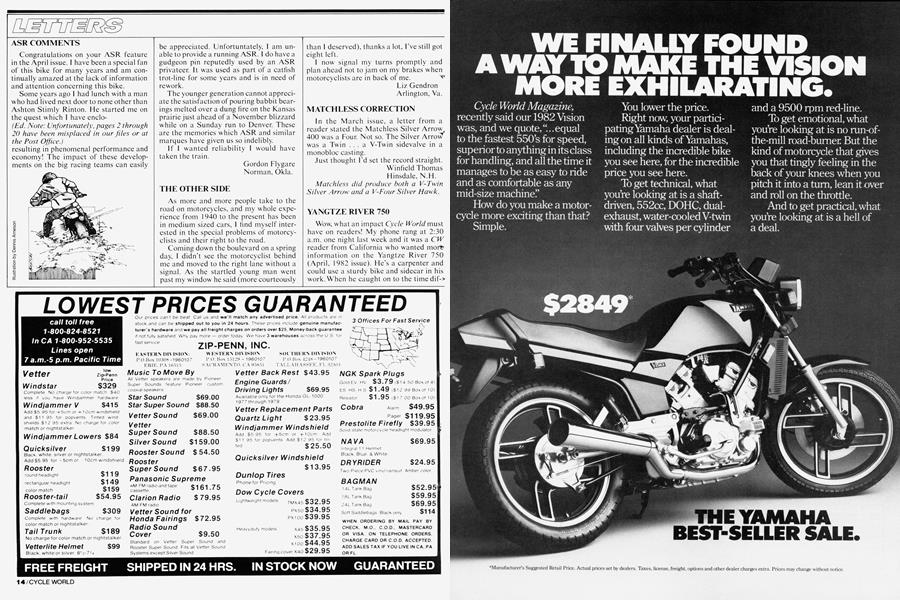
The innovative spirit of the Vision 550 is most evident in its distinct liquid-cooled V4 engine. While air-cooled engines dominated the landscape, Yamaha’s commitment to liquid cooling signaled a forward-looking approach. This V4 powerhouse was compact yet potent, delivering smooth power curves that balanced thrilling acceleration with dignified touring capability. Every component was engineered with precision, ensuring that the machine was not just fast but remarkably refined—smooth as silk yet fierce as a wildcat ready to spring.
Moreover, the advanced chassis contributed significantly to the Vision’s reputation as a motorcycle ahead of its time. The frame and suspension systems were remarkably well-balanced, offering precision handling that allowed the rider to carve corners with confidence and grace. This resulted in a ride quality that combined the stability of larger touring motorcycles with the nimbleness of a sportbike. It was a paradox resolved: the Vision 550 was a hybrid in the truest sense, bridging categories and expectations.
One of the most arresting features was the fully enclosed bodywork, a rarity for motorcycles in that era. This design choice was often met with skepticism, as purists lamented the loss of the exposed engine and the visceral connection between rider and machine. Yet, Yamaha’s Vision dared to challenge conventions, wrapping itself in a futurist shell that resembled the sleek hull of an experimental fighter jet. This not only enhanced aerodynamics but protected occupants from wind buffeting, rain, and road debris, inviting a new level of comfort and practicality into the riding experience.
From the cockpit perspective, the Vision 550 further dispelled the norms. The instrumentation cluster was encased neatly within the fairing, presenting a streamlined array of gauges and controls designed for intuitive usability. This attention to ergonomic detail illustrated Yamaha’s commitment to the rider’s experience, emphasizing that performance was not solely measured in horsepower but in the harmony between rider and machine.
The Vision 550’s silhouette remains etched in the collective consciousness as a motorcycle that dared to envision an alternate trajectory for two-wheeled transport. While many contemporaries embraced muscle and brute power, the Vision married sophistication with strength. It suggested a future where motorcycles were not only adrenaline machines but refined touring companions, sculpted for both performance and style.
Reflecting on its historical context, the early 1980s were transitional years in motorcycling—marked by technological experimentation and shifting consumer demands. The Vision did not merely respond to these shifts; it anticipated and shaped them. The industry’s gradual pivot towards liquid-cooled engines, aerodynamic fairings, and rider-centric design philosophies found a prototypical expression in this model. Essentially, the 1982 Yamaha Vision 550 was less a product of its era and more a glimpse into the coming age.
It also carried a metaphorical significance: like a silent oracle, it foreshadowed the age of integrated technology and aerodynamic innovation that would define motorcycles decades later. Its presence suggested that the future was not about raw mechanics alone but also about harmonizing technology and aesthetics to enhance the human experience. In a way, the Vision was a tactile poem—its streamlined curves writing verses of speed, innovation, and elegance.
Despite its brilliance, the Vision 550 was not without challenges. The radical design and engineering complexity limited its production numbers, making it something of a cult classic rather than a commercial juggernaut. Yet this exclusivity contributes to its mystique, cementing its place as an iconic specimen within the annals of motorcycle history. Collectors and aficionados prize the Vision as a tangible artifact of futurism, an exquisite fusion of form and function that transcends mere transportation.
In conclusion, the 1982 Yamaha Vision 550 was, in many respects, a motorcycle ahead of its time. It blended audacious design with technological foresight, creating a machine that challenged conventions and envisioned possibilities. Its legacy is not only in its specifications or performance but in its unyielding quest to redefine what a motorcycle could be. The Vision 550 invites us to reconsider the boundaries of innovation, reminding us that sometimes the most remarkable inventions are those that dare to dream beyond the horizon and race toward the future on wings of steel.