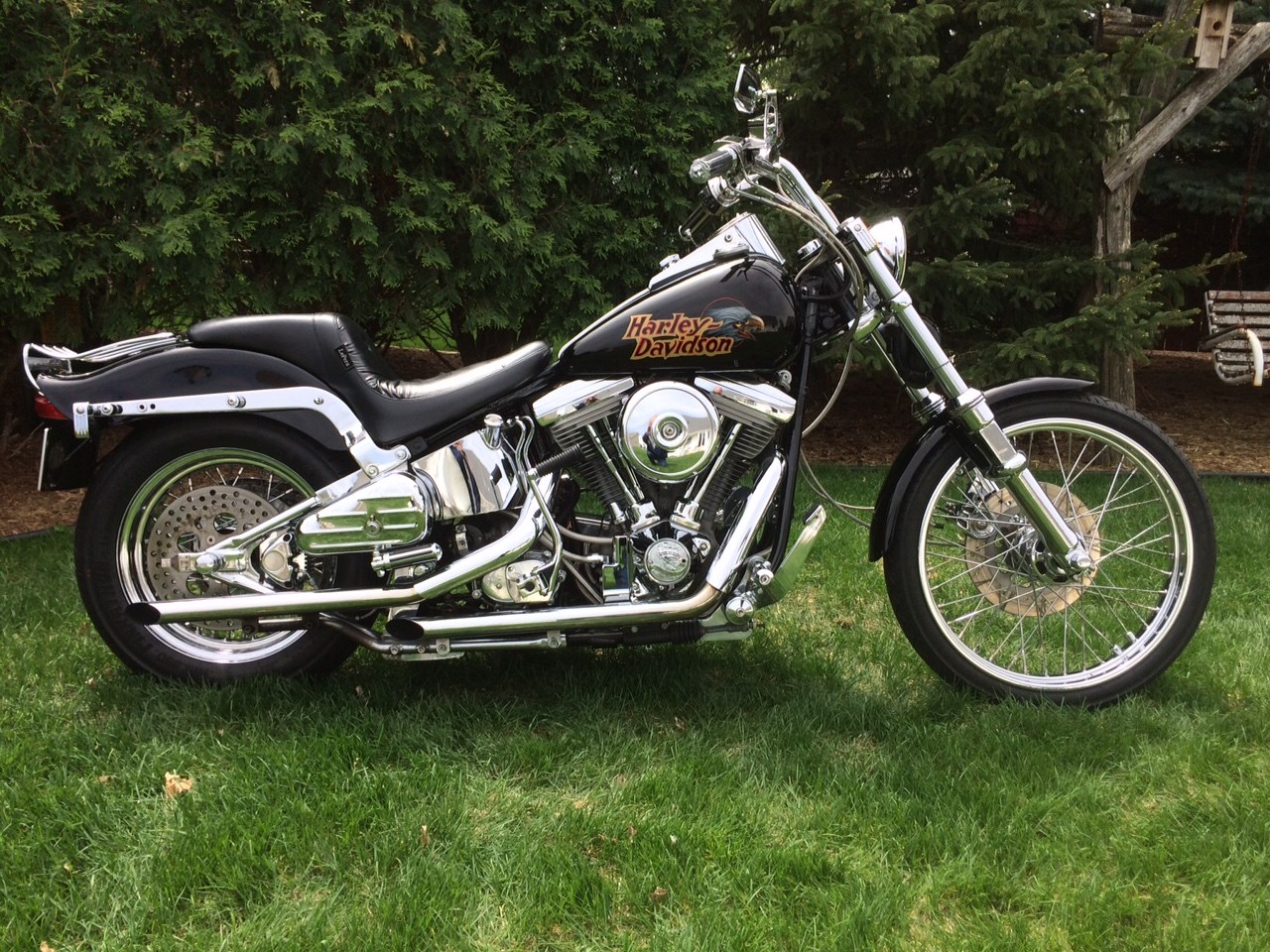
The 1984 Harley-Davidson Softail FXST is more than just a motorcycle; it represents a pivotal moment in the evolution of American motorcycling. Observers and riders alike have marveled at this machine, often citing its blend of traditional aesthetics and revolutionary engineering as the root of its enduring allure. But beyond the immediate visual appeal and mechanical sophistication, the fascination it commands speaks to deeper undercurrents—those tied to cultural identity, craftsmanship, and the unyielding pursuit of redefining the ride.
At first glance, the 1984 FXST Softail captivates with its nostalgia-laden silhouette. The bike harkens back to the classic rigid-frame Harleys, recalling an era where simplicity was cherished and raw power was worn like a badge of honor. Yet, this model ingeniously conceals a significant technological advancement beneath its timeless facade: the Softail frame. This design masterstroke preserved the clean lines reminiscent of the old hardtail models, while integrating hidden rear suspension to soften the ride. The result was a motorcycle that looked vintage but felt modern, blending heritage with innovation in a harmonious balance rarely seen before.
The Softail’s concealed rear suspension not only transformed rider comfort but also altered the very ethos of Harley-Davidson motorcycles. Before its introduction, Harleys favored rigidity and a direct connection to the road—experiences that enthusiasts often described as both exhilarating and punishing. The Softail’s design quieted this harshness without compromising the distinct Harley rumble and road presence. In effect, it addressed a unvoiced yearning among the motorcycling community: the desire for a bike that could traverse the highways comfortably without diluting character.
What further intensifies the reverence for the 1984 FXST Softail is the emblematic role it plays within the broader narrative of Harley-Davidson’s resurgence. The late 1970s and early 1980s were challenging times for the brand, with mounting competition from Japanese manufacturers threatening to erode its market share. The launch of the FXST Softail was a calculated gamble—a resolute declaration that Harley-Davidson could innovate while honoring tradition. It’s a testament to how embracing one’s roots can be a source of revolutionary progress rather than stagnation.
Diving deeper, one finds that the appeal of this Softail transcends mere functionality and corporate symbolism. It channels an intrinsic American spirit—one of rebellion tempered by respect for craftsmanship. The motorcycle is an archetype of freedom merged with meticulous engineering. The distinct V-twin engine, for instance, with its unmistakable throb and visceral performance, evokes a sense of belonging to a brotherhood of riders who value authenticity. Each component, from the hand-finished paint to the robust chrome detailing, underscores an artisanal approach that elevates the motorcycle from machine to masterpiece.
The 1984 FXST was also groundbreaking in how it addressed the rider’s experience holistically. Ergonomic design considerations ensured that controls were intuitively placed, while the bike’s geometry encouraged a natural riding posture—striking a rare and commendable equilibrium between sportiness and comfort. The Softail thus invited a broader spectrum of riders into the Harley fold, appealing not only to seasoned patrons but to those seeking a gateway to the iconic brand’s culture.
Moreover, this model catalyzed a profound emotional connection between rider and machine. The silent sophistication of its suspension, the tactile feedback transmitted through the handlebars, and the echo of the engine in open-air conditions combined to create an immersive sensory narrative. This phenomenon explains the persistent fascination with the Softail FXST beyond its specs or aesthetics. It is, in essence, a conduit for personal expression and adventure, its very presence a magnet for dreamers, rebels, and connoisseurs of the open road.
From a technical standpoint, the 1984 FXST Softail also demonstrated Harley-Davidson’s prowess in resolving engineering challenges through elegance rather than complexity. The “Softail” moniker refers to its cleverly hidden rear suspension, employing twin shocks positioned under the transmission, providing what appears to be a rigid frame while offering the cushioning of conventional suspension. This feat was not merely functional but symbolic—the convergence of appearance and reality, ideal and practice.
Given its key attributes, the FXST quickly secured its status among collectors, customizers, and riders who appreciated its blend of nostalgia and novelty. The model’s adaptability made it a perfect canvas for customization, allowing owners to imprint their identity onto the bike without compromising its inherent grace. Such versatility further underscores why the 1984 Softail remains a point of reference when discussing Harley’s storied legacy and the evolution of American motorcycling culture.
In retrospect, the 1984 Harley-Davidson Softail FXST was a transformative force, a stratagem that shaped the brand’s direction for decades. Its blend of aesthetic fidelity and mechanical advancement resolved an age-old tension in motorcycling—between tradition and progress. This pivotal bike invited riders to experience the best of both worlds: the visceral thrill of a raw Harley-Davidson and the comfort and reliability of modern design.
Ultimately, the legacy of the 1984 FXST Softail is emblematic of a broader human narrative—the quest for freedom with roots planted firmly in identity and craftsmanship. It’s a celebration of heritage reimagined, of innovation that respects the past rather than erases it. This harmonious paradox is why the motorcycle remains endlessly fascinating, a timeless icon whose story resonates far beyond the asphalt.