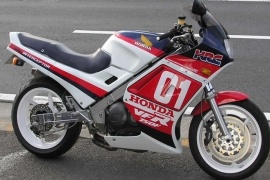
Can a motorcycle truly redefine the essence of sportbiking in an era dominated by rapid technological leaps and fierce competition? The 1986 Honda VFR750F dares to challenge conventions and, in doing so, reshapes the blueprint of what a sportbike ought to embody. Far from being just another contender in the crowded arena of 1980s motorcycles, the VFR750F emerged as an emblem of innovation, blending robust engineering with nuanced design—a machine that wasn’t merely built to race, but to elevate the riding experience itself.
When the mid-1980s arrived, sportbikes had already caught the imagination of enthusiasts worldwide. The relentless pursuit of speed, agility, and aesthetic appeal fueled intense rivalries among manufacturers. Into this fray, Honda unleashed the 1986 VFR750F, a motorcycle that nudged the boundaries and beckoned riders to reconsider the archetype of performance motorcycling. It wasn’t just about raw power anymore. Instead, it championed a sophisticated equilibrium of strength, stability, and rider engagement.
At the heart of this evolution lies the VFR750F’s distinctive powerplant—a 748cc V4 engine that marked a departure from the customary inline-four configurations dominating the sportbike segment. This V4 layout was no mere novelty; it was a deliberate exercise in engineering finesse. By adopting a 90-degree vee angle, Honda achieved an almost perfect primary balance, significantly damping the vibration often associated with high-revving fours. The result was an engine that delivered a free-revving, smooth powerband with an intoxicating character and aural symphony, enticing both casual riders and seasoned thrill-seekers alike.
Yet, power alone does not a revolution make. The VFR750F showcased an advanced aluminum perimeter frame, a structural marvel that bestowed newfound rigidity and weight reduction. This innovation facilitated more precise handling and enhanced feedback—elements critical to bridging the dichotomy between street usability and race-inspired responsiveness. By relocating mass strategically and optimizing chassis geometry, Honda crafted a motorcycle that felt nimble through corners yet planted during high-speed straights.
But what truly set the VFR750F apart was its holistic approach to rider experience. Unlike many contemporaries that focused on stripped-down performance, Honda infused the machine with a level of refinement that spoke to everyday usability without sacrificing sportiness. Features such as a comfortable seating position, effective aerodynamic fairings, and dependable braking systems underscored a philosophy that performance should harmonize with practicality. This was a sportbike that invited longer journeys, spirited backroad carving, and even casual commuting—all in an elegant, cohesive package.
Consider the suspension system—a sophisticated dual-shock rear setup complemented by an adjustable front fork. Together, they absorbed road irregularities with aplomb while preserving the sharper feedback essential for aggressive riding styles. This duality was pivotal in broadening the VFR750F’s appeal and underscored Honda’s commitment to engineering versatility. Riders no longer faced the relentless trade-off between comfort and control; the VFR750F deftly balanced both demands.
On the stylistic front, the VFR750F embraced aerodynamic efficiency married to functional aesthetics. Its sculpted full fairing was not merely a cosmetic flourish but a calculated intervention to reduce drag and shield the rider from wind buffeting. Such attention to detail manifested enhanced top-end performance and rider endurance, subtle yet perceptible benefits on long hauls or high-speed endeavors.
Moreover, the 1986 VFR750F planted the seeds for future innovations that would ripple through the sportbike landscape for decades. Its utilization of technologies like linked braking systems, thereby improving safety and control, anticipated features that would become industry standards. It also influenced the adoption of V4 powerplants in sport motorcycles, a design choice revisited and revered in subsequent Honda models and by other manufacturers seeking that elusive combination of power smoothness and compact packaging.
However, embracing such innovation was not without its challenges. Some purists questioned whether the VFR750F’s broad-spectrum approach diluted the rawness expected of a true sport machine. Could a motorcycle excel as both a reliable daily mount and a track-capable sprinter? The VFR750F answered with resounding affirmation, demonstrating that versatility and specialization need not be mutually exclusive.
In retrospect, the 1986 Honda VFR750F stands as a testament to bold vision meeting technical prowess. It carved a unique niche, balancing the aggressiveness demanded by sportbike enthusiasts with the demands of everyday usability. This synthesis unlocked a new paradigm, influencing motorcycle design philosophy and rider expectations alike. The VFR750F was not merely a motorcycle; it was a narrative of evolution, a confluence of artistry and engineering ambition.
So, does the story of the 1986 Honda VFR750F beckon us to reconsider what truly defines a sportbike? It certainly does. By challenging the notion that uncompromising speed and comfort are divergent paths, the VFR750F forged a hybrid identity that continues to resonate. Whether navigating twisty mountain roads or cruising city streets, it holds its own as a dynamic and enduring icon in the pantheon of two-wheeled machines. The playful question remains open-ended—how many motorcycles can you name that invite you to savor every mile, whether pushing limits or simply enjoying the journey? The VFR750F certainly ranks high among them.
In sum, the 1986 Honda VFR750F was more than a machine; it was a revolution on wheels, an articulate statement that sportbikes could evolve beyond mere machines of speed into orchestrators of experience. Its legacy is not confined to specs and performance charts but lives through every rider who appreciates the subtle dance of power, precision, and poise it so masterfully choreographed.