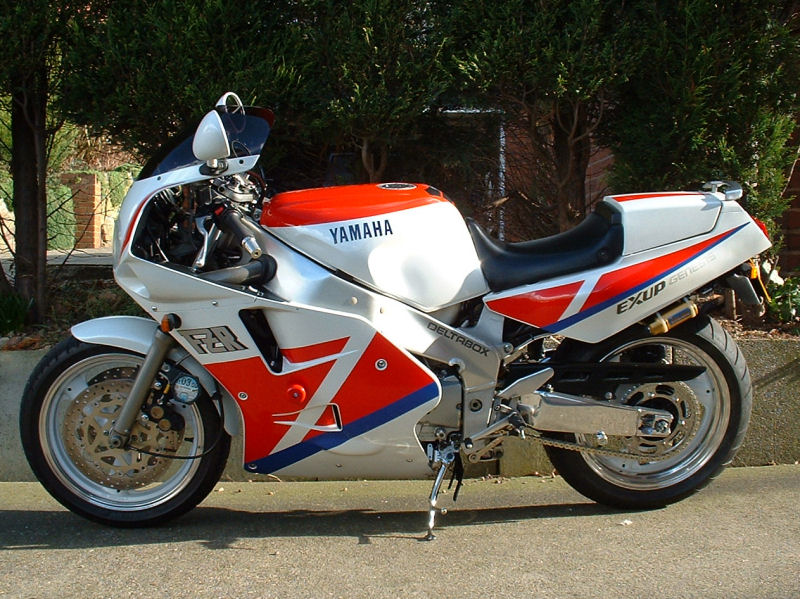
The 1990 Yamaha FZR1000—still a rocket today? At first glance, the question might seem rhetorical, especially to vintage motorcycle enthusiasts and seasoned road warriors who revere this model as a paragon of early 90s sportbike engineering. But the true test lies beyond nostalgic reverence. Can this quarter-century-old machine still ignite the senses and command the asphalt with the ferocity and finesse it once did? Or has time relegated the FZR1000 to the realm of glowing memories and leisurely rides? Let’s delve into the anatomy, legacy, and enduring performance that make the 1990 Yamaha FZR1000 a compelling contender in the dialogue of timeless motorcycles.
To understand the impact of the FZR1000, it’s vital to step back to the dawn of the 1990s—a pivotal era in motorcycle innovation. Yamaha’s FZR series, with the 1000cc engine at the forefront, was conceived as a high-performance sportbike designed to blur the line between road and racetrack. The 1990 iteration was no mere evolution; it was a culmination of Yamaha’s racing pedigree, embedded with technologies that were sophisticated for its time. Boasting a liquid-cooled, 1,001cc inline four-cylinder engine, the FZR1000 pushed boundaries with an impressive power output hovering around 145 horsepower. This wasn’t just fast; it was a veritable speed demon in a sculpted chassis, ready to devour straights and carve corners with equal aplomb.
What distinguished the 1990 Yamaha FZR1000 from its peers was not just brute power, but the harmonious interplay of mechanical and aerodynamic design. The frame utilized an aluminum Deltabox configuration—revolutionary engineering aimed at optimizing rigidity without undue weight. This translated into razor-sharp handling characteristics that inspired confidence, even at the uppermost echelons of its speed spectrum. Aerodynamic fairings sculpted with futuristic precision curtailed wind resistance, allowing the bike to slice through air with minimal turbulence. Together, these features created a motorcycle that was not simply about achieving high velocity but mastering it with grace.
But how does this legendary machine fare in today’s rapidly advancing landscape of sportbikes? Modern motorcycles have seen quantum leaps in electronic aids such as traction control, ABS brakes, adjustable suspension, and ride-by-wire throttles. The FZR1000, a product of a pre-digital age, relies purely on mechanical aptitude and rider skill. Some might argue this makes the bike archaic; others see it as a raw, unfiltered connection between human and machine. For purists, this absence of electronic intervention is precisely the intoxicating challenge—demanding attentive throttle modulation, precise brake control, and nimble steering input to extract every ounce of performance.
The challenge posed by the FZR1000’s analog nature becomes even more apparent when juxtaposed with modern sportbikes that boast similar power but enhanced ergonomics and safety features. Its suspension system, though advanced for 1990, may feel comparatively rudimentary by contemporary standards. The conventional telescopic forks and twin-shock rear, while robust, do not offer the adaptive responsiveness seen in today’s electronically controlled units. Braking is handled via dual front discs and a single rear disc, competent but lacking the bite and modulation finesse afforded by modern caliper and rotor advancements. Consequently, one must embrace the inherent quirks, accepting a hands-on approach both in riding technique and maintenance.
Yet, the visceral experience of piloting a 1990 Yamaha FZR1000 remains unmatched in many respect. The symphony of its four-cylinder engine thrumming through steel pipes, the tactile feedback delivered through the handlebars, and the unencumbered sensory engagement create an analog purity rarely found in contemporary machines. It’s a motorcycle that doesn’t just transport—it engrosses, demanding awareness and rewarding it with thrilling acceleration and agile responsiveness. Enthusiasts often describe it as a mechanical concerto, where every component plays a calibrated role in delivering adrenaline-soaked performance.
Moreover, the FZR1000’s cultural imprint enriches its significance. It embodies a golden epoch when manufacturers pursued the exhilarating fusion of technology and rider capability without the crutches of electronic modulation. Legendary racers and road riders alike celebrated it as a machine capable of unparalleled speed coupled with agility. Today, it holds a cherished space in the pantheon of classic sportbikes, its silhouette instantly recognizable and its legacy revered among collectors, restorers, and experienced riders alike.
However, challenging the FZR1000’s place in the modern era cannot ignore practical considerations. The availability of spare parts, routine maintenance demands, and the necessity of mastering its distinctive riding characteristics introduce potential barriers. Its fuel injection system, while advanced at the time, may not match the precision or efficiency of contemporary units, potentially affecting throttle response and economy. Riding comfort, while sporty, is less forgiving over extended journeys compared to newer ergonomically refined motorcycles. These facets underscore that the FZR1000 demands a dedicated and knowledgeable rider—one who embraces both the idyll and the idiosyncrasies inherent to a vintage superbike.
So, does the 1990 Yamaha FZR1000 remain a rocket today? In many respects, yes. While it may not eclipse the latest motorcycles packed with cutting-edge electronics and refinements, it still embodies the unadulterated essence of speed and handling that defined its era. It challenges the rider’s skill rather than compensates for it—an invigorating prospect for those who revel in pure, unmediated riding. The FZR1000 is not just a machine; it’s a compelling narrative of engineering excellence, perseverance, and the joyous leap into the unknown that only a raw sportbike can offer.
In conclusion, the 1990 Yamaha FZR1000 stands as a testament to a time when mechanical ingenuity was king and rider prowess was the ultimate variable. To ride one today is to engage in a dynamic dialogue between past and present, challenge and mastery, nostalgia and exhilaration. While it may not boast the bells and whistles of modern sportbikes, it carries a spirit that transcends generations—a rocket not merely clinging to former glory, but blazing a distinctive trail on roads where legend and reality converge.