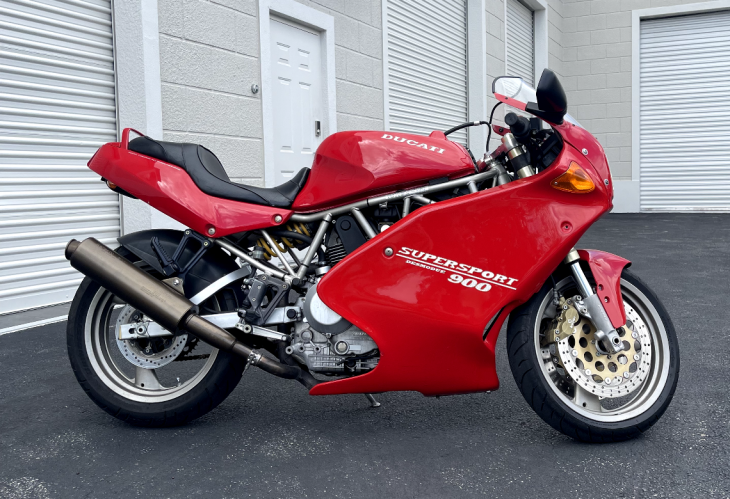
The 1995 Ducati 900 Supersport stands as an enduring emblem of Italian craftsmanship, one that has captivated motorcyclists and enthusiasts alike for decades. Its allure transcends mere function; this motorcycle embodies a unique symbiosis of aesthetic grace and mechanical prowess. While many acknowledge its striking appearance and impressive performance, the deeper fascination it commands often lies in its embodiment of Italian cultural and engineering philosophy—an intrinsic blend of passion, precision, and panache.
On first sight, the 1995 Ducati 900 Supersport arrests attention with its sculpted form and deliberate elegance. The design language is unmistakably Italian, featuring subtly voluptuous curves and an ergonomically refined silhouette that effortlessly communicates both agility and power. Unlike more ostentatious superbikes of the era, the 900 Supersport’s understated yet confident posture evokes the timeless appeal of a finely tailored suit—it doesn’t shout, it commands respect. The tubular steel trellis frame, painted in Ducati’s signature rosso corsa red, forms the motorcycle’s architectural backbone, offering an organic yet robust structural canvas upon which form and function harmoniously interplay.
Beneath the aesthetic allure lies a meticulously engineered 904cc air-cooled, two-valve, 90-degree V-twin engine, a configuration that marries simplicity with performance. This engine configuration is more than a technical choice—it underscores Ducati’s distinctive approach, marrying the visceral sensations of a carbureted V-twin with a thrusty, torquey character that rewards both riders new and seasoned. With approximately 80 horsepower delivered at a keen 8,000 rpm, the powerplant exhibits a blend of ferocity and controllability that makes the bike responsive in city traffic and exhilarating on twisty backroads alike.
It’s no coincidence that the 900 Supersport bridges the gap between raw speed and precision handling. Ducati’s engineers equipped the bike with Marzocchi suspension forks and a rear monoshock setup, calibrated to dance on the Italian tarmac with finesse. The trellis frame, beyond its visual distinction, contributes to an agile chassis that engenders confidence in the rider, ensuring that every lean and turn communicates direct feedback. This feedback loop between man and machine is fundamental to the bike’s appeal; it creates a tactile dialogue that is both intimate and exhilarating.
In the context of the mid-1990s, when high-performance motorcycles were becoming increasingly dominated by electronic aids and complex engineering, the 900 Supersport’s relative mechanical purity appeals as a sort of antidote to technology’s creep. It captures a moment in motorcycling history when rider skill and machine responsiveness were paramount. This purity resonates with enthusiasts who view motorcycling as not just a means of transport, but as a kinetic art form. The simplicity and honesty of the 900 SS’s mechanical components foster deeper engagement—each throttle twist, every shift of the gearbox, is an unfiltered connection to the road and the machine.
The cultural mystique surrounding the Ducati 900 Supersport is further reinforced through its storied lineage. Descended from a legacy of Ducati’s racing successes, the 900 SS doesn’t just reflect speed; it recalls an era of Italian motorcycling where design was an act of expression and engineering was poetry in motion. The bike’s enduring design cues—the round headlamp, the sculpted gas tank, the minimalist yet purposeful cockpit—evoke images of grand prix circuits and sun-dappled mountain roads, instilling a poetic nostalgia that transcends the decades.
Another facet of fascination is the mythology tied to the Ducati brand itself. Ducati is more than a manufacturer; it is a symbol of Italian national identity and ingenuity. Owning or even encountering a Ducati 900 Supersport stirs a certain reverence. It is, in essence, a rolling canvas that narrates stories of passion, endurance, and innovation. For many, the 1995 model epitomizes a sweet spot—a nexus between vintage charm and modern capability. This positioning is enhanced by the bike’s availability and relative affordability compared to contemporary superbikes, making it a coveted entry point into the world of authentic Italian sportbikes.
Technological considerations also enrich the bike’s timelessness. While it may lack the electronic sophistication of modern motorcycles, the 900 Supersport’s mechanical simplicity translates to ease of maintenance and longevity. Enthusiasts often note that the bike’s carbureted engine, while demanding precision in tuning, rewards the rider with a sensory experience unavailable in today’s fuel-injected era. The familiar growl of the L-twin, the tactile feedback through the mechanical linkage, and the analog simplicity of the instrumentation foster a connection nearly lost in modern digital interfaces.
When examining the allure of the 1995 Ducati 900 Supersport, it becomes apparent that this fascination is about more than just performance figures or design aesthetics. It’s about the intangible qualities it evokes—the romance of the open road, the celebration of human skill standing shoulder-to-shoulder with mechanical ingenuity, and the enduring legacy of Italian artistry in the realm of motorcycling. This motorcycle conjures images not just of speed, but of purposeful haste guided by elegance.
The 1995 Ducati 900 Supersport remains a symbol that appeals on multiple levels: as an exquisite piece of engineering, a work of art, and a living piece of Italian heritage. For those who have experienced it, the motorcycle is a gateway—a segue into the broader cultural and emotional tapestry that Ducati has woven over nearly a century. It invites reverence not just for what it can do on the road, but for what it represents in the collective imagination.
In conclusion, the 1995 Ducati 900 Supersport endures as a paragon of Italian style and speed, a machine that transcends its physical form to embody the essence of motorcycling passion. Beyond its technical specifications and design, it serves as a testament to the power of craftsmanship and the allure of timeless elegance. For those drawn to motorcycles steeped in history, character, and promise, the 900 SS offers an experience that is both exhilarating and deeply human—an unending dialogue between rider and machine in the grand tradition of Italian motorcycling.