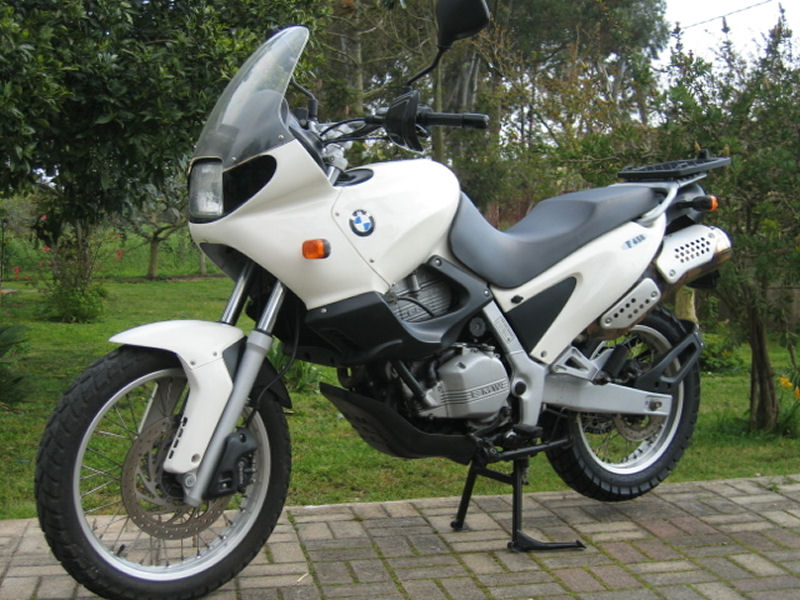
In the vast tapestry of motorcycling history, the 1997 BMW F650 emerges like a clandestine gem, a harbinger of a movement before it became a roaring phenomenon. Often overshadowed by the flashier, more opulent models of its era, this bike was, in essence, a trailblazer—a pioneer of the adventure motorcycle segment before the term “adventure bike” carved its niche into the collective consciousness of riders worldwide. To envision the 1997 F650 is to witness a synthesis of rugged pragmatism and refined engineering, woven together to create a machine that beckoned to the intrepid at heart, long before “adventure riding” was a thrumming craze.
Picture the F650 as a sturdy exoplanet—untapped, resilient, and promising a new world of exploration. Unlike many motorcycles designed merely for the asphalt or the racetrack, the F650 was conceived as an emissary between paved thoroughfares and untamed paths. Its very existence challenged convention, offering accessibility to riders who craved not just speed, but endurance and versatility. With a parallel-twin engine generating a modest yet resolute output, it was less about outright power and more about the perfect balance between reliability and spirited performance.
The design language of the 1997 F650 reflects its purpose with clarity and a touch of understated elegance. The bike’s lines are neither flamboyant nor ostentatious; instead, they speak to a functional aesthetic—a purposeful silhouette hinting at capability rather than vanity. Its slim profile, elevated seat height, and nimble chassis declare its intent: to dance nimbly across undulating landscapes and break free from urban confines. The compact frame and light weight allowed riders an unprecedented ease of handling in its day, lending the rider a feeling akin to straddling a wild stallion, eager to navigate any terrain.
One cannot discuss the F650 without highlighting its engineering nuances that contributed to its unique allure. Foremost was the decision to employ a dry-sump, water-cooled, single-cylinder engine—a divergence from BMW’s traditional boxer engines. This choice was deliberate, marrying simplicity with reliability, all while offering sufficient torque for spirited climbs and decisive pulls through diverse environments. The bike’s transmission, a 5-speed manual, complemented the engine’s character, providing an intuitive and engaging riding experience. The setup fostered a connection between rider and machine reminiscent of the era’s most celebrated motorcycles, yet with an adventure-ready soul.
The suspension system was no mere afterthought. Equipped with long-travel telescopic forks upfront and a monoshock at the rear, the F650’s architecture was developed to absorb the caprices of unpaved roads and rocky trails alike. This gave riders the confidence to push boundaries, juxtaposing comfort and control in a harmonious duet. The braking system, though not state-of-the-art by modern standards, was judiciously engineered—as much about safety as about inspiring faith in the bike’s all-terrain potential.
This adventure bike existed during a transitional period within the motorcycling industry—one where the notion of dual-sport motorcycles was shifting from niche hobby to mainstream aspiration. Yet the 1997 F650 did not chase trends; it quietly embodied a philosophy that valorized exploration over extravagance. It was an invitation to discover unseen roads and embrace the unpredictable, offering an antidote to the urban homogeny that characterized much of the decade’s commuting culture.
The F650’s appeal was further accentuated by its ergonomic design, which balanced rider comfort with control. The seating position, upright and commanding, allowed for extended journeys without fatigue—a critical feature for riders who viewed their bikes not just as machines, but as faithful companions on quests of varying lengths and difficulties. The handlebar placement, footpeg positioning, and seat cushioning came together to project an impression of thoughtful craftsmanship, where every millimeter was measured with intent.
Moreover, the F650’s adaptability fostered a diverse community of riders, each finding unique utility in the bike’s DNA. Urban commuters appreciated the ease with which it could weave through crowded streets. Weekend warriors cherished its aptitude for weekend dirt trails and backcountry sojourns. Meanwhile, globe-trekkers and adventurers found in it a reliable platform that could shoulder the burdens of loaded panniers and the vagaries of distant continents. This breadth of capability was rare, positioning the F650 as a true all-rounder ahead of its time.
In retrospect, the 1997 BMW F650 stands as a testament to prescient design and engineering foresight. It embodied a philosophy that celebrated freedom—freedom from paved roads, freedom from restrictive definitions of motorcycling, and freedom to venture into the unknown. It was less a response to market demands and more an articulation of potential, a silent herald of the explosion of adventure riding culture that would sweep the industry in subsequent decades.
Although modern adventure motorcycles are festooned with technological marvels—ride-by-wire throttles, electronic suspension adjustment, and elaborate rider aids—the F650’s charm lies in its elegant simplicity. It beckons to purists and adventurers alike, reminding us that the essence of motorcycling is not found in gadgetry, but in the raw dialogue between rider, machine, and terrain.
The 1997 BMW F650 remains a poignant symbol—a spirited call to adventure before it was vogue, an emblem of rugged explorations whispered quietly beneath the sheen of mainstream motorcycling. It invites reflection on how motorcycling culture evolves, yet often cycles back to core values: reliability, versatility, and the insatiable desire to explore. For those who seek a motorcycle imbued not with fleeting glamour but enduring character, the F650 stands as an enduring beacon of what it truly means to ride beyond limits.