In the sprawling universe of cruiser motorcycles, where extravagant technology and overpowering muscle often dominate the landscape, the 2001 Suzuki Savage 650 emerges as an emblem of understated excellence and mechanical honesty. This unpretentious machine offers a refreshing shift in perspective—a beckoning escape from the cacophony of complexity, inviting riders to savor the primal joy of motorcycling in its most elemental form. It embodies the essence of simplicity wrapped in a classic cruiser silhouette, sparking curiosity about what it truly means to connect with the road and the machine beneath you.
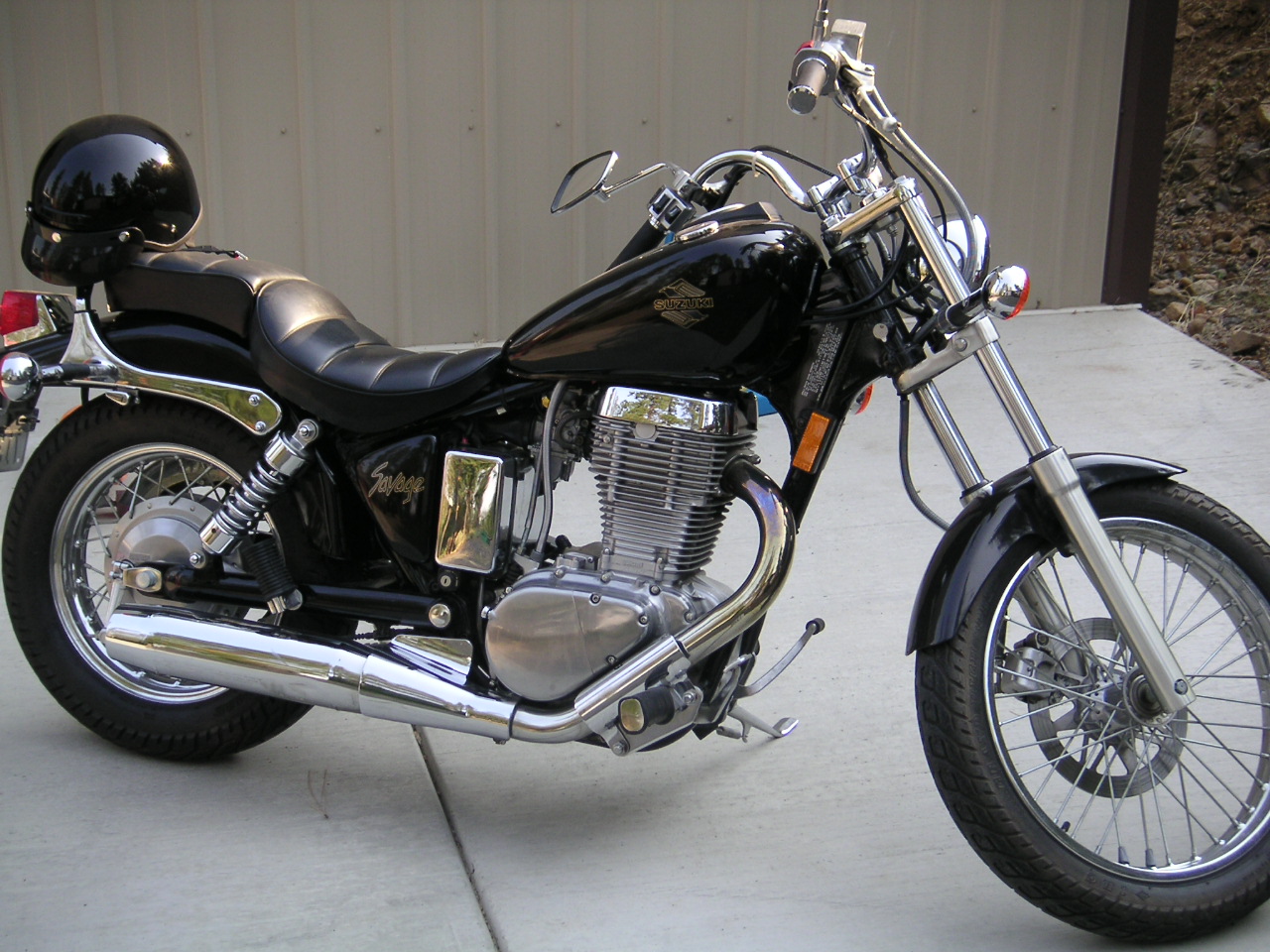
At first glance, the Suzuki Savage 650’s design is deceptively modest. It does not boast the aggressive aggression of a sportbike nor the bulk and chrome extravagance often associated with cruiser motorcycles. Instead, it stands as a lean, purposeful craft. The minimalist aesthetic, punctuated by a solo seat, bobbed rear fender, and a slender frame, signals an intent to distill the riding experience to its core elements. It invites riders to contemplate the beauty found not in excess but in restraint, where every line and curve serves a purpose rather than decoration.
Underneath this streamlined exterior lurks a 652cc air-cooled, single-cylinder engine that is a study in simplicity and efficiency. Unlike the multi-cylinder, water-cooled powerplants common to many contemporary motorcycles, this engine offers a low-maintenance, bulletproof foundation that rewards patience and attentiveness rather than frantic throttle manipulation. Producing a modest but adequate amount of torque, the Savage 650 delivers power in a measured, predictable fashion that encourages smooth riding and thoughtful throttle control. It is an engine that speaks a language of reliability and longevity, inviting newcomers and seasoned riders alike to forget the hustle and embrace a more deliberate pace.
The transmission—a five-speed manual—brings the rider into direct communion with the bike’s mechanical heart. The clutch is forgiving yet precise, while gear changes feel tactile and fulfilling. Every shift, every twist of the throttle, is an invitation to build a rhythm with the machine, cultivating an intimate dialogue between rider and machine that often gets lost in the click-and-go world of modern motorcycles packed with electronic aids and ride-by-wire systems.
Ergonomically, the Suzuki Savage 650 embraces a cruiser’s relaxed riding posture while maintaining a degree of compactness that keeps it agile and manageable. Its relatively low curb weight—just over 380 pounds—makes it a nimble companion, easy to maneuver even at lower speeds or in congested urban environments. The low seat height, typically around 27 inches, offers accessibility that breaks down barriers for shorter riders and newcomers, expanding its appeal. Here, comfort converges with practicality, setting the stage for long rides that engage the senses rather than exhaust them.
The suspension packages a conventional telescopic front fork paired with a twin shock rear setup. While it may not showcase the sophistication of adjustable high-performance components found on pricier cruisers, its straightforward design complements the motorcycle’s ethos of simplicity and reliability. The suspension soaks up typical road irregularities with gratifying composure, allowing the rider to focus on the journey rather than the imperfections of the pavement below.
Handling characteristics of the Savage 650 further solidify its position as a bike that encourages exploration of an alternate cruiser experience. The wheelbase and frame geometry strike a delicate balance, sustaining stability during straight-line cruising while maintaining an approachable turn-in and predictable cornering behavior. This duality of straight-road confidence and nimble maneuverability sets it apart from heavier cruisers that can feel ponderous in tight quarters. With the Suzuki Savage 650, the rider is granted a sense of control rarely found in its class—a palpable connection to the machine and environment that feeds the innate curiosity of those who seek more than just transportation.
The exhaust emits a throaty rumble that perfectly complements the Savage’s old-school aura. It is neither overwhelmingly loud nor subdued into forgetfulness; this harmonic signature is a constant reminder of the combustion symphony under the seat. Such sonic feedback enhances the sensory relationship between rider and bike, reinforcing the charm of a parade to the past—where every mechanical whisper and roar meant something tangible.
Additionally, its minimalist instrumentation and controls hark back to a purer era of motorcycling. With only the essentials laid out before the rider, distractions are minimized, and attention is naturally drawn to the road, the engine’s pulse, and the landscape rushing by. This pared-down approach piques curiosity about how much technology is truly necessary to enjoy the sprawling freedom of the open road.
In terms of maintenance, the Savage 650 shines as a paragon of simplicity. Its air-cooled architecture and robust mechanicals require less frequent intervention than liquid-cooled, complex engines, making it an appealing choice for riders who prefer to spend time riding rather than in the workshop. This operational straightforwardness enhances its allure for enthusiasts who appreciate a motorcycle that encourages familiarity and hands-on interaction, fostering a deeper appreciation of mechanical craft and ownership satisfaction.
Fuel economy, too, is often pleasantly surprising. With its conservative engine tuning and lightweight design, the Savage 650 manages to sip gas with discretion, offering an economical choice in a market segment often overshadowed by thirsty, high-displacement cruisers. This pragmatic feature encourages extended journeys, opening the door to explorations far beyond urban confines without the constant worry over stops at fuel stations.
For those inclined toward customization, the Suzuki Savage 650 provides an excellent blank canvas. Its simplistic frame and classic cruiser geometry invite modifications that can range from tasteful bobbers to retro cafe racers. This adaptability fuels the imagination, igniting curiosity about transforming this utilitarian motorcycle into a personal statement. The community of Savage owners often shares stories and projects, revealing a culture centered on creativity and individualized expression rather than conformity to mass-market trends.
Ultimately, the 2001 Suzuki Savage 650 is much more than a motorcycle. It is a philosophical proposition—a challenge to riders to reconsider the essence of motorcycling beyond speed, technology, and spectacle. It whispers promises of unhurried rides, thoughtful engagement, and sensory connection. It tempts those who crave authenticity, inviting them to explore a landscape of experience where simplicity is not a limitation but an artful journey.
To ride the Savage 650 is to embark on a deliberate, almost meditative exploration of two-wheeled freedom—a promise to shift perspective from the frenetic pace of modern life toward a more grounded and elemental relationship with machine and environment. Its quiet charm beckons beyond mere transportation, stirring curiosity about what remains when all but the essence is stripped away. It is, in many ways, a reminder that sometimes the most profound experiences are found not in the complex or the new, but in the unadorned and timeless.