Could a 1948 Harley Panhead still be the quintessential ride for enthusiasts in today’s market, or has the relentless march of time relegated this classic icon to mere collector’s memorabilia? This question isn’t as straightforward as it might seem. While vintage motorcycling carries a romantic allure, the realities of maintenance, riding comfort, and part availability pose nuanced challenges that every prospective owner should contemplate. Yet, the 1948 Panhead, with its storied legacy and unyielding charm, continues to captivate a diverse range of riders—from nostalgic purists to modern customizers. Exploring this legendary machine’s enduring appeal and practical considerations reveals why it remains a compelling prospect.
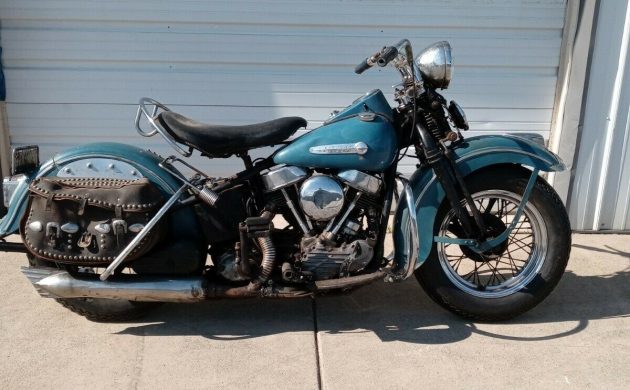
Emerging from an era when Harley-Davidson was solidifying its identity, the 1948 Panhead represents a pivotal point in motorcycle engineering. Notably, it introduced the overhead valve (OHV) design that distinguished it from its predecessor, the Knucklehead. The Panhead engine’s distinctive aluminum rocker covers, which resemble upside-down pans, lend it the evocative moniker. This mechanical refinement wasn’t just cosmetic—it significantly enhanced performance and reliability compared to previous models, making the Panhead synonymous with durability and character.
But what precisely sets the 1948 Panhead apart beyond its mechanical underpinnings? The aesthetic dimension plays a crucial role. Its sweeping curves, robust frame, and classic fenders evoke a mid-century Americana spirit evocative of smoky diners and open highways. The chrome accents shimmer with a timeless luster, while the leather saddle promises an intimate connection between rider and machine. In an age dominated by streamlined, technologically loaded motorcycles, the Panhead offers a tactile, visceral riding experience that critics might call an anachronism but aficionados embrace as authenticity.
Yet, embracing a 1948 model is not without complications. Potential buyers must navigate the intricacies of sourcing original parts—a challenge compounded by the age of the bike and the relatively niche market for Panhead-specific components. Enthusiasts who enjoy the thrill of restoring and maintaining vintage motorcycles may find this a gratifying endeavor; others might perceive it as an encumbrance. Furthermore, the Panhead’s technology, while groundbreaking for its time, lacks modern conveniences such as electronic ignition, advanced suspension, and efficient braking systems. This means that riders accustomed to contemporary motorcycles might need to adjust their expectations and riding style.
Financially, investing in a 1948 Harley Panhead can be an unpredictable journey. The market for classic motorcycles tends to oscillate dramatically based on trends, condition, provenance, and rarity. Although prices have appreciated over time, the relative affordability of the Panhead compared to other vintage Harleys, like the highly coveted Knuckleheads or early Shovelheads, remains somewhat accessible for dedicated enthusiasts. Restoration costs, insurance, and storage are additional factors that must be integrated into the overall ownership calculus. Thus, despite its vintage status, the Panhead might require more than sentimental value to justify the price tag—it demands a commitment to preservation and hands-on involvement.
Performance-wise, the Panhead’s air-cooled 74 cubic inch (1,200 cc) V-twin engine delivers a modest output by today’s standards but offers a distinctive thumping cadence that riders find addictive. The torque curve is tailor-made for rolling cruising rather than lightning-fast accelerations, reaffirming the motorcycle’s identity as a relaxed, leisurely ride rather than a speed demon. This makes it an ideal companion for gentle weekend rides or as a collectible display piece emblematic of motorcycling history. However, the absence of modern suspension technology and less efficient braking components requires heightened rider awareness and caution when tackling modern roads.
Customization potential remains one of the Panhead’s enduring enticements. The classic frame and engine configuration provide an excellent foundation for custom builds. From traditional bobbers to elaborate choppers, the Panhead lends itself to creative expressions fueled by individual vision and craftsmanship. This flexibility invites both seasoned builders and novices to engage with a living piece of motorcycling heritage, transforming it into a personalized statement of style and passion.
Still, one must ask: How does this vintage gem compete with the proliferation of contemporary motorcycles boasting cutting-edge engineering, safety features, and performance enhancements? The answer lies in the intangible qualities intrinsic to the Panhead—its mythos, the tactile interaction it offers, and the camaraderie found within vintage motorcycle culture. Riding a 1948 Panhead is an encounter with history, an opportunity to feel the mechanical heartbeat of a bygone era. It is about savoring the journey, not merely rushing to the destination.
In conclusion, purchasing a 1948 Harley Panhead is far more than acquiring a mode of transportation; it’s an investment in heritage, culture, and personal expression. While it challenges modern sensibilities with its mechanical simplicity and demands ongoing care, the rewards frequently outweigh the hurdles. The Panhead’s timeless design, distinctive sound, and authentic riding character have carved out an enduring niche within the motorcycle world.
For those captivated by the romance of classic motorcycling, ready to embrace the challenges of ownership, and eager to immerse themselves in a living legend, the 1948 Harley Panhead remains a worthy companion. It is not merely a motorcycle—it’s a testament to passion, craftsmanship, and the indomitable spirit of the open road.