The 1982 Honda CX500 Turbo occupies a unique niche in the annals of motorcycle history. It is a machine that simultaneously captivates and perplexes enthusiasts, engineers, and casual observers alike. Emerging in an era when turbocharging was predominantly the realm of automotive innovation, Honda’s foray into this technology on a midsize motorcycle spoke volumes about ambition and experimentation. Yet, the CX500 Turbo also exudes an unusual aura—part futuristic marvel, part mechanical curiosity—prompting a perennial debate: was it genuinely ahead of its time or simply too weird for widespread acclaim?
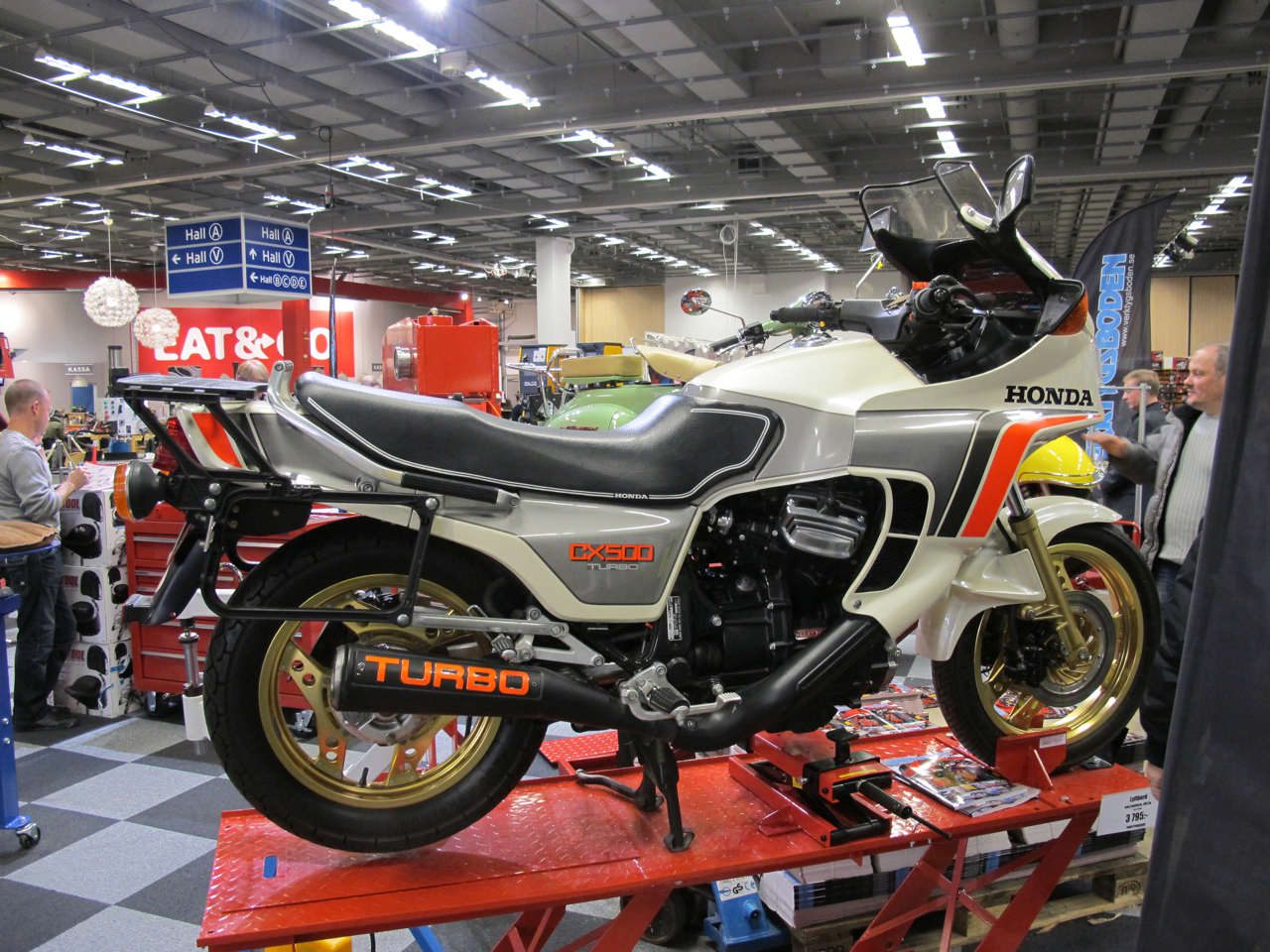
At first glance, the CX500 Turbo commands attention through its marriage of innovative technology and distinctive aesthetics. Beneath the sleek contours of its fairing lies a 497cc V-twin engine, which had already established a reputation for reliability and smooth power delivery. However, Honda added a turbocharger, a complex and delicate component that, in the early 1980s, was still relatively nascent in motorcycle design. The result was a machine claimed to produce around 82 horsepower, a significant leap from the naturally aspirated variants of the era. This enhancement translated into exhilarating acceleration that challenged conventional expectations of mid-displacement motorcycles.
But beyond sheer performance statistics, the CX500 Turbo represented a bold philosophical shift. By integrating forced induction, Honda was exploring new means to extract power without increasing engine displacement and thus weight or fuel consumption drastically. This approach was radical in a market that often equated bigger engines with better performance. Turbocharging promised a more efficient yet potent powertrain, aligning with rising fuel economy concerns following the 1970s oil crises.
However, pioneering technology also ushers inherent challenges, and the CX500 Turbo was no exception. Turbo lag—the delay between throttle input and turbocharger boost—posed a significant obstacle. Rideability suffered during the early moments of acceleration, with bursts of power arriving unpredictably. This trait could unsettle riders accustomed to linear power delivery and precise throttle response. Honda’s engineers tackled the issue with complex control systems, yet the solutions of the time were not flawlessly seamless.
Moreover, the turbocharged engine added mechanical complexity and necessitated additional maintenance vigilance. Turbo bearings, exhaust routing, and cooling systems all required careful management to avoid premature wear or failure. These factors contributed to the perception of the CX500 Turbo as a finicky machine, demanding a more sophisticated rider to appreciate its intricacies fully. For many, the tradeoff between futuristic performance and practical reliability proved difficult to justify, especially when compared to simpler, naturally aspirated contemporaries.
The styling of the CX500 Turbo further amplified its polarizing nature. Departing from classical cruiser and sportbike aesthetics, it featured a full fairing with angular lines that some lauded as visionary while others derided as awkward. Its faux vent designs, thick-profile tires, and prominent intercooler were unapologetically functional yet unusual in visual character. This silhouette became emblematic of early 1980s motorcycle design trends, characterized by experimentation and divergence from traditional forms. While some collectors today prize this unconventional look as an emblem of a fearless era in motorcycle design, others find it aesthetically jarring.
The CX500 Turbo also anticipated a future that felt tantalizingly out of reach in its own time. Today’s motorcycle market embraces turbocharging in niche segments, supported by electronic management systems that eradicate much of the lag and unpredictability that plagued early turbo bikes. Modern advancements in materials, engine control units, and cooling solutions make turbocharged motorcycles more viable and attractive. Viewed through this lens, Honda’s 1982 Turbo was the harbinger of technological evolution, a glimpse of what might have been if the timing aligned with the digital age’s advent.
Yet the inherent tension between innovation and market acceptance must be acknowledged. The CX500 Turbo’s commercial performance was modest, a reflection of widespread hesitation toward the unfamiliar. Many riders in the 1980s were wary not only of turbo lag but also of the increased complexity and perceived unreliability. This apprehension was not merely technical but cultural; motorcycling communities often prize tactile, predictable machines, and anything that disrupts that expectation encounters resistance.
It is this duality—between fascination and unease—that underpins the enduring allure of the CX500 Turbo. The model has cultivated a cult following, not simply because it was powerful or rare, but because it is emblematic of a daring spirit of exploration. Enthusiasts admire it as a mechanical anthropologist’s artifact—a snapshot of a moment when engineering bravado collided with societal readiness. It challenges conventional narratives about progress, urging reflection on how technology adoption hinges as much on cultural factors as on pure performance metrics.
In many ways, the 1982 Honda CX500 Turbo epitomizes the archetype of a machine ahead of its time. It ventured into uncharted technological territory, offering glimpses of future possibilities while grappling with the technical and perceptual limitations of its era. Its quirky aesthetics and idiosyncratic performance characteristics fuel debates that persist decades later, illustrating how innovation can both alienate and inspire.
In retrospect, the CX500 Turbo’s charm lies not merely in its horsepower or its turbocharged novelty, but in its role as a bold statement of intent. It provokes curiosity about the trajectory of motorcycle technology and reminds aficionados that progress is seldom linear. Sometimes, ideas emerge too early and must wait for the zeitgeist to catch up. The CX500 Turbo endures as a symbol of that liminal space where genius meets eccentricity—a machine that, while perhaps too weird for widespread embrace in 1982, has attained an almost mythic status through the prism of history and hindsight.