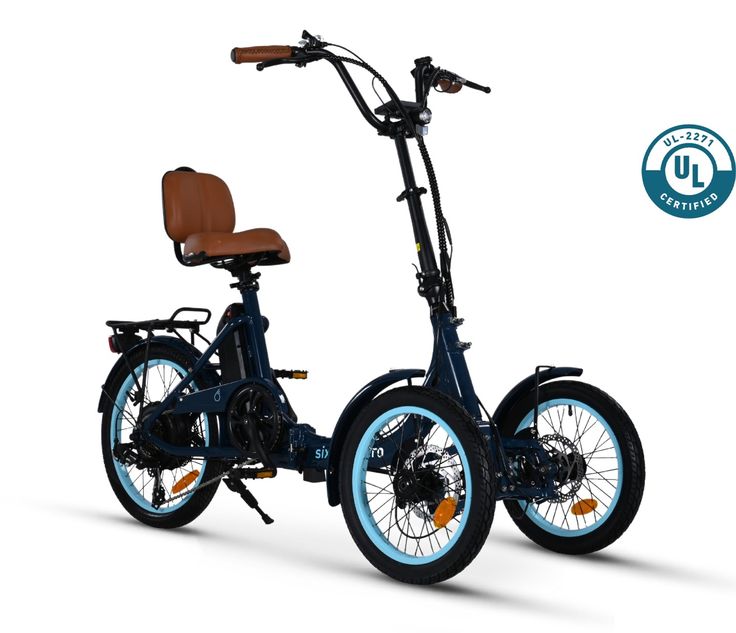
Have you ever pondered why some trikes sport not one, but two wheels at the front, seemingly flipping the conventional design on its head? This intriguing configuration, often labeled as a “reverse trike,” challenges the traditional tricycle blueprint that places a solitary wheel up front and two at the rear. The question beckons: what advantages does this playfully counterintuitive design offer, and could it perhaps solve some longstanding issues inherent in the realm of three-wheeled vehicles?
At first glance, a reverse trike’s geometry might appear whimsical—almost as though it’s upside down. However, beneath this unconventional exterior lies a thoughtful engineering solution balancing performance, stability, and rider experience. Unlike its standard counterpart, reverse trikes position two wheels at the front, creating a fundamental shift in dynamics and usability that merits a closer inspection.
One of the most salient benefits of the reverse trike configuration is enhanced stability, especially during cornering maneuvers. Traditional trikes, with a single front wheel, often wrestle with issues such as tipping or wobbling when negotiating sharp turns or uneven road surfaces. The dual front wheels of reverse trikes distribute lateral forces more effectively, mitigating these risks and allowing for a more confident, flat-leaning cornering experience reminiscent of motorcycles. This layout essentially broadens the contact patch with the road where steering inputs are most critical, translating to superior grip and control.
Moreover, dual front wheels facilitate improved braking performance. Since braking forces experienced at the front wheels are generally more significant than those at the rear due to weight transfer during deceleration, having two contact points upfront increases overall braking capability and reduces the likelihood of wheel lock-up. This is particularly advantageous for electric reverse trikes, which have become increasingly popular and often feature regenerative braking systems that rely on efficient front-end load management.
The reverse trike design also offers ergonomic and practical advantages. With the two front wheels providing a wider stance, designers can incorporate a compact and often more comfortable cockpit that resembles a small car’s driving environment rather than a motorcycle’s. This enhances rider comfort and weather protection potential without compromising the open-air thrill associated with three-wheelers. Some models even integrate enclosed cabins or fairings, blurring the line between motorcycles and automobiles.
Despite these notable benefits, reverse trikes pose unique engineering challenges, not least in terms of handling nuances. While the broader front axle heightens frontal stability, it can complicate low-speed maneuvers and require precise suspension tuning to prevent understeer tendencies. Balancing the vehicle’s weight distribution becomes paramount; if too much mass shifts toward the front, it may diminish rear traction, thus negatively impacting acceleration and overall dynamics. Engineers must therefore engage in meticulous testing and iterative design to hone the perfect equilibrium.
Adding to the complexity is the steering mechanism itself. The traditional single front wheel allows for straightforward fork dynamics, but managing two wheels demands sophisticated linkages, often adopting car-like rack and pinion steering systems. While this enhances precision, it brings additional weight and mechanical complexity, which must be offset by chassis design considerations and powertrain calibration.
Let’s also ponder the aesthetic element. Two wheels at the front endow reverse trikes with a distinctive silhouette that stands apart in a sea of motorcycles and traditional three-wheelers. This unconventional look can attract enthusiasts who seek vehicles that merge performance and individuality, offering a sense of uniqueness on the road. The avant-garde design often translates into a sporty, futuristic identity that resonates with tech-savvy riders and eco-conscious commuters alike.
But one might ask: do these advantages translate into real-world superiority? The answer depends largely on the intended use. For urban commuting, the stability and compactness of reverse trikes offer a compelling proposition, especially when configured with electric drivetrains. Their reduced footprint and enhanced safety margin pave the way for nimble navigation through congested streets while instilling greater rider confidence. Meanwhile, for recreational use, the playful dynamics and sporty handling characteristics provide an engaging riding experience that traditional trikes cannot fully replicate.
Environmental considerations further elevate the appeal of reverse trikes with two wheels upfront. Their structural design often incorporates lightweight materials and aerodynamically optimized shapes, which collectively enhance energy efficiency. Coupled with the rising adoption of electric powertrains, these vehicles exemplify a forward-thinking approach to personal transportation that aligns with sustainability trends without sacrificing excitement or practicality.
Of course, reverse trikes are not immune to limitations. Their relatively novel status means they are less prevalent and may encounter higher production costs, specialist maintenance requirements, and limited aftermarket support compared to motorcycles or conventional cars. Additionally, some riders accustomed to traditional two-wheeled dynamics might find the handling of a reverse trike initially counterintuitive. However, with evolving technology and growing market interest, these obstacles will likely diminish over time.
In sum, reverse trikes with two front wheels are a fascinating chapter in the evolution of three-wheeled vehicles, pushing boundaries in terms of safety, performance, and design ingenuity. They strike a delicate balance—combining the exhilarating freedom of motorcycles with the grounded stability of cars. Whether for spirited weekend rides or practical daily commuting, this configuration offers an innovative pathway that challenges assumptions and invites riders to rethink what a trike can truly be.
So next time you encounter a reverse trike cruising down the road, take a moment to appreciate the thoughtful engineering beneath its playful appearance. It’s more than just an oddity; it’s an embodiment of progress that asks us to reconsider the old rules, embrace creativity, and explore new horizons in personal mobility.