In the vibrant realm of power cruisers during the mid-1980s, few motorcycles commanded attention quite like the 1984 Honda Magna series. Among these, the V30 and V65 variants stood out as paragons of engineering and style, pitting two formidable machines against each other in a compelling showdown. Enthusiasts and riders have long debated the merits, quirks, and capabilities of these two models, each embodying a distinct blend of performance, design, and character that defined an era of motorcycling culture.
The 1984 Honda Magna V30, with its robust V4 engine displacing 750cc, offered a refined balance of power and manageability. Compact yet muscular, the V30 was designed for riders who desired a versatile cruiser that did not sacrifice agility for brute force. Meanwhile, its sibling, the V65, amped up the ante dramatically. Equipped with a 1,100cc V4 engine, the V65 was a veritable powerhouse, boasting unprecedented torque and acceleration figures that propelled it into the upper echelons of cruisers during its time.
Examining the engines offers an insightful starting point for this comparative exploration. The V30’s liquid-cooled, 748cc V4 motor was a marvel of precision engineering, boasting a high-revving nature that translated to smooth and responsive throttle control. Its power output hovered around 80 horsepower, which, for a cruiser, was respectable and allowed for confident cruising as well as spirited riding on twisty back roads. The sound it generated was melodic yet assertive, providing aural feedback that matched the bike’s nimble demeanor.
Contrast this with the V65’s title as one of the most powerful production cruisers of the decade. Honda’s engineering prowess manifested in a 1098cc V4 powerhouse that churned out approximately 116 horsepower. This monstrous engine delivered thrust with unapologetic assertiveness, establishing the V65 as a muscle bike that did not shy away from straight-line speed or throttle abuse. The V65’s engine note was deeper and more menacing, echoing its muscular disposition and promising an adrenaline-charged ride.
Beyond raw power, the chassis and overall design philosophy played crucial roles in defining the two machines’ distinct characters. The V30 featured a relatively lightweight chassis, promoting agility and precise handling. Its frame geometry was tuned to provide stability while encouraging cornering finesse uncommon in cruisers of that period. Rider ergonomics favored comfort without compromising control—an important factor for those looking to blend long-distance comfort with spirited daily riding.
The V65, conversely, was a heftier animal. Built to withstand and channel its prodigious power, the V65’s frame was reinforced, resulting in a heavier overall weight. This increased mass translated into a planted, grounded feel on the highway, exuding unwavering confidence at high speeds. However, the added heft sacrificed some nimbleness, making the V65 more suitable for riders who preferred powerful straight-line performance combined with the classic cruiser posture. Its wide-set handlebars, forward foot controls, and sculpted seat provided an imposing yet comfortable cockpit, emphasizing dominance and stability.
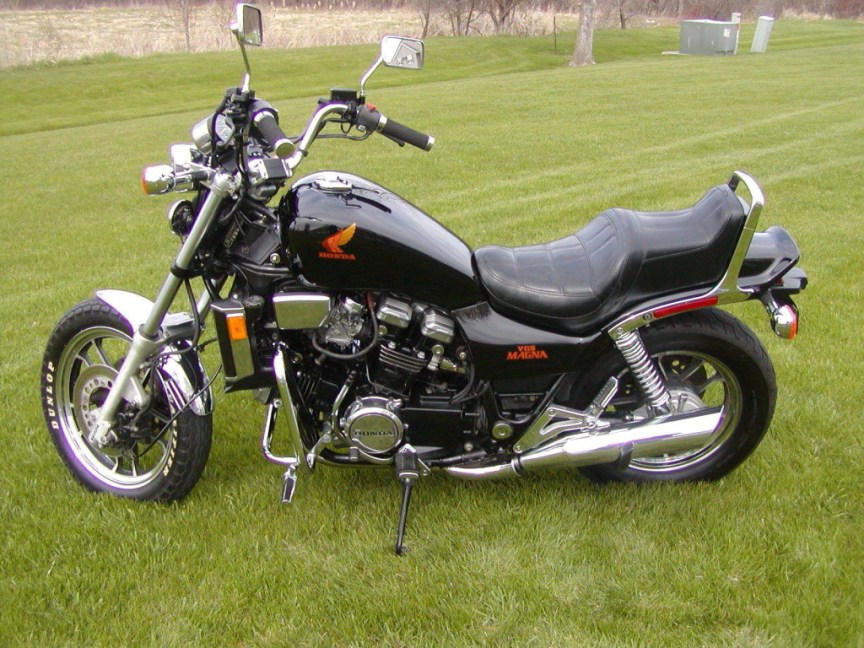
When it comes to aesthetics, the 1984 Honda Magna series is truly a feast for the eyes. The V30 carried a somewhat understated yet aggressive appearance, characterized by its sleek tank and clean lines that underscored its purpose as a nimble, fast cruiser. Polished chrome accents and subtle bodywork detailing created an aura of restrained sophistication, making it appealing to riders who sought substance over extravagant flashiness.
The V65, on the other hand, was the embodiment of boldness and swagger. It featured wider tires, bold chrome exhaust pipes, and a prominently muscular tank that visually communicated its status as the flagship model. The V65’s styling was unapologetically assertive, reflecting its performance ethos and making it a head-turner on city streets and highways alike. The silhouette of the V65 was a harmonious blend of curvaceous form and mechanical bravura—a trophy of Honda’s engineering ambitions.
In terms of rider experience, the divide between the V30 and V65 reveals itself through nuanced contrasts. The V30 caters to those who relish a dynamic ride punctuated by responsive handling and manageable power. It’s a machine that invites exploration of winding roads, offering feedback and control that instill rider confidence. Its moderate seat height and balanced ergonomics further appreciable for riders of various builds. Fuel economy and maintenance also tipped in the V30’s favor, making it a practical yet exhilarating choice.
Meanwhile, the V65 is a visceral beast, tailored for riders who crave raw power and the exhilaration of unrelenting acceleration. The motorcycle’s commanding presence coupled with its potent torque curve made it suitable for seasoned riders who relish the thrill of commanding a heavyweight cruiser with the heart of a sportbike. Riding the V65 demands respect and skill; it rewards those who dare to harness its capabilities with exhilarating bursts of speed and a soundscape that resonates with dominance.
Technological considerations further distinguish these two models. Both benefitted from Honda’s advanced V4 liquid-cooled engines, but the V65 boasted enhancements such as dual overhead camshafts and upgraded carburation systems that optimized airflow and combustion efficiency. Suspension components in both models were designed for safety and comfort, yet the V65’s suspension was calibrated to manage its greater weight and power, offering a firmer, more disciplined ride. Brake systems were comparable but leaned towards higher stopping power on the V65 given its performance envelope.
For collectors and aficionados, the 1984 Honda Magna V30 and V65 each represent different facets of motorcycling heritage. The V30 holds an appeal for those who appreciate a balanced cruiser with technological sophistication and spirited dynamics, often regarded as a gateway into the power cruiser category. The V65 embodies a pinnacle of 1980s performance cruiser engineering—catering to enthusiasts who desire a blend of muscle-bike power with cruiser comfort and style.
Ultimately, choosing between the 1984 Honda Magna V30 and V65 revolves around the interplay of rider preference, intended use, and appreciation for engineering nuance. Both motorcycles showcase Honda’s skill at marrying performance with cruiser aesthetics in the 1980s motorcycle landscape. Whether one favors the nimble agility and understated charm of the V30 or the commanding power and muscular presence of the V65, each machine stands as a testament to an era when cruisers began embracing performance without sacrificing their iconic style.
In summation, the 1984 Honda Magna V30 versus V65 battle is not merely a contest of specs but an exploration of distinct riding philosophies. It captures the essence of a transformative period in motorcycle development, reflecting the desires of riders who sought to own machines as versatile daily commuters, spirited weekend rides, or outright power statements. Exploring both models—technically, visually, and experientially—offers invaluable insights into the evolution of power cruisers and cements the Magna series’ place in motorcycling lore.