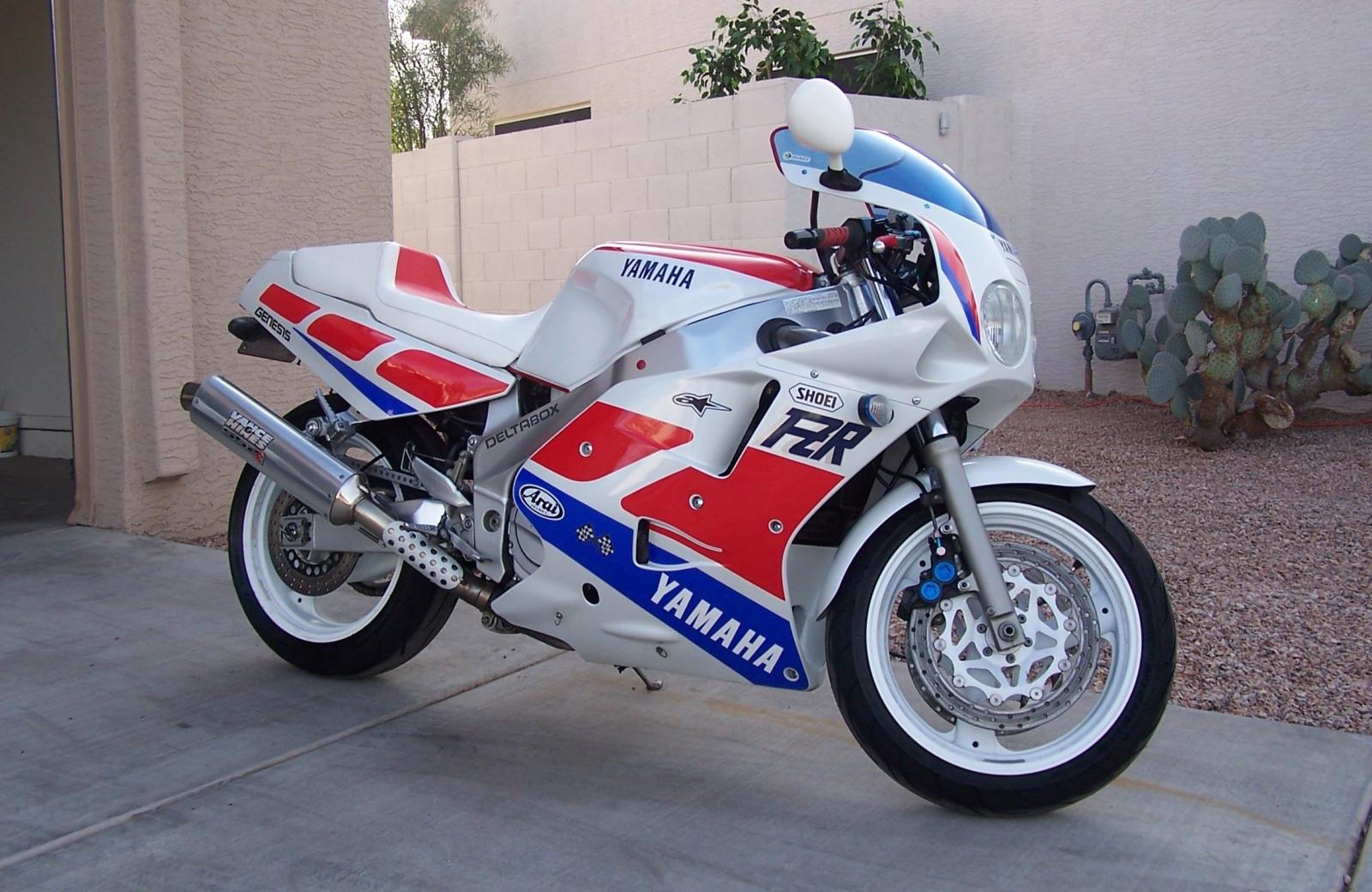
In the grand theater of sport motorcycles, the 1989 Yamaha FZR series represents a symphony of engineering prowess and aerodynamic elegance. Among the most evocative performers in this ensemble are the FZR600 and the FZR1000—a duel not merely of speed but a contest of character, capability, and the very essence of two-wheeled thrill. Peering beneath their fairings reveals more than raw numbers; it unveils the poetry of motion and the unique heartbeat of Yamaha’s design philosophy during a pinnacle era. The 1989 Yamaha FZR600 versus FZR1000 speed comparison is not just a juxtaposition of horsepower figures but an exploration of how differing engineering intentions mold the essence of velocity.
To approach this comparison, one must first understand the soul of each contender. The 1989 FZR600 is a lithe and nimble machine, aimed at delivering razor-sharp agility combined with manageable power. Its smaller displacement engine whispers promises of swift cornering and accessible acceleration, tailored for those who dance with the road’s curves rather than merely chase the horizon. The FZR600’s engine, a 599cc inline-four, pumps with a rhythmic urgency, capable of producing around 84 horsepower at the crank, accompanied by a ferocious redline near 13,000 rpm. Its lightweight chassis and finely tuned suspension create a ballet in motion—one replete with precision and responsiveness.
Contrast this with the 1989 FZR1000, a beast cloaked in streamlined plastic, exuding raw intent with every inch. The FZR1000 is an embodiment of muscle and aerodynamic finesse, a machine designed to sprint across stretches of open asphalt with effortless authority. Beneath its skin lies a 1,002cc inline-four engine—a titan that delivers roughly 135 horsepower. The FZR1000’s formidable powerplant thrums with aggressive vigor, coupled with a more substantial frame engineered to harness the surging force it commands. This motorcycle is an iron stallion engineered to defy air resistance and incinerate seconds from the stopwatch, soaring toward triple-digit speeds that few can rival.
When thrust into the crucible of speed, these two machines exhibit distinctive personas. The FZR600, with its lighter weight of approximately 423 pounds (192 kg), feels as if it’s tethered to the wind by a silken thread—quick to lift its nose and dance on the edge of traction. Its acceleration is a nimble flash, reaching highway speeds in a breath, but not in a roar. In contrast, the FZR1000 weighs a more substantial 502 pounds (228 kg), yet manages to mask this heft with brutal torque and a powerband that sweeps through gears like a tempest. The throttle response of the FZR1000 is a visceral surge, a powerful crescendo reminiscent of a sprinting stallion breaking free from the paddock.
Examining top speeds illuminates the divergent philosophies underpinning these motorcycles. The FZR600, while no slouch, typically peaks around 145 mph (233 km/h)—a speed that marries exhilaration and control. This velocity is perfectly aligned with its role as a versatile sports bike, equally adept at city streets and the twisties. Riders find themselves gripped by a sense of alert focus rather than outright intimidation, as the bike’s chassis and aerodynamics forge a harmonious bond with its powerplant.
The FZR1000, by contrast, rockets toward an audacious top speed near 170 mph (273 km/h), a figure that typifies true superbike territory of the late ’80s era. This velocity is not just a number but a challenge to conventional limits, the bike slicing through air with an assertive wind-cutting profile aided by Yamaha’s then-innovative design cues such as the Genesis engine configuration. The feeling here is of propulsion—an overwhelming force that makes time dilate, as if the machine itself commands the highway’s very fabric to bend to its will.
Acceleration dynamics further deepen the narrative. The FZR600’s 0-60 mph time hovers near the 4-second mark—a brisk sprint that rewards skilled riders with accessibility and precision rather than raw intimidation. Its power delivery encourages mastery over the machine’s character, tantalizing with near-endless revs without overwhelming the user.
Conversely, the FZR1000’s acceleration is merciless, often dipping under 3 seconds for the same interval, owing to its sheer power and torque. With every twist of the throttle, this model asserts dominance, standing as a testament to Yamaha’s commitment to performance supremacy. It is less a gentle guide and more a forceful partner in pursuit of the horizon, inviting a boldness few machines can summon.
Yet the speed comparison is incomplete without contemplating handling and rider experience. The FZR600, despite its more modest raw speed, often proves the more engaging rider’s steed on technical roads. Its balanced chassis and nimble wheelbase facilitate rapid directional changes and encourage spirited riding through varying terrain. It feels like a finely tuned musical instrument, sensitive to the rider’s input and rewarding precision.
The FZR1000, while undeniably faster in a straight line, commands respect in corners, demanding more from its pilot due to its size and power. However, it’s far from unwieldy; instead, it provides a grounded, planted sensation—an anchor amidst the storm of acceleration—allowing experienced riders to exploit its potential across all aspects of performance riding.
In summary, the 1989 Yamaha FZR600 and FZR1000 serve as two facets of the same exceptional gem. The FZR600 embodies agility and accessible finesse, offering a nimble companion eager to explore twisting backroads with swift precision. Its speed is a measured, thrilling dialogue between rider and machine. The FZR1000, in contrast, is a raw symphony of brute force and aerodynamic mastery, a motorcycle that asserts itself as a titan of speed and straight-line capability without sacrificing composed handling.
Ultimately, the choice between these two is a reflection of rider temperament: whether one is drawn to the humming zest of a razor-sharp lightweight weapon or the titanic thrust of a superbike engineered to conquer the very essence of velocity. Both leave an indelible mark on the legacy of Yamaha’s engineering and the spirit of the late ’80s motorcycle renaissance—a compelling testament to how speed can be sculpted in varied and thrilling forms.