At the heart of Harley-Davidson’s 2012 lineup lies a mechanical marvel that redefines the essence of cruiser power: the Twin Cam 103 engine. More than just an evolution of its predecessors, the 103 cubic inch V-Twin engine heralds a profound shift in how enthusiasts perceive Harley performance. Beneath its classic exterior, this powerplant orchestrates a performance symphony that both honors tradition and commands the road with newfound potency.
The 2012 Harley 103 engine distinguishes itself through a significant increase in displacement, measuring 103 cubic inches (or 1690 cc). This jump from the earlier Twin Cam 96 not only serves as a quantitative enhancement but also illustrates Harley’s commitment to marrying torque and horsepower with longevity and reliability. The increased bore and stroke dimensions propel this engine into higher realms of torque delivery, delivering an exhilarating experience tailored for those who crave muscle in every twist of the throttle.
Yet, the raw specifications reveal only half the story. With approximately 73 horsepower under the hood, the 103 engine dispenses an output that feels considerably more muscular on the street. What might seem modest on paper belies the engine’s capacity to surge effortlessly, providing linear and immediate throttle response that basks riders in a visceral sense of control and confidence. This characteristic is intrinsic to Harley-Davidson’s ethos—a fusion of refined engineering and unadulterated rumble.
Torque, the lifeblood of cruiser performance, flows impressively from this V-Twin beast. With approximately 96 ft-lbs of torque unleashed at a low and accessible RPM range, riders are met with grunt that transforms everyday riding into an authoritative display of dominance. This abundance of low-end and mid-range torque results in a responsive powerband, ensuring nimble acceleration from stoplights and unflinching power during overtakes. It is the kind of torque that speaks to the primal urge of motorcycling, promising an unbroken connection between rider and machine.
What truly piques curiosity is how the 103 engine manages to retain its iconic sound and character despite the enhancements. The twin-cam design, featuring dual overhead cams, allows for precise valve timing and improved breathing efficiency. This technical ingenuity ensures smoother operation, while preserving the signature Harley growl—a quintessential audio tapestry that stirs the soul of any motorist within earshot. Its acoustics are not merely noise but an aural narrative that elevates riding from transportation to an immersive experience.
Moreover, the engine incorporates an improved cooling system that mitigates overheating during prolonged rides, particularly in urban stop-and-go traffic. This refinement addresses a perennial challenge for air-cooled engines, prolonging engine life and maintaining consistent performance without sacrificing the classic air-cooled aesthetics beloved by purists. This balance between authenticity and performance engineering represents a crucial evolution within the Harley lineage.
The real-world performance of the 2012 Harley 103 engine extends beyond numerical data. Riders report an enhanced ability to maintain highway speeds with minimal throttle adjustment, resulting in relaxed cruising and reduced fatigue. The engine’s robust torque and horsepower synergy facilitate seamless gear shifts, making the ride both responsive and comfortably predictable. This specialized tuning reflects Harley’s understanding of modern motorcycling needs—offering a powerplant that thrives equally in rush hour traffic and open road escapades.
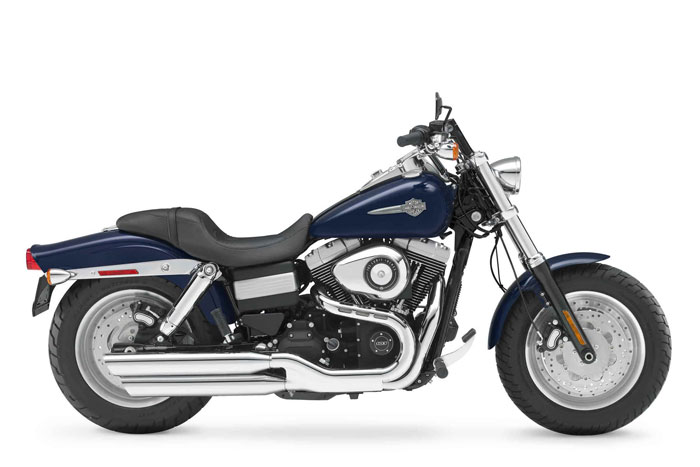
When integrated into the 2012 Harley-Davidson FXDF Dyna Fat Bob, the 103 engine’s capabilities become even more apparent. The bike’s aggressive styling and responsive chassis complement the engine’s power delivery, producing a balanced package that indulges both the aesthetic sensibilities and the performance-driven ambitions of riders. The engine’s thrust aligns harmoniously with the bike’s mass, ensuring that every acceleration feels purposeful rather than overwhelming.
In examining the 2012 Harley 103 engine, one notes the interplay of sophisticated engineering and vintage ethos. The displacement increase and mechanical enhancements promise not just improved performance but a renaissance in Harley-Davidson’s V-Twin heritage. This engine transcends mere horsepower and torque figures; it breathes life into the Harley experience by fostering an intimate relationship between rider and machine, one punctuated with every rumble and surge.
Beyond its mechanical prowess, the engine serves as a symbol—a testament to how tradition and innovation can coexist and thrive. It challenges preconceived notions that classic American motorcycles sacrifice performance for style. Here, the 103 engine asserts that heritage does not preclude horsepower, and that authentic sound need not come at the expense of engineering refinement.
In conclusion, the 2012 Harley 103 engine reimagines the boundaries of cruiser performance. It invites a rethinking of what a V-Twin can achieve, harmonizing power, sound, and reliability into an unforgettable riding experience. This powerplant does not simply propel a motorcycle; it propels a legacy forward, igniting curiosity and admiration in equal measure for riders who dare to embrace the road with unabashed intensity.