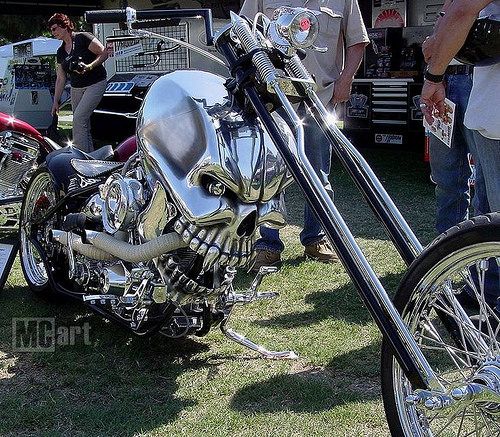
There’s something primal, almost mythic, about a skull. It’s not just bone and shadow—it’s a symbol of rebellion, of raw power, of a life lived on the edge. When you fuse that symbolism with the sleek, untamed lines of a custom chopper, you don’t just build a motorcycle. You forge an artifact of defiance, a rolling testament to the art of riding without apology. This isn’t about decoration. It’s about transformation. It’s about turning steel and leather into a rolling narrative, where every curve whispers of the open road and every chrome accent glints with the weight of history. If you’ve ever looked at a chopper and felt a pulse of something deeper than admiration, you’re not just a rider—you’re a storyteller. And it’s time to let the skulls do the talking.
The Skull as a Canvas: Beyond Ornamentation
At first glance, a skull on a chopper might seem like mere decoration—a bold graphic slapped onto the gas tank or a decal on the fairing. But that’s the surface-level thinking of someone who hasn’t felt the weight of intention. A skull, when wielded with purpose, becomes a living emblem of the machine’s soul. It’s not just an image; it’s a declaration. It says, “This isn’t just a bike. This is a statement.” The key lies in treating the skull not as an afterthought, but as the focal point around which the entire aesthetic revolves. Think of it as the heart of a narrative, pulsing with the rhythm of pistons and the hum of the engine. Every line, every shadow, every gleam of chrome should orbit this central motif, creating a cohesive visual language that speaks before the rider even fires up the engine.
Consider the texture. A skull isn’t smooth—it’s jagged, weathered, alive with imperfections. That roughness should echo through the bike’s design. Weld seams that mimic bone sutures. Paint that cracks like old ivory. Even the mechanical elements—exhaust headers, handlebars, footpegs—can borrow from the skull’s anatomy. A headlight shaped like an eye socket. A seat that mimics the curvature of a jawline. This isn’t about making the bike look like a skull. It’s about infusing the machine with the skull’s essence: unapologetic, unrefined, and utterly unforgettable.
Choosing the Right Skull: Symbolism Meets Aesthetic
Not all skulls are created equal, and not all skulls belong on a chopper. The choice of skull—its shape, its expression, its implied history—will dictate the entire direction of your build. A grinning skull, teeth bared in a silent roar, lends itself to a bike that’s aggressive, almost feral. It’s the kind of skull that belongs on a machine built for dominance, where every ride is a challenge to the road itself. On the other hand, a serene, closed-mouth skull—perhaps with closed eyes or a faint smile—suggests a different kind of rider: one who rides not for the thrill of the fight, but for the purity of the journey. This skull whispers of miles logged under starlit skies, of quiet moments between towns where the engine’s growl fades into the wind.
Then there’s the matter of realism versus stylization. A hyper-realistic skull, rendered with painstaking detail, demands a bike that’s equally meticulous. The paint must be flawless. The chrome must gleam. Every bolt must align with surgical precision. This is the domain of the perfectionist, the artist who sees the bike as a gallery piece as much as a ride. Conversely, a stylized skull—think Day of the Dead sugar skulls or tribal interpretations—opens the door to bolder, more experimental designs. Here, color becomes a weapon. Swirling patterns, neon accents, and abstract flourishes can turn the skull into a living mural, a riot of hues that defies convention. The choice isn’t just aesthetic; it’s philosophical. Are you building a monument to precision, or a rebellion against it?
Material Alchemy: Forging the Skull into Metal
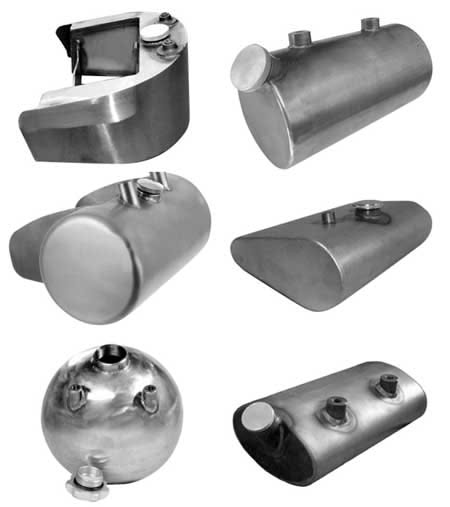
Skulls aren’t confined to paint and decals. They can be forged into the very bones of the chopper, becoming part of its skeletal structure. This is where the artistry of the build truly shines. Imagine a gas tank sculpted to resemble a skull’s cranium, its contours flowing seamlessly into the frame. The welds disappear into the illusion, making it impossible to tell where the art ends and the machine begins. Or consider handlebars that twist like vertebrae, their curves mimicking the natural flow of a spine. Even the exhaust can play a role—headers that flare like the flared nostrils of a charging beast, or mufflers that resemble the hollow eye sockets of a predator.
But material alchemy isn’t just about shape. It’s about texture. A skull’s surface is never uniform. It’s pitted, grooved, weathered by time. To replicate that, builders turn to techniques like plasma cutting, where metal is melted away to create organic, bone-like patterns. Or they use hydroforming, which allows for the creation of complex, three-dimensional shapes that defy traditional fabrication. The result? A chopper that doesn’t just carry a skull motif—it *is* a skull in motion, a mechanical beast that breathes through its chrome veins.
For those willing to push boundaries, consider incorporating real bone—ethically sourced, of course—into non-structural elements. A skull-shaped shift knob. A gear shifter fashioned from antler. These aren’t just accents; they’re talismans, imbuing the bike with a sense of raw, untamed energy. The materials you choose will dictate the bike’s voice. Steel whispers of strength. Aluminum sings of speed. And bone? Bone howls of the wild, untamed heart of the rider.
Color as a Weapon: Painting the Skull’s Soul
Color isn’t just decoration—it’s emotion made visible. A skull in monochrome—black, white, or gunmetal gray—speaks of mystery, of a rider who prefers to let the bike’s presence do the talking. It’s the color of shadows and secrets, of a machine that lurks in the corners of the world, waiting to strike. But introduce color, and the skull becomes a different beast entirely. Red, the color of blood and passion, turns the skull into a warning. Blue, the hue of twilight and depth, softens its edges, making it seem almost contemplative. And then there’s neon—electric pinks, acid greens, blinding yellows—that transform the skull into a beacon, a rolling firework that demands attention in the darkest alleys and brightest highways.
The technique matters just as much as the hue. A skull painted in matte black absorbs light, making it seem like a void, a portal to another world. A glossy finish, on the other hand, reflects the world around it, making the skull appear alive, as if it’s watching, waiting, *breathing*. For a truly immersive effect, consider using techniques like airbrushing to create depth—shadows that sink into the eye sockets, highlights that make the teeth gleam like ivory daggers. Or, for a more avant-garde approach, experiment with metallic flakes or pearlescent pigments that shift color with the angle of the light, making the skull seem to pulse with an otherworldly energy.
Don’t forget the power of contrast. A skull rendered in stark white against a matte black frame creates a visual shockwave, a jolt of electricity that commands the eye. Conversely, a skull in deep crimson against a brushed aluminum tank feels like a wound, a raw and visceral reminder of the bike’s untamed spirit. Color isn’t just about beauty—it’s about control. It’s the difference between a skull that whispers and one that screams.
The Rider’s Role: Becoming the Skull’s Avatar
A chopper adorned with a skull isn’t just a machine—it’s an extension of the rider. The way you dress, the way you ride, even the way you carry yourself becomes part of the narrative. This isn’t about cosplay. It’s about embodying the essence of the skull. If your bike wears a grinning skull, you ride with your chin up, unafraid of the road’s challenges. If it bears a serene, closed-mouth skull, you move with quiet confidence, a ghost on two wheels. The skull isn’t just a decoration; it’s a mirror. It reflects who you are—or who you aspire to be.
Consider your gear. A leather jacket with skull patches. Boots that echo the jagged lines of bone. Gloves that mimic the texture of weathered ivory. Even your helmet can play a role—custom-painted to match the bike’s motif, or shaped to resemble a skull’s contours. The goal isn’t to disappear into the costume. It’s to amplify the message. Every time you swing a leg over the saddle, you’re not just mounting a bike. You’re stepping into a role, becoming the living embodiment of the skull’s defiance.
And then there’s the ride itself. A chopper with a skull motif isn’t meant for cautious Sunday drives. It’s built for the long haul, for the roads that twist like vertebrae, for the nights that stretch into infinity. It’s a machine that demands respect—not just from other riders, but from the road itself. When you ride, you’re not just traversing distance. You’re writing a story. And the skull? It’s the title page.

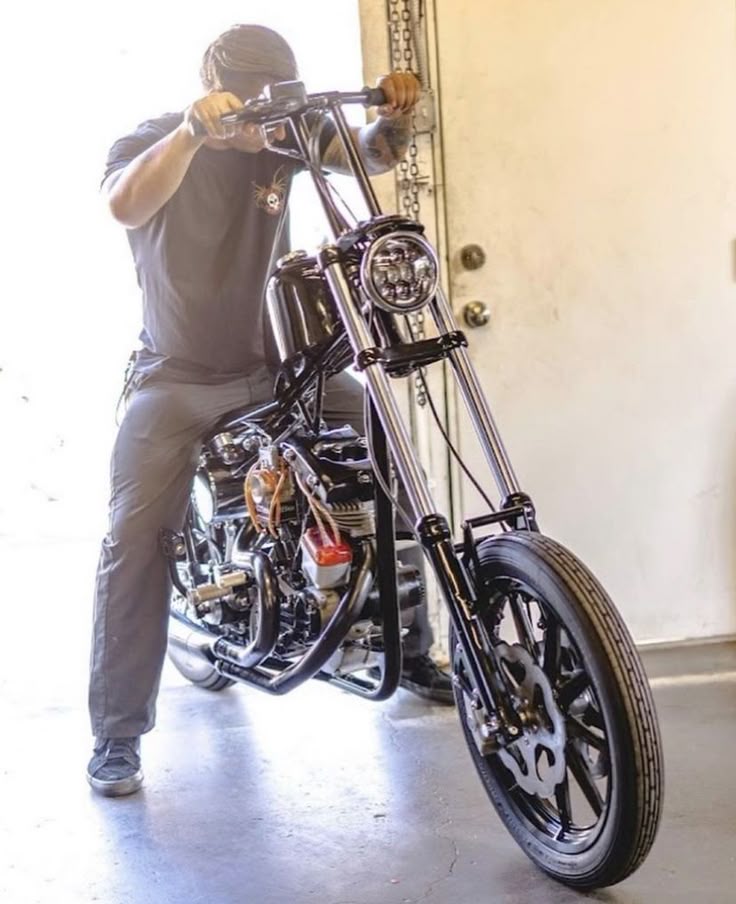
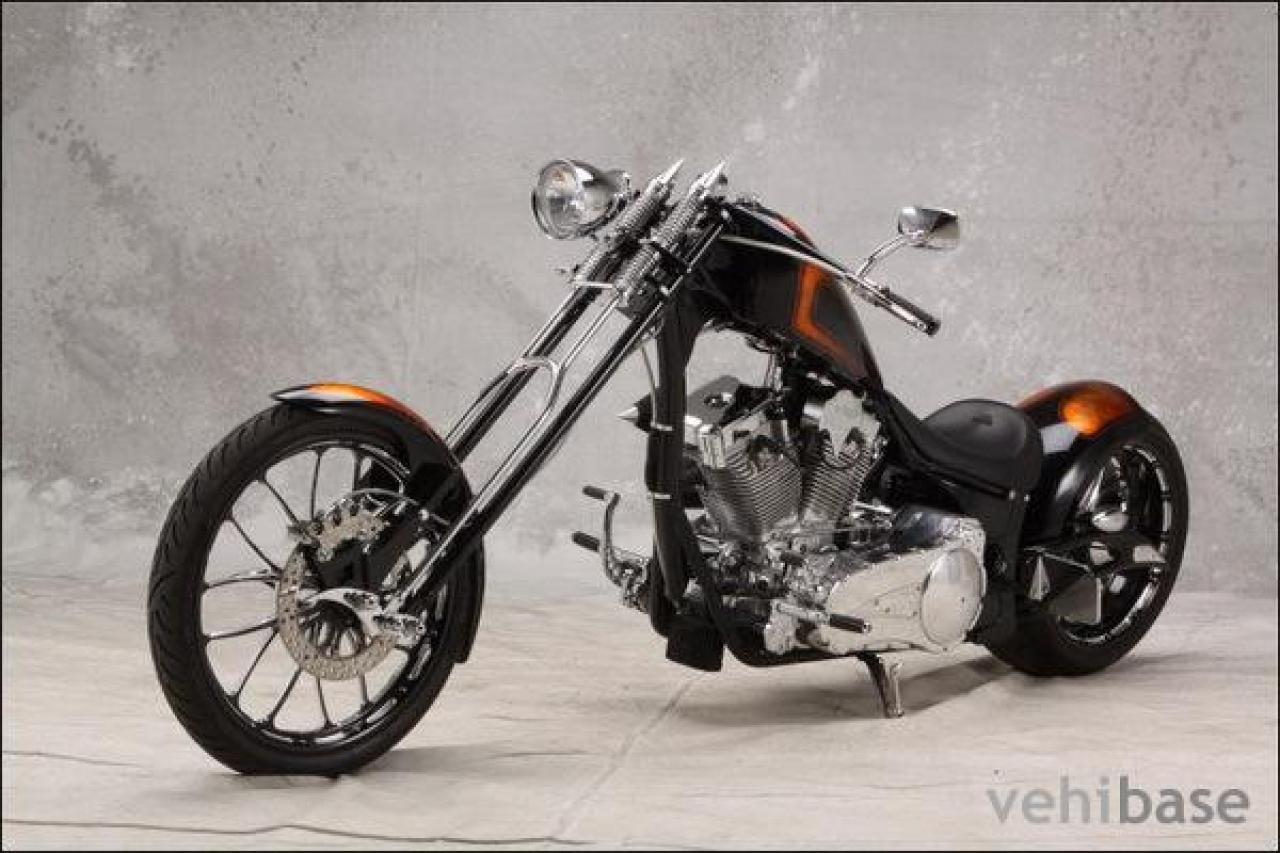
The King Custom Skull Chopper stands as a testament to the fusion of mechanical precision and artistic rebellion. Every line, every curve, every gleam of chrome is a deliberate choice, a brushstroke in a larger narrative of defiance and freedom.
Legacy and Lore: The Skull as a Timeless Motif
Skulls have adorned choppers since the dawn of the custom bike movement. They’re not a trend. They’re a tradition. From the outlaw biker clubs of the 1950s to the modern-day artisans pushing the boundaries of fabrication, the skull has remained a constant—a symbol of the rider’s unbreakable spirit. But why? Because a skull doesn’t age. It doesn’t apologize. It doesn’t conform. It’s the ultimate icon of rebellion, and in a world that increasingly demands conformity, that’s a power worth wielding.
When you build a chopper around a skull, you’re not just creating a bike. You’re joining a lineage. You’re adding your voice to a chorus that stretches back decades, a chorus of riders who refused to be tamed. Your bike becomes a relic, a piece of living history that future generations will look upon with awe. It’s not just a machine. It’s a legacy.
So ask yourself: What story do you want to tell? Do you want to be the rider who builds a monument to precision, where every weld and paint stroke is a testament to discipline? Or do you want to be the outlaw, the wild card, the one who turns steel into myth? The skull doesn’t care. It’s waiting. And the road is calling.