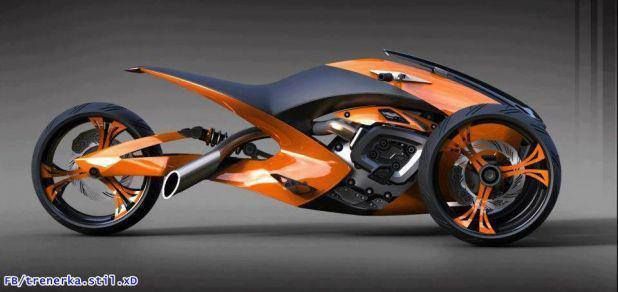
Two-front-wheel motorcycles have long ignited the curiosity of enthusiasts and casual observers alike, straddling a delicate line between bold innovation and perceived novelty. At first glance, these machines provoke a bewildering mix of admiration and skepticism. Their unconventional design disrupts the conventional silhouette of motorcycles, challenging deeply ingrained notions of balance, control, and aesthetic simplicity. Yet beneath this surface-level intrigue lies a profound narrative about the evolution of motorcycle engineering and the shifting paradigms of personal mobility.
Traditional motorcycles, with their singular front wheel and distinctive, lean-forward posture, have remained largely unchanged for over a century. This archetype, refined through countless iterations, epitomizes a dynamic equilibrium between agility and stability. The introduction of a second front wheel is therefore not merely a cosmetic alteration—it’s an audacious recalibration of the motorcycle’s core mechanics. The dual-front-wheel configuration offers not just a visual departure but invites enthusiasts to reconsider what a motorcycle can be, blending characteristics of motorbikes and automobiles into a singular, hybrid experience.
One cannot dismiss the psychological magnetism of two-front-wheel motorcycles. They embody a futuristic aesthetic, an allure steeped in the avant-garde. Their striking appearance suggests enhanced safety and superior handling, resonating with riders who crave both confidence and excitement on the road. The symmetrical front end evokes the design ethos of high-performance supercars, while retaining the stripped-down rawness that motorcyclists cherish. This juxtaposition of familiarity and novelty triggers a fascination that goes beyond the mechanics, tapping into deeper cultural narratives about progress and risk-taking.
Technologically, the dual-front-wheel setup offers tangible advantages. Enhanced stability during cornering is one of its most touted benefits. By distributing the load across two front tires, these motorcycles can maintain greater contact with the road surface, thereby minimizing the precarious lean angles traditionally demanded of solo front wheels. This mechanical innovation translates into improved grip, reduced skid risk, and heightened rider confidence, especially under adverse conditions such as wet or uneven terrain. Furthermore, the twin front wheels can absorb and dissipate impact forces more efficiently, lowering the likelihood of accidents caused by front-end instability.
Another compelling dimension is the evolution of suspension systems tailored for such chassis architectures. Unlike conventional telescopic forks, these motorcycles often utilize complex linkage mechanisms that finely tune the front-end dynamics. This results in a more compliant ride quality and sharper, more predictable handling. Engineers have employed advanced materials and computational modeling to harmonize the interactions between both front wheels, ensuring that the extra componentry enhances, rather than detracts from, the riding experience. The outcome is a machine that challenges the tyranny of compromise traditionally associated with motorcycles, balancing sportiness with rider comfort.
Yet, despite these practical upgrades, the two-front-wheel concept also wrestles with persistent criticisms. Skeptics question whether the increased complexity justifies the relative gains in performance and safety. The added weight and mechanical intricacy can sometimes undermine the purity and simplicity that many motorcyclists prize. Maintenance demands rise, and the price point often escalates beyond what casual riders are willing to invest. Moreover, the expanding footprint of the front assembly might complicate maneuverability in tight urban spaces, negating some of the inherent advantages of motorcycles over cars.
Beyond the technicalities, the cultural narrative around two-front-wheel motorcycles is equally compelling. They occupy a liminal space between outright innovation and niche curiosity. Media portrayal often oscillates between branding them as visionary mobility solutions and dismissing them as fleeting gimmicks. This ambiguity reflects a broader tension within the motorcycling community—between tradition and progression, conservation and disruption. The allure of dual front wheels taps into a collective yearning for reinvention, while simultaneously challenging orthodoxies that have defined motorcycling for generations.
The future trajectory of two-front-wheel motorcycles will likely hinge on broader trends in transportation technology and rider preferences. As autonomous systems, electric propulsion, and smart safety features become increasingly mainstream, motorcycles with enhanced stability and control may gain new relevance. The dual-front-wheel design could synergize with these innovations to produce vehicles that are not only safer but also more adaptable to complex urban environments. Additionally, evolving regulatory frameworks focused on accident reduction might incentivize manufacturers to explore such alternative architectures more aggressively.
Nonetheless, the survival of this concept hinges on how effectively manufacturers can reconcile functionality with accessibility. For mass adoption, these motorcycles must transcend the realm of exotic prototypes and provide tangible value to everyday riders. This entails addressing ergonomic considerations, affordability, and cultural acceptance without diluting the uniqueness that initially captures imaginations. As with many transformative technologies, the path forward will likely involve incremental refinements and a gradual shift in consumer mindset.
In conclusion, two-front-wheel motorcycles should not be dismissed hastily as mere novelty or fleeting spectacle. They represent a bold foray into rethinking fundamental principles of motorcycle dynamics, merging experimental engineering with a forward-looking aesthetic. The enduring fascination with them stems from a deeper resonance—a collective desire to reimagine what motorcycling could become in an era marked by rapid technological and societal change. Whether they ultimately prevail as the future of motorcycles or fade into niche obscurity, these machines have already expanded the horizon of possibility and challenged us to reconsider the boundaries of two-wheeled transport.