What if the most breathtaking choppers weren’t born from Detroit’s steel forges or the neon-lit garages of California, but from the meticulous hands of a Japanese artisan hidden in the shadows of Tokyo’s backstreets? Shinji Kuni isn’t just a builder—he’s a mythmaker, a sculptor of steel who bends chrome and dreams into machines that defy gravity, logic, and convention. His choppers don’t just ride; they levitate, whisper, and command attention like modern-day dragons forged in the fires of obsession. But how does one man, in a world obsessed with mass production and digital perfection, create machines that feel alive? Buckle up. We’re about to dive into the world of Shinji Kuni, where every bolt tells a story and every curve is a rebellion against the ordinary.
The Genesis of a Japanese Chopper Visionary
Shinji Kuni didn’t wake up one morning and decide to build choppers. His journey began in the neon-soaked alleys of Shinjuku, where the hum of motorcycles blended with the clatter of ramen shops and the distant thrum of karaoke. As a teenager, he wasn’t content with the cookie-cutter machines rolling off assembly lines. He craved something raw, something that pulsed with the heartbeat of the rider. So, he started tinkering—stealing scraps of metal from junkyards, salvaging engines from forgotten bikes, and teaching himself the alchemy of welding and design. His first chopper wasn’t a masterpiece; it was a Frankenstein’s monster of mismatched parts, held together by sheer will and a stubborn refusal to conform. But that monstrosity? It ran. And that was all he needed.
The turning point came when a local café owner, a man with a penchant for the unconventional, commissioned him to build a bike that would turn heads. Kuni didn’t just build a bike—he crafted a legend. The café’s regulars, hardened bikers with calloused hands and even harder opinions, fell silent when the machine rolled in. Its elongated frame, the way the front wheel seemed to defy physics, the growl of its engine—it was as if Kuni had captured lightning in steel. From that moment, whispers spread. The quiet genius of Shinjuku had birthed something extraordinary.

The Philosophy Behind the Steel: Why Kuni’s Choppers Feel Alive
Most chopper builders chase trends. Kuni chases essence. His philosophy is simple yet radical: a bike should be an extension of the rider’s soul, not just a mode of transport. Where others rely on CAD software and pre-fabricated parts, Kuni sketches his designs freehand, letting the curves flow from his pen like a jazz musician improvising a solo. His choppers aren’t just built; they’re coaxed into existence, each weld a deliberate stroke, each line a silent conversation between man and machine.
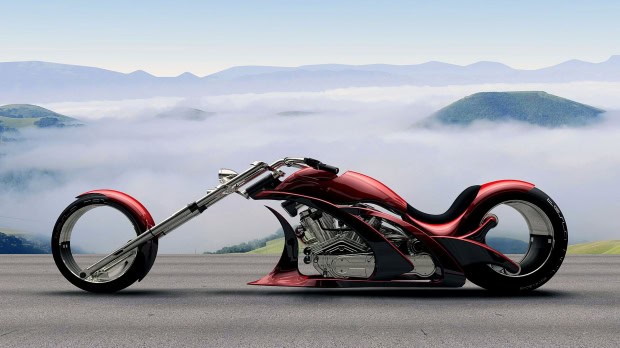
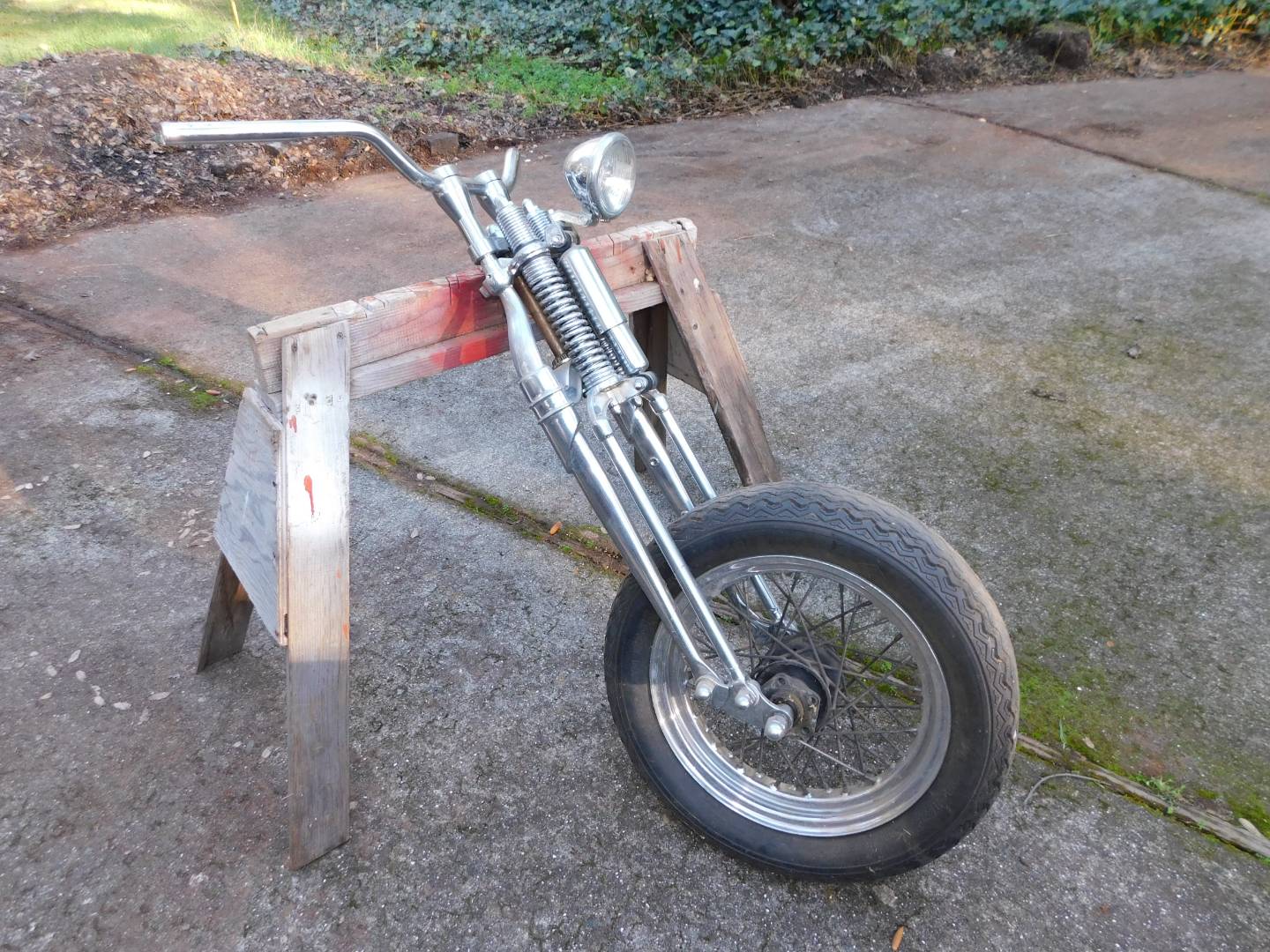
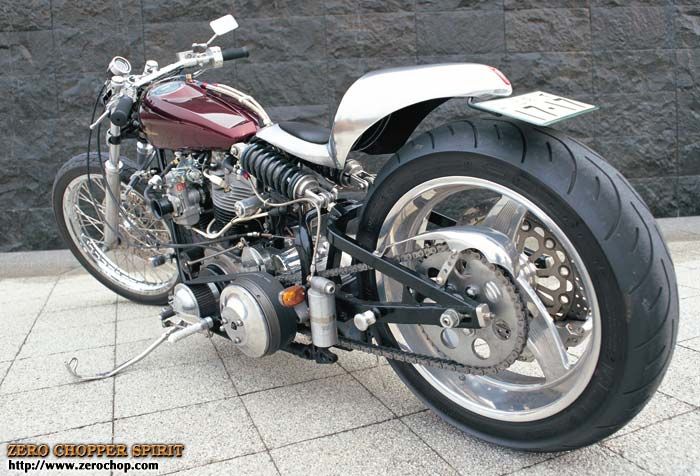
Take his signature “Levitating Frame” design—a moniker that sounds like something out of a cyberpunk novel. By manipulating the geometry of the chassis, Kuni creates the illusion that the front wheel is floating, untethered from the earth. It’s a trick of physics, yes, but it’s also a statement. These bikes don’t just sit on the road; they dance on it. And then there’s the “Whisper Engine,” a custom-built powerplant that doesn’t roar but purrs, its exhaust note a deep, resonant hum that vibrates through the rider’s bones. It’s the kind of sound that makes bystanders pause mid-conversation, their heads turning in unison toward the source.
But Kuni’s genius isn’t just in the aesthetics or the engineering—it’s in the way his bikes make riders feel. Climb onto one of his creations, and you’re not just piloting a machine; you’re stepping into a narrative. The seat molds to your posture like a second skin. The handlebars, positioned just so, invite your hands to grip them with purpose. The bike responds not as a tool, but as a partner, leaning into turns with a grace that belies its raw power. It’s as if Kuni has distilled the essence of freedom into steel and chrome.
The Unseen Struggle: The Challenges of Building Like a Mad Genius
Of course, building choppers like Kuni’s isn’t all smooth rides and standing ovations. It’s a gauntlet of challenges, each more daunting than the last. For starters, there’s the tyranny of time. Kuni’s process is painstakingly slow. While the world moves at the speed of overnight shipping and 3D-printed prototypes, he insists on hand-fabricating nearly every component. A single frame can take months to perfect, its curves refined through countless iterations of trial and error. “Perfection isn’t a destination,” he’s quoted as saying. “It’s a daily argument with the metal.”
Then there’s the financial tightrope. Custom fabrication is expensive. Rare alloys, precision machining, and the labor of skilled artisans don’t come cheap. Kuni’s bikes aren’t for the faint of wallet—or the impatient. Each one is a six-figure investment, a fact that forces him to turn down commissions from those who can’t appreciate the artistry. “I’d rather build one bike a year that makes a man weep,” he once remarked, “than churn out a dozen that gather dust in a garage.”
And let’s not forget the skeptics. The motorcycle world is rife with purists who sneer at anything that deviates from tradition. Kuni’s designs, with their elongated forks and radical geometry, are often dismissed as “gimmicks” or “stunts.” But here’s the thing about gimmicks: they fade. Artistry endures. Every time a skeptic climbs onto one of Kuni’s bikes and feels the road melt away beneath them, the doubt melts too. The proof is in the riding.
The Legacy: How Kuni is Redefining the Art of the Chopper
Shinji Kuni isn’t just building bikes. He’s rewriting the rules of what a chopper can be. In an era where motorcycles are increasingly becoming appliances—efficient, reliable, but ultimately forgettable—Kuni’s work is a defiant celebration of the handmade, the idiosyncratic, and the deeply personal. His influence is seeping into the mainstream, inspiring a new generation of builders who see choppers not as machines, but as canvases for self-expression.
Consider the rise of “metric choppers”—bikes built from Japanese and European components, blending the raw power of a Harley with the precision of a Ducati. Kuni’s designs are the blueprint for this movement. His use of lightweight frames, his obsession with balance, and his refusal to compromise on aesthetics have set a new standard. Even established manufacturers are taking notes, incorporating elements of his philosophy into their own limited-edition models.
But perhaps Kuni’s most enduring legacy will be the way he’s changed the conversation around custom motorcycles. He’s proven that a chopper can be more than just a rebellious statement—it can be a work of art, a heirloom, a piece of history. His bikes aren’t just ridden; they’re revered. They’re photographed, filmed, and written about in hushed tones. They’re the kind of machines that inspire pilgrimages, with riders traveling across continents just to lay eyes on them, let alone ride one.
The Future: What’s Next for the Enigmatic Builder?
So, what’s next for Shinji Kuni? If his past is any indication, the answer is simple: more madness. He’s already teasing a new project—a chopper that integrates electric propulsion without sacrificing the soul of a traditional build. Imagine a bike that hums like a turbine, accelerates like a rocket, and yet, when you grip the handlebars, it feels like an extension of your own body. It’s a challenge that would make lesser builders quake, but for Kuni, it’s just another puzzle to solve.
There’s also the matter of his elusive workshop. For years, its location has been a closely guarded secret, known only to a handful of trusted riders and collectors. Rumors swirl of a hidden space in Yokohama, where the air is thick with the scent of motor oil and the walls are lined with blueprints of machines yet to be born. Will he ever open his doors to the public? Unlikely. Kuni’s magic thrives in secrecy. The mystery is part of the allure.
One thing is certain: Shinji Kuni isn’t done. He’ll keep pushing boundaries, defying expectations, and building machines that make the world stop and stare. And in a world that often feels like it’s moving too fast, too uniformly, too digitally, his work is a reminder of the beauty that still exists in the tangible, the handcrafted, and the unapologetically bold.
So, the next time you see a chopper glide past, pause for a moment. Look closely. You might just catch a glimpse of Kuni’s signature—a curve that feels like a smile, a line that tells a story. And if you’re lucky enough to ride one of his creations? Hold on tight. You’re not just on a bike. You’re on a journey.