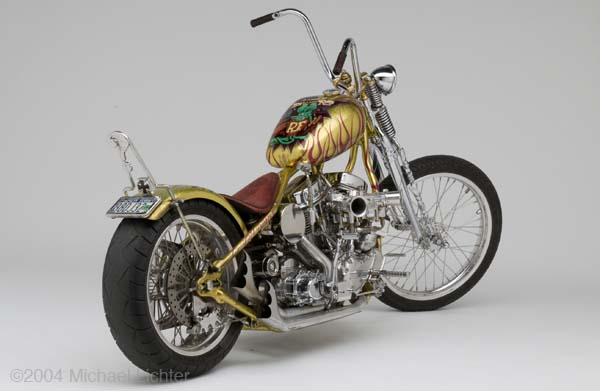
The rumble of a V-twin engine, the gleam of polished chrome, the raw defiance of a machine stripped down to its skeletal essence—this is the world of Indian Larry, a man whose name echoes through the annals of chopper culture like the growl of a Harley Davidson at full throttle. Larry Desmedt, known simply as Indian Larry, wasn’t just a builder; he was an alchemist who transformed steel and spirit into rolling works of art. His influence didn’t just shape motorcycles; it sculpted an entire subculture, infusing it with a rebellious soul and an unapologetic aesthetic. To understand the legacy of Indian Larry is to peer into the heart of what makes a chopper more than just a vehicle—it’s a statement, a rebellion, a love letter to the open road.
The Birth of a Mechanical Maverick
Born in 1949, Larry’s journey began not in the gleaming showrooms of Detroit, but in the gritty garages of New York City, where the scent of gasoline and ambition mingled with the hum of fluorescent lights. He wasn’t born with a wrench in his hand, but he wielded one with the precision of a surgeon and the passion of a poet. His early days were spent tinkering with bikes, not for fame or fortune, but for the sheer joy of creation. Larry’s genius lay in his ability to see beyond the blueprints; he saw the soul of the machine, the untold story it could tell. His work wasn’t just about engineering—it was about storytelling, about crafting a narrative in steel and chrome that would roar to life with every turn of the throttle.
The Chop as a Canvas: Larry’s Artistic Rebellion
A chopper, at its core, is a rebellion against the assembly-line monotony of modern motorcycles. It’s a canvas where the builder’s personality, dreams, and defiance are etched into every curve and line. Indian Larry understood this better than anyone. His choppers weren’t just machines; they were three-dimensional manifestos of individuality. He took the humble Harley Davidson and transformed it into something mythic—a beast of burden for the restless spirit. His designs were a fusion of raw power and delicate artistry, where the rawness of the engine’s growl was softened by the elegance of hand-tooled leather and the shimmer of custom paint. Larry’s choppers were like the tattoos of the road: indelible, personal, and unapologetically bold.

What set Larry apart was his refusal to conform to the rigid rules of motorcycle design. He didn’t just chop bikes; he sculpted them, bending metal and spirit to his will. His creations were a dance between chaos and control, where every bolt and weld told a story of defiance against the ordinary. Larry’s choppers were the visual equivalent of a punk rock anthem—loud, unrefined, and impossible to ignore.
The Engine as a Heartbeat: Larry’s Mechanical Poetry
At the heart of every Larry chopper was an engine that pulsed with life, a mechanical heartbeat that synchronized with the rider’s own rhythm. Larry wasn’t content with stock engines; he pushed them to their limits, coaxing out every ounce of power and character. He understood that an engine wasn’t just a power source—it was the soul of the machine. His modifications weren’t just about horsepower; they were about creating a symphony of sound and sensation. The deep, resonant growl of a Larry-tuned engine wasn’t just noise; it was a declaration of intent, a battle cry for the open road.
Larry’s approach to engine tuning was akin to a jazz musician improvising on a classic melody. He took the familiar hum of a Harley and transformed it into something entirely new, something that resonated with the rider’s spirit. His engines weren’t just built; they were composed, each component carefully selected and tuned to create a masterpiece of mechanical harmony. This attention to detail elevated his choppers from mere machines to objects of reverence, machines that riders didn’t just ride—they worshipped.
The Culture of the Chop: Larry’s Role in Shaping a Movement
Indian Larry wasn’t just a builder; he was a cultural icon, a figurehead for a movement that rejected conformity and embraced individuality. His influence extended far beyond the garage, shaping the ethos of an entire generation of riders and builders. The chopper culture that Larry helped define was more than just a style; it was a lifestyle, a community bound by a shared love of freedom, creativity, and rebellion. Larry’s choppers became symbols of this culture, icons that represented the spirit of the open road and the unyielding pursuit of self-expression.
The block parties, the gatherings, the late-night rides—these were the rituals of a culture that Larry helped nurture. His presence was magnetic, drawing in riders and builders who saw in his work a reflection of their own dreams and aspirations. Larry’s choppers weren’t just machines; they were beacons, guiding the way for those who sought to break free from the constraints of convention. His legacy lives on in every chopper that roars down the highway, in every rider who feels the wind in their face and the thrill of the ride.
The Aesthetic of Defiance: Larry’s Signature Style
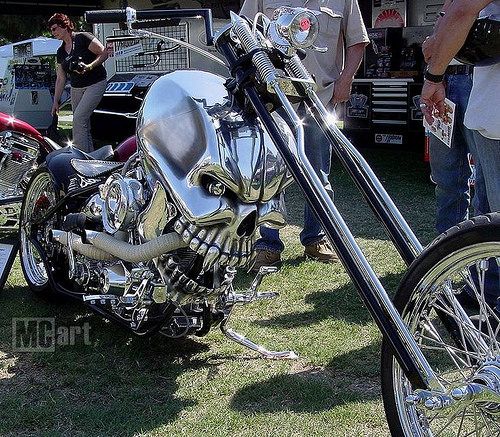
To describe Larry’s style as “custom” would be an understatement. His choppers were a fusion of the raw and the refined, where the grit of the garage met the elegance of the showroom. He was a master of contrast, pairing the rough edges of a chopped frame with the delicate curves of hand-tooled leather and the gleam of polished chrome. His designs were a visual feast, a feast that celebrated the beauty of imperfection and the allure of the unconventional.
Larry’s choppers were often adorned with intricate details that told a story—a skull here, a flame there, a patchwork of symbols that spoke of adventure, danger, and freedom. His use of color was bold and unapologetic, with hues that popped like a neon sign in a dark alley. He understood that a chopper wasn’t just a machine; it was a work of art, a rolling sculpture that demanded to be seen and admired. Larry’s aesthetic was a rebellion against the sterile, mass-produced designs of the modern world, a celebration of the handmade and the hand-loved.
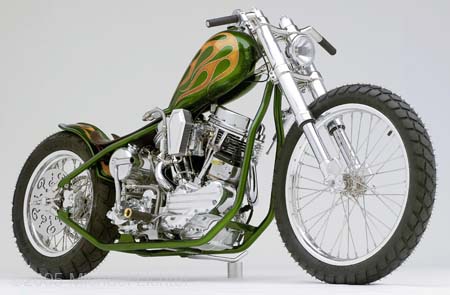
His choppers were also a testament to his love of the vintage, a nod to the golden age of motorcycling when bikes were built to last and ridden with passion. Larry’s designs often incorporated elements from the past—retro handlebars, classic paint schemes, the unmistakable hum of an old-school engine—yet they were undeniably modern, a fusion of the old and the new that captured the spirit of the times.
The Enduring Legacy: Larry’s Influence on Modern Choppers
Decades after his passing, Indian Larry’s influence can still be seen in every corner of the chopper world. His designs have inspired countless builders, his ethos has shaped entire communities, and his spirit lives on in every machine that roars to life with a defiant growl. Larry didn’t just build choppers; he built a legacy, one that continues to inspire and challenge riders and builders alike.
Modern choppers owe a debt of gratitude to Larry’s vision. His emphasis on individuality, his celebration of the handmade, and his refusal to conform to convention have become hallmarks of the chopper culture. Today’s builders draw inspiration from his work, incorporating his techniques and aesthetics into their own creations. Larry’s legacy is a reminder that a chopper isn’t just a machine—it’s a canvas, a story, a piece of the rider’s soul.
The choppers of today may be sleeker, more technologically advanced, or more daring in their designs, but they all share one thing in common: the spirit of Indian Larry. His influence is a thread that weaves through the fabric of chopper culture, a thread that connects the past to the present and the present to the future. Larry’s legacy isn’t just about the bikes he built; it’s about the lives he touched, the dreams he inspired, and the rebellion he embodied. His choppers were more than just machines; they were monuments to the power of individuality, the beauty of imperfection, and the unyielding pursuit of freedom.