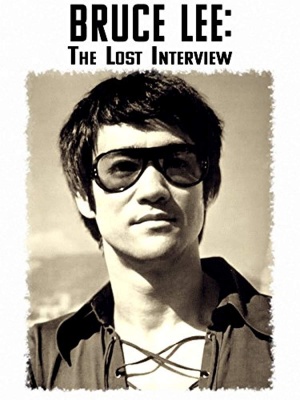
In the shadowed corridors of music history, where legends whisper secrets to the wind, there exists a moment frozen in time—a conversation that never quite reached the ears of the world. It was an interview, lost to the tides of digital decay, yet its echoes linger like the last notes of a fading vinyl record. This is the story of Paul Sr.’s untold revelations, a dialogue that transcends mere words to unravel the very fabric of artistic lineage and the weight of inherited genius.
The Allure of the Unheard: Why We Hunger for Lost Voices
There is a peculiar magnetism to the unheard, the unseen, the fragments of existence that slip through the cracks of time. It is not merely curiosity that drives us to seek these lost fragments; it is the haunting suspicion that within them lies a truth too profound to be confined by the constraints of history. When an interview vanishes into the ether, it becomes more than a mere conversation—it transforms into a myth, a whispered legend that grows richer with each retelling. The human psyche is wired to fill in the blanks, to project our own desires and fears onto the silences of the past. In the case of Paul Sr., the absence of his words has only amplified their perceived significance, turning a simple exchange into a cultural artifact of near-religious reverence.
Consider the way we mythologize artists. Their lives become canvases upon which we paint our own struggles, triumphs, and unspoken longings. When an interview is lost, it is as if a veil has been lifted, revealing not just the artist, but the raw, unfiltered process of creation itself. The fascination isn’t just with the man—it’s with the idea of him as a conduit between eras, a bridge between the sacred and the profane in music. We crave these lost dialogues because they offer a glimpse into the alchemy of inspiration, the unspoken rules of a craft passed down like a family heirloom.
The Weight of Legacy: Inherited Genius and Its Burdens
Paul Sr. stands at the precipice of a paradox: the son of a legend, yet a legend in his own right. The burden of legacy is a theme that resonates deeply in the arts, where the shadow of a parent’s achievements can either inspire or suffocate. To be the child of a titan is to inherit not just a name, but an entire legacy of expectations, critiques, and unspoken comparisons. Yet, in the fragments of his lost interview, there is a sense that Paul Sr. has not merely inherited this legacy—he has redefined it. His words, though fleeting, suggest a man who has grappled with the weight of his lineage, only to emerge with a voice that is distinctly his own.
This is the crux of the fascination: the tension between inheritance and innovation. How does one honor the past while forging a new path? Paul Sr.’s reflections, if they could be unearthed, would likely delve into the nuances of this struggle—the late-night rehearsals where old melodies collided with new ideas, the moments of doubt when the ghost of a parent’s voice seemed louder than his own. There is a quiet rebellion in his silence, a refusal to be defined solely by what came before. The lost interview, then, becomes a metaphor for the creative process itself: a dialogue between the past and the future, where every word is a negotiation between homage and defiance.

The Alchemy of Mentorship: Learning from the Masters
At the heart of Paul Sr.’s narrative is the idea of mentorship—not as a one-way street of knowledge passed down, but as a dynamic exchange where both teacher and student are transformed. The lost interview, if it were to resurface, would likely reveal a man who saw his father not just as a figure of authority, but as a fellow traveler on the road to mastery. This is where the true magic lies: in the unspoken lessons, the subtle shifts in tone, the way a single glance could convey volumes. The art of learning from legends is not about mimicry; it is about internalizing the essence of their craft and then setting it ablaze with one’s own fire.
There is a term in Japanese culture, iemoto, which describes the intricate, often unspoken bond between a master and their apprentice. It is a relationship built on trust, discipline, and an almost spiritual transmission of knowledge. Paul Sr.’s story, as hinted at in the fragments of his lost interview, embodies this concept. His journey was not one of blind imitation but of discernment—knowing when to honor tradition and when to break it. The fascination with his words stems from this duality: the desire to understand the mechanics of genius while also witnessing the courage it takes to step out from under its shadow.
The Ghost in the Machine: Why Digital Decay Haunts Us
In an age where every conversation is recorded, archived, and immortalized in the cloud, the loss of an interview feels like a betrayal—a glitch in the matrix of digital permanence. We have grown accustomed to the illusion of immortality, where data persists indefinitely, untouched by the ravages of time. Yet, the disappearance of Paul Sr.’s interview reminds us of the fragility of memory in the digital age. It is a humbling realization: no matter how advanced our technology, the past remains a fragile thing, subject to the whims of servers, formats, and the relentless march of progress.
This fragility only deepens the mystique. The lost interview is not just a missing file; it is a ghost, a specter that haunts the collective consciousness. We are left to wonder: what secrets did it contain? What truths were whispered into the void, never to be heard? The allure of the lost is not just in what we find, but in what we imagine we might have found. It is the ultimate creative prompt, a Rorschach test for the human need to fill in the gaps with our own narratives.
The Echoes of What Could Have Been
To lose an interview is to lose a piece of history, but it is also to gain something intangible—a sense of possibility. The fragments of Paul Sr.’s conversation, though incomplete, serve as a reminder that the past is not a fixed entity but a living, breathing thing, shaped by our yearning for connection. In the silence of what was never said, we hear our own voices, our own questions, our own unspoken desires to understand the alchemy of artistry.
The fascination with the lost interview is, at its core, a fascination with the unknown—the way a single missing piece can transform a story into a legend. It is the same pull that draws us to ruins, to half-remembered dreams, to the echoes of a song that fades before the last note is played. Paul Sr.’s untold words are not just a relic; they are an invitation to imagine, to create, to fill the silence with our own stories. And perhaps, in doing so, we honor not just the past, but the future it has yet to become.