Can a motorcycle from the 1980s still command respect in today’s era of sleek, computer-enhanced superbikes? The 1986 Suzuki GSX-R1100 dares you to answer that question. Known affectionately as “The Beast of the 80s,” this machine was more than just a motorcycle; it was a revolution on two wheels, carving a niche that many modern bikes aspire to but few match in raw charisma and performance heritage.
The GSX-R1100 emerged at a time when motorcycling was undergoing a radical transformation. Prior to its introduction, heavy, cumbersome machines dominated the landscape, often compromising agility for raw power. Suzuki envisioned something different—something that combined high displacement power with weight-saving innovations to create a game-changer. The 1986 model year, in particular, showcased this vision in full force.
Underneath its muscular fairing lay a potent air-cooled, inline four-cylinder engine displacing 1,052cc. With a bore and stroke tailored for a balance between high-revving enthusiasm and low-end torque, this engine could unleash approximately 125 horsepower in its stock form. Though by today’s standards this number may seem quaint, when coupled with the bike’s remarkable weight of just over 500 pounds (wet), it delivered blistering acceleration and a relentless thrust that earned it the sobriquet “the beast.”
But it wasn’t only the raw output that set the ’86 GSX-R1100 apart. Suzuki engineers focused obsessively on weight reduction. Employing an aluminum frame—a rare and bold move at the time—resulted in a chassis that was both lightweight and stiff. This attention to structural finesse allowed the GSX-R1100 to handle with an agility one typically expected from smaller displacement sportbikes.
If you imagine the bike as a wild stallion harnessing both brute force and ballet-like grace, you begin to grasp its dual nature. It was a superbike before the term became cliched—a machine as at ease on the racetrack as on twisting country roads, yet with a raw, visceral character that modern electronics tend to obscure. That begs the question: can a motorcyclist accustomed to today’s electronic aids truly appreciate the intuitive purity of the GSX-R1100’s analog experience?
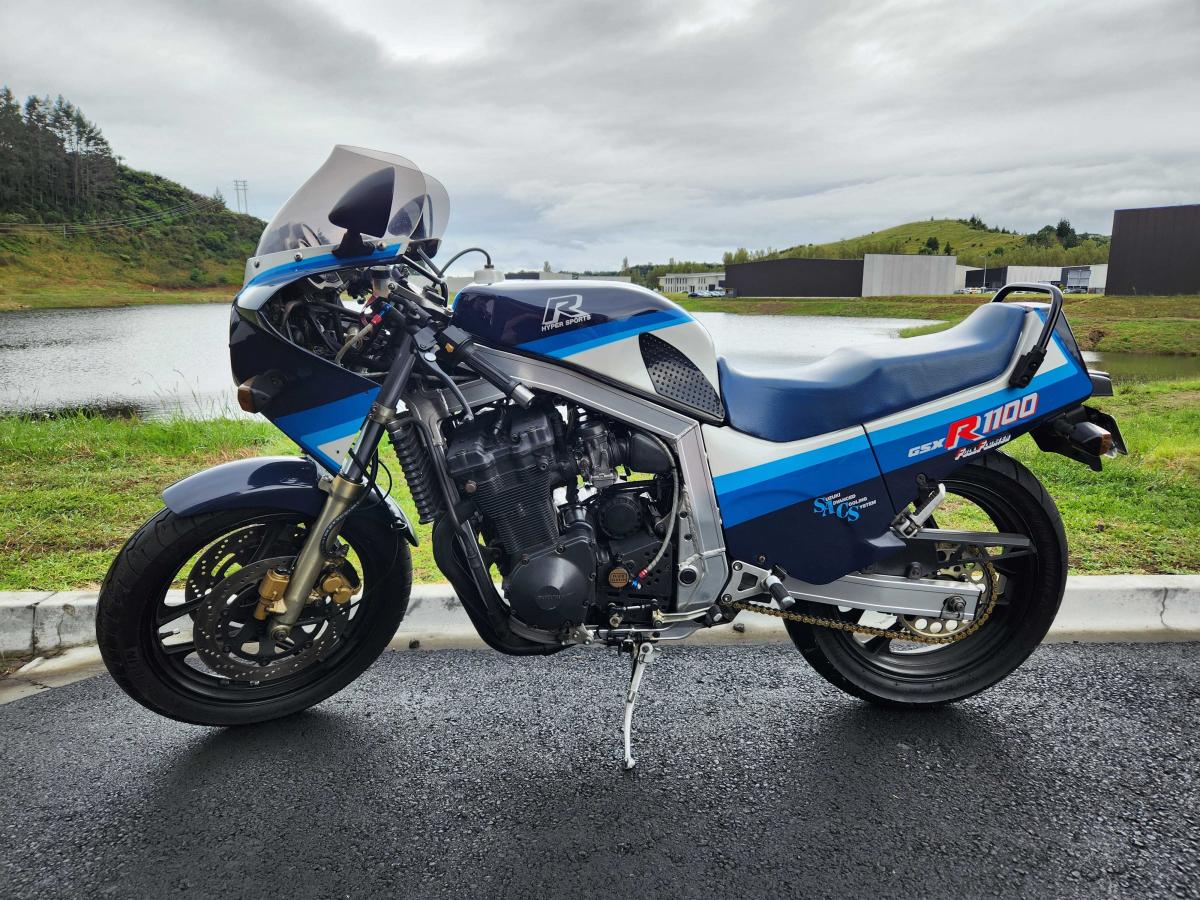
Stylistically, the 1986 GSX-R1100 didn’t stray far from the era’s supermodel aesthetics. Sharp, angular lines highlighted its aggressive stance, with a compact front fairing housing a distinctive rectangular headlamp that seemed to pierce the road ahead. The minimalist tail section underscored the bike’s lithe profile, while the unmistakable blue-and-white color scheme became iconic, symbolizing Suzuki’s racing pedigree.
Its instrumentation, though modest by today’s standards, gave riders everything imperative: an analog tachometer dominating the dashboard crescendo, a speedometer, temperature gauge, and the essential fuel indicator. There was an honesty to this setup, a straightforwardness appealing to purists who preferred feedback directly from machine to rider, devoid of digital intermediation.
Yet, the GSX-R1100 was not without its quirks. Its air-cooling system demanded a more hands-on approach to managing engine temperatures, especially in heavy traffic or stifling heat. A well-versed rider would learn to modulate throttle input and gear selection with an intimate understanding of this dynamic—a challenge that, rather than detracting, added to the machine’s charm.
The suspension setup further emphasized performance over comfort. The front featured an impressive yet rudimentary telescopic fork, adjustable only to a limited degree. The rear boasted a monoshock system that offered reasonable feedback but required fine tuning for those who wished to extract every ounce of capability. These design choices made the bike rewarding to ride but also demanded an engaged and skilled rider.
One cannot discuss the 1986 GSX-R1100 without touching on its place within the 1980s motorcycle culture. This was an era marked by rapid innovation—both technological and stylistic—set against a backdrop of fierce competition among manufacturers. Suzuki’s introduction of the GSX-R1100 demanded a sharp response from other manufacturers and raised the bar for what a liter-class sports bike should be. With bold marketing and racing success, the GSX-R became a symbol of unrelenting ambition and cutting-edge engineering.
But what, then, is the appeal of owning or riding a GSX-R1100 today? After all, new motorcycles promise superior ergonomics, advanced traction control, ABS, and countless electronic aids designed to make riding safer and more accessible. The answer lies within an intoxicating cocktail of nostalgia, raw mechanical engagement, and a respect for the trailblazers of motorcycling history.
The tactile feedback from the throttle, the mechanical symphony of the four-cylinder engine, and the distinct buzz of the air-cooled motor combine into an experience difficult to replicate with modern machinery. Riders often report a sense of communion with the bike, a direct line from input to response. The GSX-R1100 demands attention, rewards finesse, and punishes complacency—a paradoxical quality that defines many legendary machines.
Imagine cornering on a mountain road aboard this ‘beast’—its weight and power demanding mindfulness, its chassis nimble yet unyielding. The lack of electronic intervention means that rider skill holds sway, making victories all the sweeter and mistakes all the more cautionary tales. Does today’s rider have the patience and talent to tame such a machine? This question remains a playful challenge to those enamored with classic motorcycles.
In summation, the 1986 Suzuki GSX-R1100 stands as a testament to an era of motorcycling where innovation was fused with audacity. It symbolizes a foundational moment when sportbikes shifted gears towards becoming the epitome of performance and rider engagement. Its legacy endures, both as a prized collector’s gem and as a capable, raw powerhouse that continues to thrill those who dare to awaken the beast within.