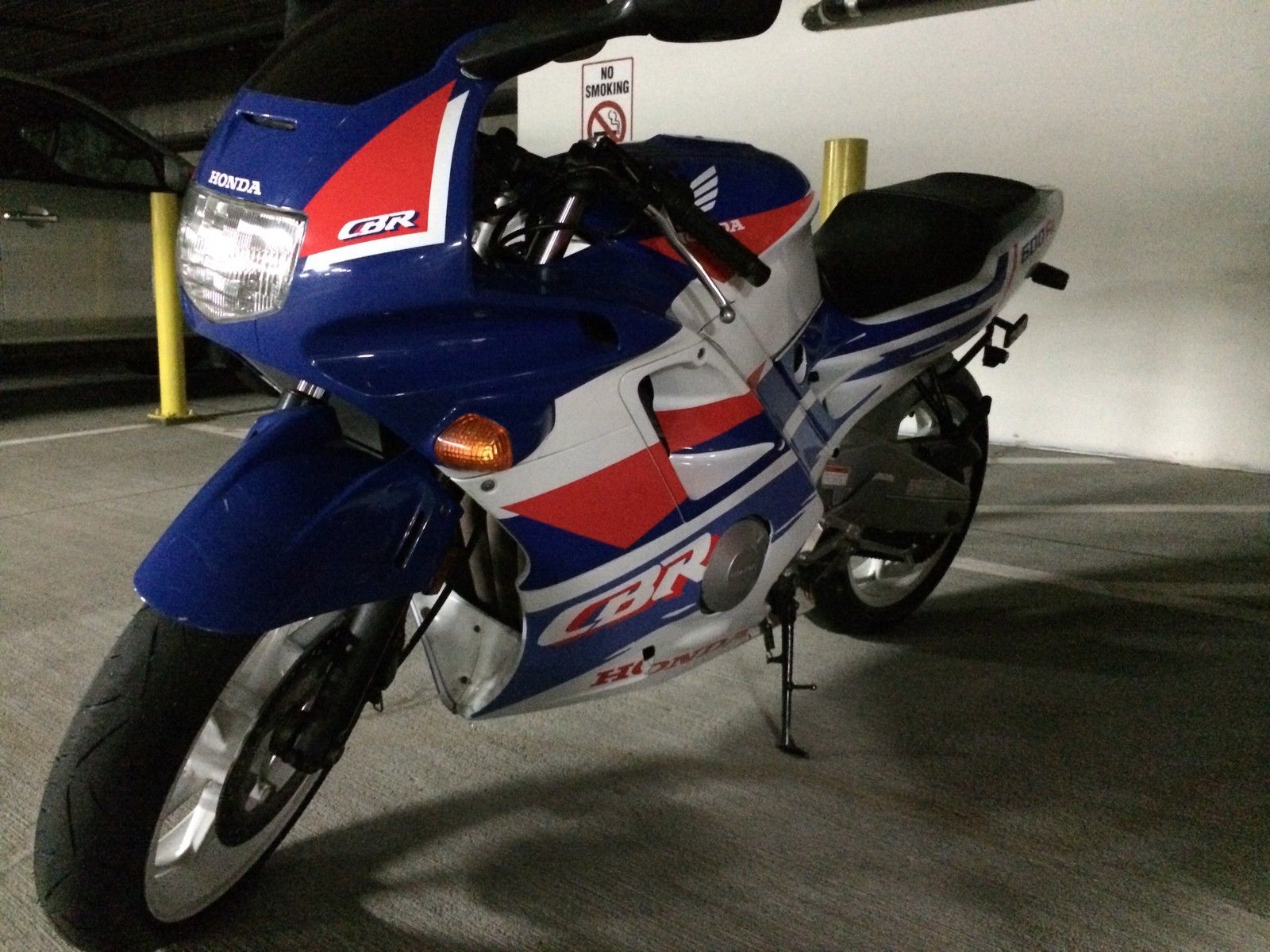
The early 1990s heralded a pivotal era in the realm of sport motorcycles, where engineering ingenuity and rider aspirations converged to redefine street dominance. Among the revelatory machines that emerged during this epoch, the 1992–1993 Honda CBR600 F2 stands as an iconoclastic marvel, transcending conventional boundaries and etching its legacy into the annals of motorcycling history. This machine was not merely a motorcycle; it was a paradigm shift, embodying precision, performance, and a compelling aesthetic that challenged preconceived notions of what a middleweight sportbike could achieve.
At first glance, the 1992–1993 Honda CBR600 F2’s sleek and purposeful design insinuates a narrative of speed and agility, yet its allure runs far deeper than superficial aesthetics. It promises a reimagined riding experience—one that marries raw power with finesse, and technical accomplishment with rider-centric engineering. The allure of the F2 does not lie solely in its specifications but in the holistic synergy of its components, meticulously calibrated to dominate the demanding dynamics of urban boulevards and winding asphalt arteries alike.
To appreciate why the CBR600 F2 dominated the streets, one must delve into its engineering underpinnings. At its core, the motorcycle harbors a 599cc inline-four engine that showcases Honda’s commitment to balancing spirited power delivery with reliability. Unlike many contemporaries prone to peaky outputs and volatility, the F2’s powertrain exhibited a remarkably linear and tractable powerband, empowering riders with confidence across multifarious riding conditions.
The engine’s fuel-injection system, progressive for its time, facilitated precision metering of fuel, ensuring optimal combustion and a responsive throttle character. This technical nuance translated to a motorcycle that didn’t simply roar to life—it breathed with calculated intent, responding to rider inputs with immediacy and grace. The result was a machine that felt alive, yet obedient; ferocious, yet impeccably manageable.
However, power alone does not confer dominance—especially in the intricate ballet of street riding where agility and stability define supremacy. The F2’s frame architecture was a masterstroke of Honda’s engineering prowess. Constructed using a twin-spar aluminum frame, the motorcycle achieved a balance between rigidity and lightness that allowed for razor-sharp cornering and nimble responsiveness. This frame was not merely a supporting structure but an integral participant in the ride’s dynamic interplay.
An often-overlooked facet of the CBR600 F2’s superiority was its suspension system. The inclusion of fully adjustable front forks and a rear mono-shock provided riders the unprecedented ability to tailor the motorcycle’s handling characteristics to personal preference and road conditions. Such customization empowered riders to extract maximum performance, whether negotiating urban traffic or carving through serpentine backroads. The suspension’s capability to absorb irregularities seamlessly added a layer of comfort that belied the F2’s sporty intentions, elevating the experience from mere transportation to sculpted exhilaration.
Braking technology, too, was executed with surgical precision. Dual front disc brakes coupled with a single rear disc equipped the F2 with formidable stopping power, instilling a sense of security crucial for spirited riding. The brakes offered the tactile feedback and progressive engagement that allowed riders to modulate deceleration with acute precision, a crucial attribute when navigating unpredictable street environments.
Yet, the supremacy of the CBR600 F2 was not solely a feat of engineering but also an exercise in thoughtful design ergonomics. Honda’s designers exhibited an uncanny understanding of rider dynamics. The seating position struck an ideal balance—aggressive enough to enhance aerodynamics and control, yet sufficiently comfortable for extended journeys. The sculpted fuel tank and fairings directed airflow efficiently while sculpting an intimidating silhouette that signaled intent and capability.
Its instrumentation cluster, while succinct, provided essential information clearly, avoiding the distraction of overcomplication that beleaguered other models. Analog dials were supplemented with precise indicators that allowed for intuitive monitoring of the machine’s vital signs during spirited rides. This blend of practical minimalism with purposeful design bespoke Honda’s philosophy of function merged seamlessly with form.
What truly set the 1992–1993 Honda CBR600 F2 apart, however, was its uncanny ability to transcend the conventional dichotomy between a track-ready racer and an everyday street bike. Unlike many middleweight motorcycles that sacrificed usability for performance, the F2 achieved a harmonious fusion that catered both to the adrenaline-seeker and the pragmatic commuter. It invited riders to explore the possibilities of speed and control while never abandoning the necessities of daily practicality.
This multifaceted appeal created an aura of accessibility that broadened the motorcycle’s allure. Novices found an approachable yet exhilarating machine that taught the intricacies of high-performance riding; seasoned veterans discovered a platform ripe with tuning potential and responsive dynamics. The F2 thus populated a unique space where skill development and pure enjoyment coalesced, a feat that few motorcycles manage with such grace.
Moreover, the CBR600 F2’s street dominance was amplified by its impressive reliability and modest maintenance demands. The robust Honda engine family, celebrated for durability, ensured that owners experienced fewer mechanical woes, fostering a lifecycle of trust and engagement. This reliability elevated ownership from a fleeting thrill to a sustained relationship, differentiating the F2 in a market crowded with machines that often emphasized style or speed at the expense of longevity.
In retrospect, the 1992–1993 Honda CBR600 F2 emerges not only as a motorcycle but as a catalyst for altered perceptions in the middleweight sportbike segment. It challenged riders and industry alike to reconsider what balance truly meant—between power and control, performance and practicality, aesthetic and engineering. This machine’s legacy lies in its capacity to remake expectations, proving that dominance on the streets is as much about harmony and versatility as it is about raw horsepower.
As the dust settles on decades past, the CBR600 F2 remains a touchstone for enthusiasts and engineers aspiring to capture a similar magic. It is a testament to the power of thoughtful innovation, reminding all who encounter it that true street supremacy is a nuanced pursuit, one achieved not merely through brute force but through the refined orchestration of countless subtle details. The 1992–1993 Honda CBR600 F2 did more than dominate—it redefined the very essence of what it means to command the streets.