The 1994 Suzuki GSX-R750 holds a prestigious place in the annals of sportbike history, a machine that effortlessly merges performance and agility, earning its reputation as a true street weapon. Nearly three decades since its debut, it remains a fascinating subject among enthusiasts and casual riders alike. Underneath its deceptively compact frame lies an engineering marvel that still begets admiration and respect. But in an era dominated by technological advancements and electronic sophistication, can this iconic motorcycle still command the roads with the same fervor and authority it once did? Examining this legendary machine reveals not only its timeless attributes but also the evolving landscape of street performance.
The 1994 GSX-R750 was part of Suzuki’s third generation of the GSX-R series, a watershed moment in sportbike evolution. Its design philosophy emphasized a balance of lightweight construction and a high-revving inline-four engine, creating an exquisite mix of power and handling rarely seen at the time. With a dry weight hovering around 370 pounds and a power output close to 106 horsepower, the bike offered a nimble yet explosive ride. The compact chassis and refined suspension components introduced a new paradigm for sportbike dynamics, enabling riders to slice through corners with breathtaking precision.
One of the core appeals of the ’94 Suzuki GSX-R750 lies in its visceral riding experience—a feature often diluted in modern motorcycles overladen with electronic rider aids. The bike’s carbureted engine demands a relationship between man and machine where throttle control is crucial and rewarding when mastered. This mechanical connectivity offers a sense of involvement that contemporary models, with their traction control systems and ride-by-wire throttles, tend to diminish. Riders find themselves fully engrossed in the ride, attuned to every nuance of the GSX-R’s response and feedback.
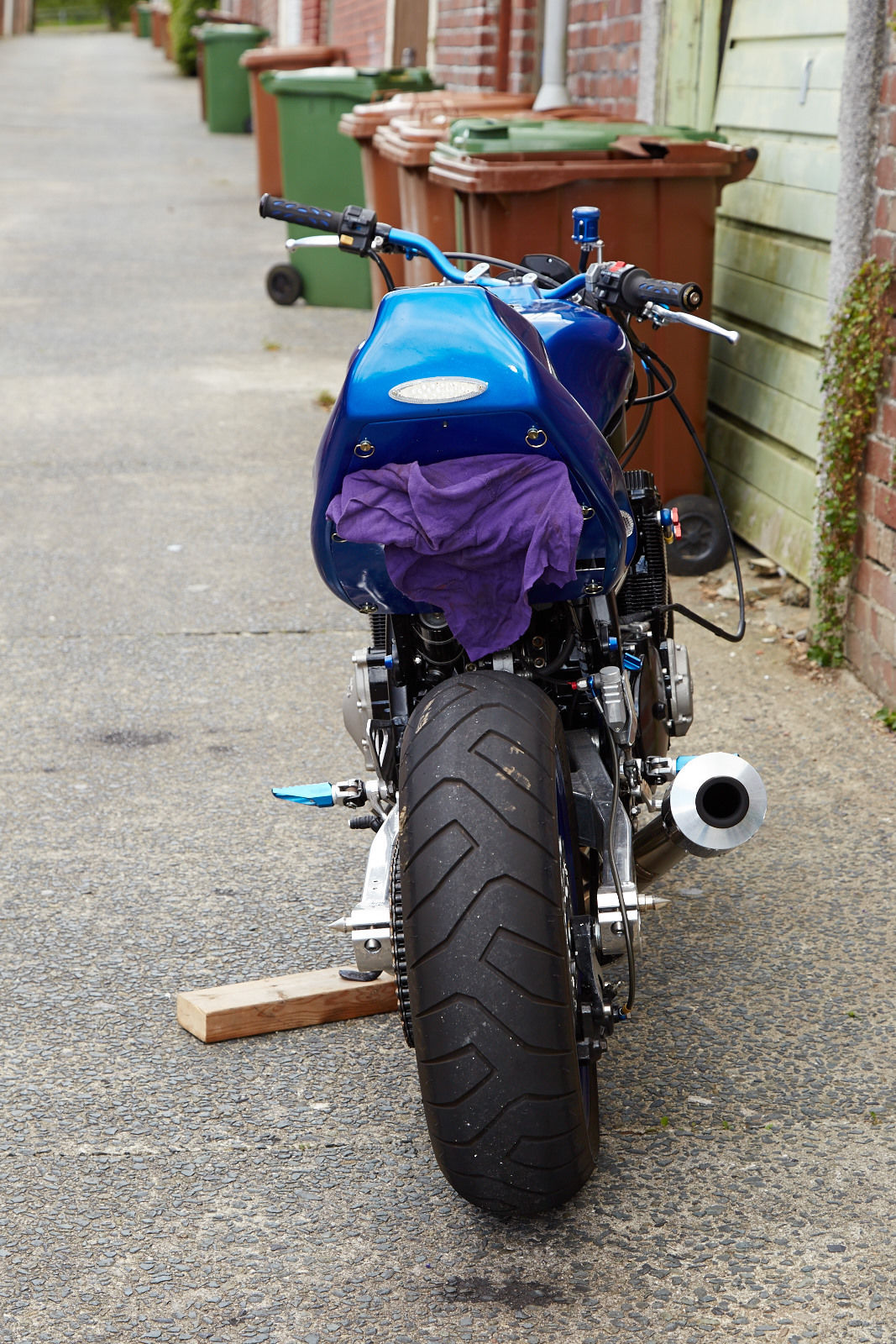
Visually, the GSX-R750 of this era stands out with its aggressive, streetfighter-esque appearance. The minimalist body panels, sharp lines, and exposed engine components underscore its no-nonsense, performance-oriented character. Unlike today’s sportbikes, where aerodynamic flamboyance often takes precedence, this Suzuki adopts a stripped-down, functional aesthetic that resonates with purists and those who appreciate form meeting function—the design is not merely for spectacle but tuned for function. The bike’s distinctive twin round headlamps and the bold GSX-R graphics paint an image that is instantly recognizable and markedly timeless.
For those intrigued by technical specifics, the 1994 GSX-R750’s engine architecture features a 749cc, liquid-cooled, DOHC inline four-cylinder configuration with a four-valve per cylinder arrangement. At its heart lies a smooth yet aggressive power delivery, bolstered by Suzuki’s use of titanium valves to reduce reciprocating mass and enhance revving capability. The bike’s gearbox and clutch are robust and precise, engineered to withstand spirited riding on both street and track. Suspension components include fully adjustable forks and mono-shock rear suspension, derived directly from racing technology, which provide exceptional feedback and control over varying road surfaces.
Braking performance, critical in defining the efficacy of a street weapon, does not fall short. Equipped with dual front disc brakes and a single rear disc, the braking system offers impressive stopping power for its class and weight. Although it lacks modern ABS technology, riders who are skilled in modulating brake force find the setup intuitive and reliable for aggressive riding styles. This characteristic further enhances the rider’s command, fostering skills that are often automated away in newer motorcycles.
When contemplating the contemporary relevance of the 1994 Suzuki GSX-R750, it’s essential to evaluate how it compares to modern machinery in practical terms. While it may lack cutting-edge electronics such as traction control, ABS, ride mode selection, and sophisticated fuel injection mappings, its raw character presents an analogue alternative to digital domination. Enthusiasts who seek an unfiltered, pure motorcycling experience gravitate towards this model precisely because it demands skill and rewards attentiveness. It delivers thrills in a way that is less mediated, providing a profound sense of accomplishment with every ride.
However, owning and maintaining a bike of this vintage demands dedication. Parts availability, tuning expertise, and mechanical upkeep can be challenging hurdles. Yet, these aspects only add to its allure, fostering a grassroots culture of restoration, customization, and community knowledge sharing. Many riders relish the opportunity to tailor the bike to personal specifications—enhancing performance, handling, or simply preserving originality—further immortalizing the GSX-R750 as not just a machine, but a living artifact of motorcycling heritage.
The sound of the GSX-R750 is another defining element that separates it from more contemporary sportbikes. The evocative exhaust note, raw and throaty with a hint of rasp at higher revs, has a primal quality that ignites both rider and onlooker excitement. This auditory experience complements the physical feedback from the chassis and engine, creating a full sensory engagement that heightens the essence of riding a street weapon. Such character traits are harder to come by in an age of strict noise regulations and muffled exhaust systems.
For potential riders or collectors, the ’94 GSX-R750 offers a compelling proposition: a motorcycle that embodies a bygone era’s engineering purity while still delivering sufficient performance for spirited street riding today. It’s equally at home on twisty backroads and urban thoroughfares, challenging riders to hone technique and anticipate every response. While it may not outperform modern superbikes on paper or racetrack circuits, its experiential qualities forge an emotional resonance that transcends statistics and lap times.
In summary, the 1994 Suzuki GSX-R750 remains a formidable contender in the realm of street-ready sportbikes. Its blend of lightweight agility, mechanical simplicity, and raw power keeps it relevant as both a collector’s gem and a viable, exhilarating ride. In a world where technology increasingly automates the art of motorcycling, this machine whispers a reminder of the raw, unadulterated thrill that originally defined the sportbike category. For those willing to embrace its idiosyncrasies and invest time in its upkeep, the GSX-R750 continues to function not merely as a motorcycle, but as an enduring street weapon that commands respect and excitement on every ride.