As the sun cast a golden hue over the sprawling BMW headquarters in Munich, an aura of anticipation enveloped the air. It was not merely another day at the automobile manufacturer; rather, it marked a distinctive fusion of speed, skill, and unparalleled engineering. Enter Chris Pfeiffer, a virtuoso in the realm of stunt riding, whose mastery on two wheels would redefine the connection between artistry and machinery.
The BMW headquarters, with its futuristic architecture and precision-driven ethos, provided a fitting backdrop for an event that promised to meld daring stunts with the manufacturer’s renowned elegance. This wasn’t just an exhibition; it was a choreography of man and machine, disruption and design. At the heart of this spectacle lay Chris Pfeiffer, a rider who has become synonymous with motorcycle trick performances.
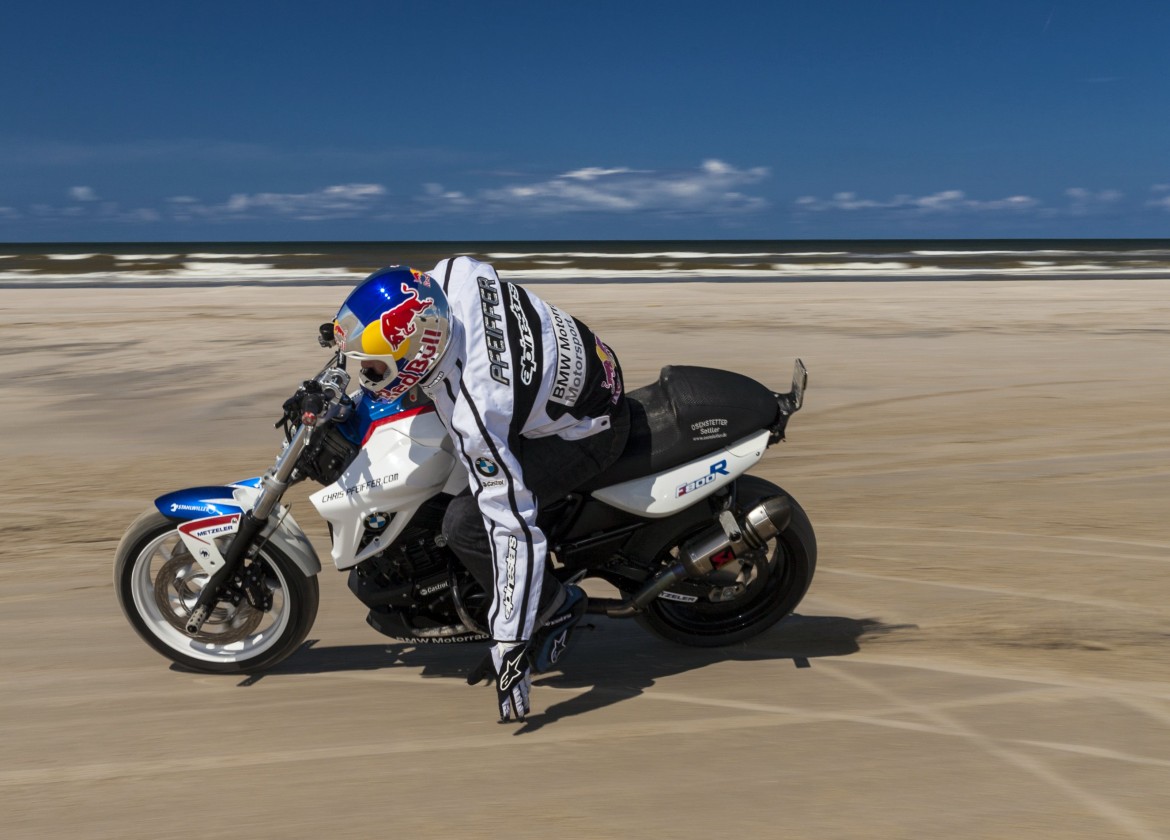
Pfeiffer’s reputation as a stunt rider is not merely founded on his ability to perform wheelies and stoppies; it is entrenched in his relentless pursuit of perfection. His feats transcend mere showmanship; they are a testament to the bond between rider and motorcycle, an intimate dialogue that encapsulates trust and interactivity. As Pfeiffer revved the engine of the BMW F800R, attendees were not simply spectators; they were witnesses to the symbiosis of human ingenuity and mechanical prowess.
The F800R itself is an exceptional specimen of BMW’s engineering prowess. With its sleek lines and formidable power, it serves as the ideal canvas for Pfeiffer’s artistic interpretations. The bike’s design is rooted in precision, built to handle the rigorous demands of stunt riding while remaining intuitive enough for the average enthusiast. As Pfeiffer showcased the motorcycle’s capabilities through unimaginable tricks and maneuvers, it became evident that this was not just a performance; it was a revelation. This unique blend of sport and artistry serves to challenge conventional perceptions of what motorcycles can achieve.
One of the most mesmerizing aspects of Pfeiffer’s performance lies in his ability to manipulate the aesthetic and practical features of the bike. The way he executed a combination of tricks—making tight turns, effortlessly transitioning from one stunt to another—illuminated the intimate relationship between rider and equipment. This level of mastery encourages viewers to reconsider the amalgamation of form and function in motorcycle design. What appears to be mere entertainment unfolds as a profound exploration of the potential within engineering.
Beyond the thrill of the stunts, Pfeiffer emphasized the importance of safety and preparation. Each daring act was underpinned by meticulous planning and unyielding discipline—a reminder that behind every exhilarating performance lies a foundation of safety protocols and a profound understanding of one’s machinery. In an age where thrill-seeking often overshadows caution, Pfeiffer remains a beacon advocating for safety while still pushing the limits of his craft. This juxtaposition presents an intriguing paradigm: can one fully embrace the exhilaration of speed while adhering to the principles of safety? The answer, demonstrated vividly, is a resounding yes.
The performance also afforded insight into the meticulous nature of BMW’s manufacturing processes. As Pfeiffer navigated the parameters of the F800R, it became apparent that each component was optimized for performance, durability, and rider enjoyment. This commitment to quality is not merely a signature of the brand; it is a philosophy that permeates every aspect of BMW’s design and engineering ethos. In witnessing Pfeiffer’s stunts, the audience was inadvertently launched into a discourse on how design influences functionality and vice versa.
Moreover, the event echoed the broader narrative of how extreme sports can bridge gaps between communities, fostering an appreciation for both art and engineering. Those present, a melange of bike enthusiasts, designers, and casual admirers, were united by a common reverence for the intricacies at play. The sharing of experiences, from breathtaking stunts to discussions about motorcycle technology, fostered connections across varying demographics. Through Pfeiffer’s impressive display, the concept of stunt riding transformed from a mere spectator sport into a connective tissue binding cultures and innovations.
The culmination of this extraordinary experience invited attendees to re-evaluate their preconceived notions of motorcycles and their capabilities. It prompted a fundamental question: how can the world of motorcycles continue to evolve through the lens of creativity? The realm of stunt riding, reflecting an intersection of talent and precision engineering, provides fertile ground for such exploration. The enhancements in technology, safety measures, and design perspectives engender a rich tapestry of potential innovation that beckons the next generation of riders and engineers alike.
In conclusion, Chris Pfeiffer’s performance at BMW HQ served as a poignant reminder that the world of motorcycle stunt riding transcends merely defying gravity; it challenges the status quo of how we perceive the relationship between rider and machine. As motorcycles grow ever more sophisticated, so too must our understanding of their capabilities and the artistry that accompanies their operation. In embracing this newfound perspective, the horizons of motorcycle culture expand, offering an enticing glimpse into an exhilarating future, where everything is possible on two wheels.