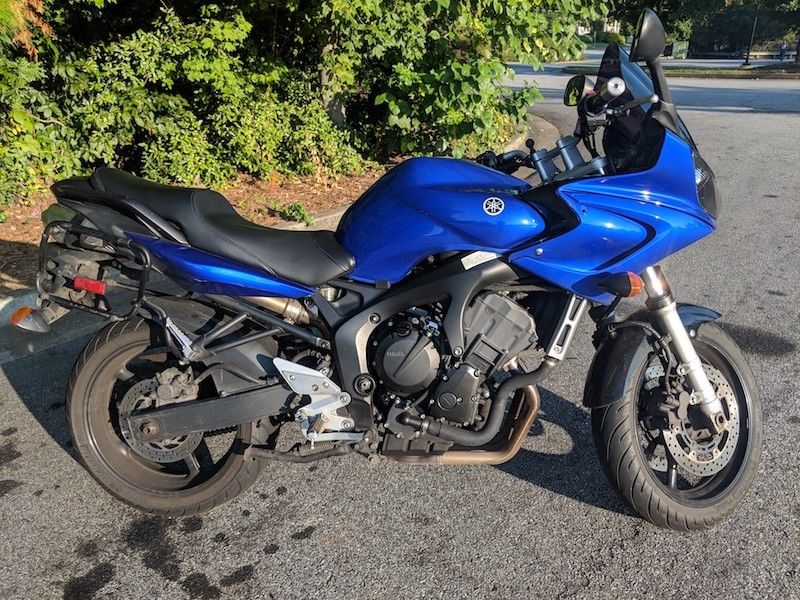
Ever wondered if a middleweight motorcycle can truly straddle the line between spirited performance and everyday practicality? The 2006 Yamaha FZ6 presents a compelling conundrum: can a bike with moderately modest horsepower and manageable weight deliver a riding experience that inspires both confidence and exhilaration? This question is far from trivial, especially when stacking the FZ6 against a crowded field of competitors aiming to define the sweet spot in the sport-standard category.
The 2006 Yamaha FZ6 arrived as a revelation in the mid-2000s, targeting riders who sought versatility without sacrificing excitement. It wasn’t the most powerful machine on the asphalt, but its balanced engineering hinted at a craftier story beneath the shiny fairings. The FZ6’s heart is a 600cc inline four-cylinder engine, tuned to provide a harmonious blend of spirited revs and pliable torque delivery. This inline-four boasts roughly 98 horsepower at a brisk 12,500 RPM—certainly not a hyper-bike figure, but more than enough to stir adrenaline in a capable rider.
At first glance, the horsepower might seem lackluster compared to liter-class motorcycles boasting in excess of 150 hp. However, what makes the FZ6 intriguing is the alchemy created when that power is married with its curb weight, tipping the scales at approximately 445 pounds (wet). This weight is a crucial factor—it strikes a midpoint that prevents the bike from feeling onerous, yet provides enough substance to convey stability at a variety of speeds.
Herein lies the potential challenge for enthusiasts: is the FZ6’s horsepower-to-weight ratio enough to render it truly competitive, or does it merely play second fiddle to more aggressive motorcycles? To answer this, one must delve beyond mere figures and into the nuances of real-world performance, where balance and responsiveness often don’t show up on paper but profoundly influence the quality of the ride.
From a performance perspective, the FZ6 excels in delivering an accessible powerband that blends perfectly with its chassis dynamics. The midrange torque especially sparks spontaneity, making it a responsive companion for urban riding and spirited canyon carving. The engine’s smoothness is commendable, avoiding the harshness common in many high-strung 600s of the era. This quality allows riders to extract thrill not only at peak RPMs but across a broad spectrum of engine speeds.
The frame architecture plays a pivotal role in translating horsepower and weight into tangible rider feedback. Built on a diamond-shaped aluminum chassis, the FZ6 is both rigid and light, fostering nimble handling and precise cornering. Coupled with an adjustable suspension setup—43mm forks up front and a link-type rear shock—the bike offers a customizable ride that can be firm for eager maneuvers or compliant for everyday cruising.
However, with these capabilities comes an implicit expectation: that a rider harnesses the full potential of the package. The FZ6 doesn’t overwhelm with raw power, so the enjoyment often hinges on finesse—maintaining momentum, smooth throttle modulation, and cornering technique. For some, this might pose the playful challenge: can you coax every ounce of performance without resorting to outright aggression?
This nuanced relationship between horsepower, weight, and rider skill places the 2006 Yamaha FZ6 in an intriguing niche. It is arguably more about rider synergy than outright brawn. For instance, the relatively modest weight allows quick changes of direction and confidence-inspiring agility. When the rider masters the bike’s linear power delivery alongside its balanced chassis, the result is a sensation that feels far sportier than the raw stats would suggest.
Moreover, the FZ6’s controllability extends into the braking domain. Dual front discs coupled with a single rear disc provide dependable stopping power. The brakes are neither too bitey nor mushy—just the right amount of feedback to inspire trust when pushing the bike towards its limits. This equilibrium complements the horsepower and weight, ensuring the bike doesn’t just accelerate with poise but also stops with precision. This element cannot be understated in evaluating real-world performance.
On the other hand, it’s impossible to ignore that more aggressive riders might eventually find the FZ6’s HP ceiling and weight a limiting factor, especially when compared to supersport motorcycles or more powerful naked bikes that have surged ahead in the market since 2006. For those focused on outright speed and track dominance, the FZ6 might appear to lack that ferocity. Nonetheless, for a street-focused rider or those seeking a well-rounded platform capable of daily use and weekend thrills, the balance struck by this motorcycle remains compelling.
Adding to the FZ6’s appeal is its ergonomic design, which provides a relatively upright posture that marries comfort with sportiness. This setup enhances control without the aggressive crouch typical of pure supersports, making longer rides less taxing while maintaining a connection to the road that full-on cruisers often lack. This ergonomic choice further amplifies the bike’s versatility, an essential consideration when contemplating its real-world performance beyond raw horsepower numbers.
Additionally, the appeal of the 2006 Yamaha FZ6 is centered upon its precision tuning. Yamaha’s engineering philosophy was to create a motorcycle that could do many things well rather than excel in just one. The powertrain, chassis, suspension, brakes, and ergonomics were meticulously calibrated to work in concert rather than competition. The resulting cohesion is a distinct advantage when considering what “performance” truly means for most riders—meaningful engagement with the machine, consistency, and predictability under a variety of conditions.
In conclusion, evaluating the 2006 Yamaha FZ6’s horsepower versus weight and its real performance reveals a motorcycle designed to challenge conventional notions about mid-range sport standards. It poses an inviting question: can a rider find exhilaration and satisfaction in a package that prioritizes balance and finesse over overwhelming numbers? The answer lies in the ride itself. With just under 100 hp to push a sub-450-pound frame, the 2006 FZ6 rewards skillful throttle control, precise cornering, and an appreciation for mechanical harmony. It invites riders to play with its limits rather than smash through them, offering a well-rounded experience that remains relevant years after its debut. A motorcycle born not merely to go fast but to go well.