In the high-octane world of custom motorcycle fabrication, few names resonate with the raw creativity and unbridled passion of Paul Sr. from *American Chopper*. His workshops have birthed mechanical marvels that blur the line between art and engineering, transforming steel and chrome into rolling masterpieces. Behind every weld, every curve, and every gleaming detail lies a philosophy—a symphony of craftsmanship that elevates fabrication from mere construction to an almost spiritual pursuit. For those who dare to dream in metal, Paul Sr.’s insights are nothing short of alchemy, turning the mundane into the extraordinary.
The Alchemy of Vision: Seeing Beyond the Blueprint
Fabrication, at its core, begins not with a welder’s torch or a plasma cutter, but with the mind’s eye. Paul Sr. has always championed the idea that the most breathtaking builds start as whispers in the imagination—fragments of an idea that refuse to stay confined to paper. He speaks of “seeing the soul” in a sketch before the first line is ever drawn. This isn’t just about aesthetics; it’s about infusing intention into every inch of metal. A chopper isn’t merely a vehicle; it’s a narrative, a statement, a rebellion against the ordinary. His ability to coax form from chaos is akin to a sculptor chiseling away at a block of marble, revealing the hidden figure within. The key? Trusting the process, even when the path isn’t clear.
Precision as Poetry: The Dance of Tolerances and Temperatures
To the uninitiated, metalwork might seem like brute force—hammering, bending, and welding until something holds together. But Paul Sr. knows better. He treats fabrication like a ballet, where every step must be measured, every movement deliberate. Tolerances aren’t just numbers; they’re the difference between a machine that hums with harmony and one that groans under strain. He speaks of “dancing with the torch,” where the heat must be wielded with the precision of a violinist’s bow. Too hot, and the metal warps; too cold, and the welds fracture. It’s a delicate balance, one that demands respect for the material’s temperament. His workshops are laboratories of controlled chaos, where science and artistry collide in a shower of sparks and sputters.
And then there’s the matter of patience. Paul Sr. insists that rushing a build is like trying to force a flower to bloom—it only leads to wilted petals and broken stems. Each joint must cool, each component must align, and every adjustment must be made with the reverence of a monk transcribing sacred texts. The result? Machines that don’t just function but sing—a testament to the harmony of human touch and mechanical perfection.
The Language of Materials: Speaking Steel’s Secret Tongue
Not all metals are created equal, and Paul Sr. has spent a lifetime learning their dialects. He treats steel, aluminum, and titanium like old friends, each with its own quirks, its own strengths, and its own betrayals. Steel, for instance, is the backbone of his builds—a reliable, steadfast companion that bends but rarely breaks. Aluminum, on the other hand, is the trickster, light as a feather but prone to warping if not handled with care. And titanium? It’s the diva of the workshop, demanding respect and rewarding it with unparalleled strength and a finish that gleams like a star.
His approach to material selection is almost spiritual. He doesn’t just pick a metal because it’s strong or light; he chooses it because it feels right. There’s an intuitive leap here, a leap that separates the master from the journeyman. He’ll often say that the best builders don’t just work with metal—they listen to it. The ring of a hammer, the hiss of a plasma cutter, the subtle resistance of a bend—these are the whispers of the material, guiding the hand of the craftsman. Ignore them, and the build suffers. Embrace them, and the machine becomes an extension of the builder’s soul.

The Art of Collaboration: When Two Minds Forge One Masterpiece
While Paul Sr. is often the face of *American Chopper*, his genius is magnified by the synergy of his team. Fabrication, he insists, is never a solo endeavor. It’s a chorus of voices—welders, painters, engineers—each contributing their unique timbre to the final symphony. He thrives in the crucible of collaboration, where ego takes a backseat to the pursuit of excellence. His son, Paul Jr., embodies this philosophy perfectly. Where Paul Sr. is the architect, Paul Jr. is the innovator, pushing boundaries with wild, unorthodox designs that still honor the craft’s traditions.
This dynamic duo is a study in contrasts that somehow harmonize. Paul Sr.’s adherence to classic lines and structural integrity balances Paul Jr.’s penchant for flamboyant, avant-garde flourishes. Together, they’ve redefined what a chopper can be—not just a machine, but a rolling canvas for storytelling. Their builds are dialogues, arguments even, between tradition and rebellion, discipline and whimsy. And in that tension, magic happens.
The Unseen Details: Where the Devil—and the Divine—Reside
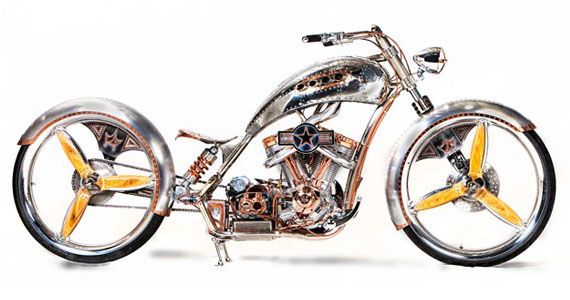
To the casual observer, a chopper is a spectacle of chrome and curves. But to Paul Sr., the true magic lies in the details that most people never notice. The way a fuel tank tapers into the frame, the seamless integration of a hidden storage compartment, the precision of a seat that cradles the rider like a lover’s embrace—these are the silent heroes of fabrication. They’re the difference between a machine that impresses and one that captivates.
He often speaks of “the whisper of the wind” in a bike’s design, a phrase that encapsulates his obsession with aerodynamics and ergonomics. Every line, every angle, must serve a purpose beyond beauty. A chopper should slice through the air like a knife through silk, its rider cocooned in comfort, its mechanics humming in perfect unison. It’s this relentless pursuit of the unseen that elevates his work from mere craftsmanship to art.
Legacy in Steel: Building for the Ages
Paul Sr.’s greatest lesson might be this: fabrication is not just about creating something that works today—it’s about crafting something that endures. His machines aren’t just ridden; they’re revered. They become heirlooms, passed down through generations, each scratch and dent a badge of honor. He builds with the future in mind, knowing that the materials he chooses, the techniques he employs, and the passion he infuses will outlast him.
In a world obsessed with the disposable and the temporary, Paul Sr.’s philosophy is a radical act of defiance. He doesn’t build choppers; he crafts legacies. And in doing so, he reminds us that true artistry isn’t measured in hours or dollars, but in the indelible mark it leaves on the world.