In the relentless pursuit of speed and technological advancement, the modern motorcycle often steals the spotlight, boasting cutting-edge engineering and blistering performance figures. Yet, hidden beneath this veneer of contemporary prowess lies a lineage of forgotten machines—vintage motorcycles whose capabilities challenged, and in many cases outpaced, their modern counterparts. These relics of the past, steeped in history and innovation, invite us to reconsider the very foundations of motorcycle performance and excellence. They promise a seismic shift in perspective, nudging us to acknowledge that speed and mastery aren’t solely the domain of today’s silicon-and-carbon-fiber titans.
To embark on this journey, one must first transcend the allure of raw horsepower and modern electronics and delve deep into the heart of these forgotten bikes. The motorcycles of yesteryear were crafted in an era where mechanical intuition and craftsmanship reigned supreme. Each rivet and gear bore the imprint of ingenuity, born in workshops dedicated to pushing the envelope despite limited computational tools or aerodynamic simulations. The result was a collection of machines that, in some facets, remain astonishingly fast even when held against the metric of modern performance.
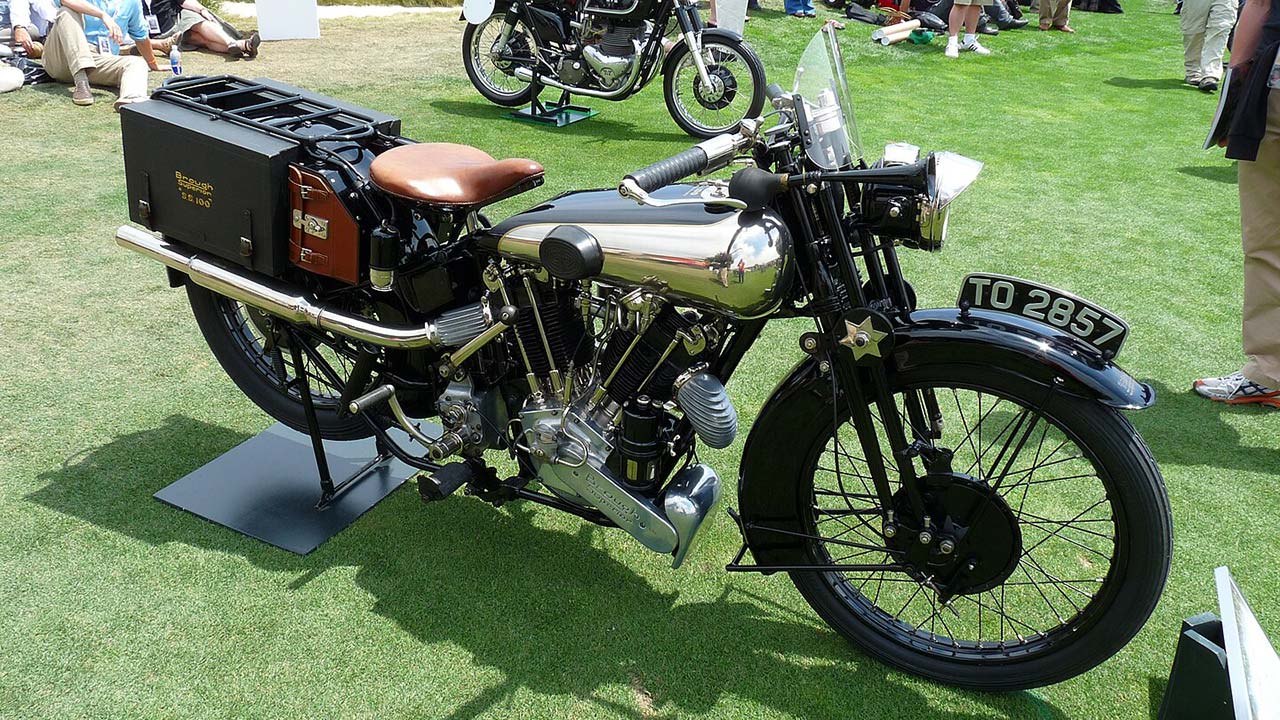
Consider the iconic 1926 Brough Superior SS100, a motorcycle synonymous with the golden age of bespoke engineering. Craftily constructed with bespoke hand-fitted components, the SS100 earned its moniker “SS” (Super Sports) due to its remarkable ability to breach 100 miles per hour—a staggering feat more than 90 years ago. This bike, often referred to as the “Rolls-Royce of Motorcycles,” was the embodiment of a philosophy where reliability and performance were not mutually exclusive but inseparable. Even by today’s standards, when you juxtapose the SS100’s top speed and handling, many modern entry-level sportbikes would find themselves outmatched in raw character and sheer audacity.
This raises an intriguing point that modern machines, despite their abundant technology, sometimes sacrifice visceral feedback and rider engagement on the altar of electronic intervention and mass-produced homogeneity. The raw, unfiltered riding experience delivered by these vintage beasts harnessed not only speed but a profound connection between man and machine. Their mechanical simplicity demanded a skilled pilot, lending a narrative of mastery that few modern counterparts aspire to.
Continuing the exploration reveals other forgotten legends like the Vincent Black Shadow, introduced in the late 1940s. This motorcycle shattered contemporary speed records with its robust 998cc V-twin engine, producing approximately 55 horsepower—a figure that, while modest today, was revolutionary for its time. Its lightweight construction paired with insatiable power output allowed it to climb peaks in velocity that would intimidate many modern naked bikes. The Black Shadow’s impressive top speed of 120 mph challenged the notion that older motorcycles were inherently slower, underscoring a timeless principle: engineering brilliance transcends eras.
One might ask, why have these motorized marvels faded into the shadows of modernity? The answer lies partially in the evolution of motorcycle design, which has often favored safety, emissions compliance, and mass accessibility over unbridled speed alone. As manufacturers compete on electronic aids such as ABS, traction control, and ride modes, some of the mechanical purity—and by extension, certain performance nuances—have been diluted. Yet, this does not diminish the raw capabilities of the motorcycles born in earlier decades. Rather, it reinforces that the metrics of excellence are multi-dimensional.
Another compelling narrative emerges when we examine the mechanical innovations embedded in these vintage bikes. Many featured pioneering suspension designs, frame geometries, and carburetion techniques that were ahead of their time. For instance, the telescopic fork suspension, which is now ubiquitous, was a ground-breaking feature on motorcycles like the early Triumphs and Nortons, transforming ride quality and control. These innovations enabled riders to achieve handling precision and confidence at speeds once thought impossible, effectively providing a performance edge over some modern machines that rely on electronic crutches instead of mechanical ingenuity.
Delving deeper into the lineage reveals how some motorcycles from the mid-20th century, such as supercharged motocross and racing bikes, achieved accelerative feats rivaling present-day sportbikes. The use of forced induction in motorcycles, though rare today due to complexity and regulatory constraints, was a bold experiment in the quest for speed. These machines delivered instantaneous throttle response and an unmatched surge of power that challenged assumptions about what vintage motorcycles could accomplish.
Moreover, the aesthetics and design philosophies of these forgotten bikes echo a palpable identity and purpose, often absent from today’s globalized and homogenized motorcycle industry. The interplay of form and function atop these machines conveys stories of aspirational racing heroes, rugged adventurers, and artisan craftsmen. The very essence of riding a vintage motorcycle that outperforms a modern sibling is a pilgrimage into the past’s daring spirit, a reminder that speed and performance have myriad expressions beyond digital dashboards and traction control systems.
In contemplating these forgotten speed demons, enthusiasts and casual observers alike are compelled to reconsider the conventional hierarchy of motoring mastery. Speed, after all, is more than an empirical measurement—it’s an interplay of engineering, daring, precision, and soul. While modern motorcycles embody the crescendo of technological evolution, they do not hold the monopoly on excellence or velocity. Vintage motorcycles like the Brough Superior SS100 and Vincent Black Shadow challenge our preconceived limits, beckoning us to appreciate a different dimension of performance defined by ingenuity, courage, and timeless mechanical art.
In this light, forgotten bikes offer more than nostalgia—they present a compelling narrative that modern progress does not inherently eclipse the past’s marvels. These machines are living testaments to the notion that, sometimes, history’s machines can not only keep pace with but surpass those of today. Unearthing their stories is more than a mechanical appraisal; it is a rediscovery of the essence of speed itself, unencumbered by modern conventions, and eternally compelling.