In the high-octane world of chopper fabrication, where precision meets passion and creativity collides with craftsmanship, chaos is the enemy. A cluttered shop isn’t just an eyesore—it’s a productivity killer, a safety hazard, and a breeding ground for costly mistakes. Enter the 5S methodology, a lean manufacturing framework that transforms disarray into order, efficiency into excellence, and frustration into flow. For fabricators who build rolling works of art, mastering 5S isn’t just about tidiness; it’s about reclaiming control over the chaos and turning your workspace into a well-oiled machine. Whether you’re a solo builder or part of a bustling custom chopper crew, these five principles will help you streamline your shop, sharpen your focus, and supercharge your builds.
The Foundation: Sort (Seiri) – Eliminate the Excess to Unleash Clarity
Before you can organize, you must purge. The first step in 5S is Sort, a ruthless but necessary process of distinguishing the essential from the extraneous. In a chopper shop, this means confronting the clutter head-on—those half-used rolls of wire, the rusted tools buried under benches, the stacks of half-finished projects that have become more of a monument to procrastination than a work in progress. Start by categorizing every item in your space: keep, donate, recycle, or toss. Be unapologetic. If you haven’t used a tool in six months, it’s likely dead weight. If a part has been sitting in a bin for years, it’s probably obsolete. Create three zones: red tag for items to discard, yellow tag for those to relocate, and green tag for the keepers. The goal isn’t just cleanliness; it’s clarity. A sorted shop is a shop where every tool has a purpose, and every purpose has a tool.

Set in Order (Seiton) – Design a Workflow That Flows
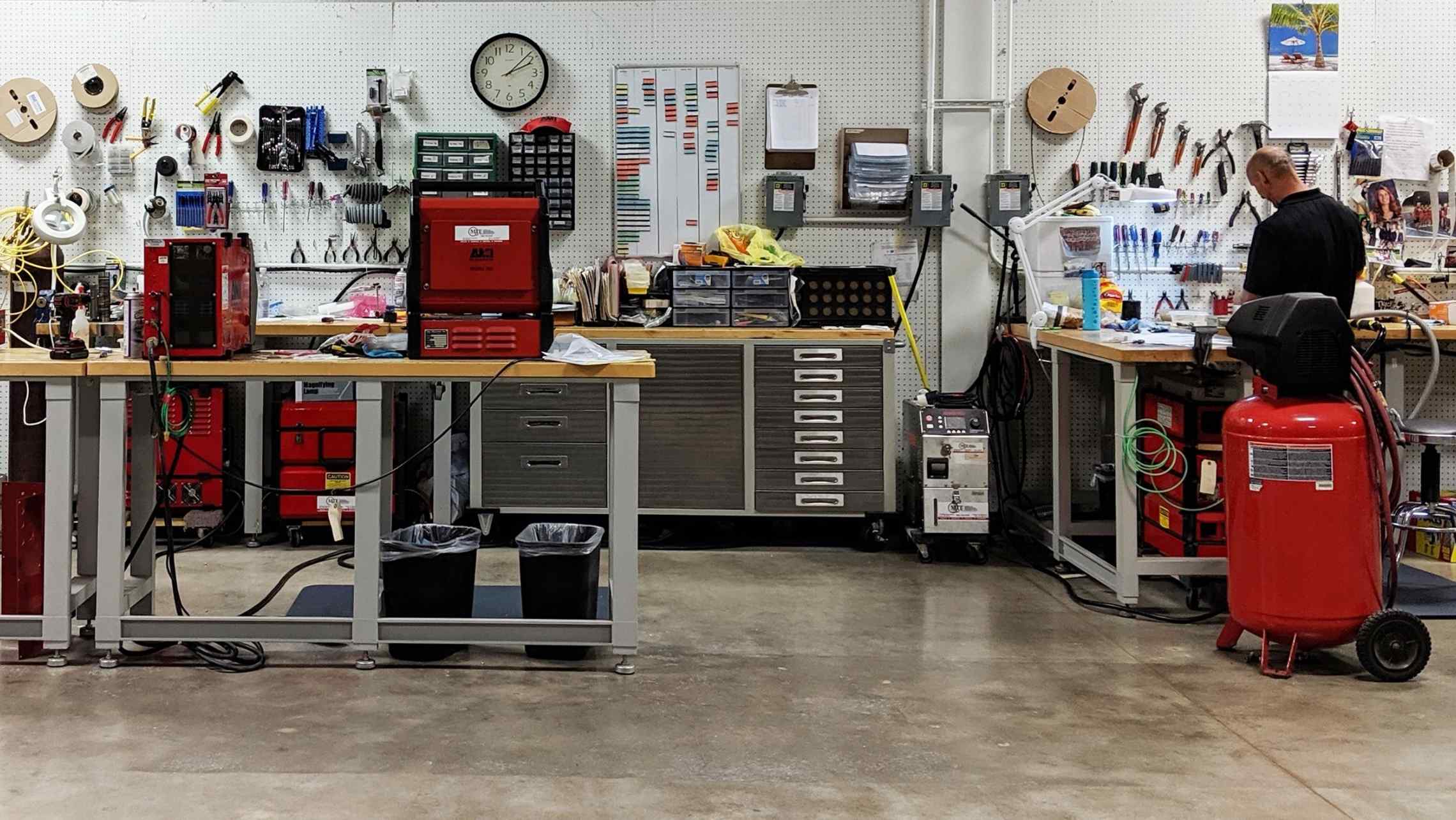
With the clutter gone, the real magic begins: Set in Order. This isn’t about arranging tools alphabetically or lining up wrenches like soldiers—it’s about designing a workflow that feels intuitive, almost second nature. Start by mapping your most frequent tasks. Where do you spend the most time? Welding? Fabricating frames? Painting? Place the tools and materials for these tasks within arm’s reach, in the order you use them. Use shadow boards for frequently accessed items, so a missing wrench isn’t just annoying—it’s impossible to miss. Label everything, from bins to shelves to the very floor with tape markings that define zones. For chopper builders, consider a “build sequence station” where every part of a project—from raw tubing to finished fender—has its own designated spot. The result? A shop that doesn’t just look organized; it feels organized. Every step is a stride toward efficiency.
Shine (Seiso) – The Ritual of Respect for Your Craft
Organization isn’t static; it’s a practice. That’s where Shine comes in—a daily commitment to cleanliness as a form of respect for your craft and your workspace. In a chopper shop, dust from grinding, metal shavings from cutting, and oil stains from repairs are inevitable. But they don’t have to be permanent. Make cleaning a ritual. Sweep the floors after every shift. Wipe down tools to prevent rust. Vacuum the welding booth to keep sparks from becoming fire hazards. Use compressed air to clear out the nooks where metal fragments love to hide. Shine isn’t just about aesthetics; it’s about safety and longevity. A clean tool is a reliable tool. A clean shop is a productive shop. And a shop that gleams with pride? That’s a shop where the next masterpiece is already taking shape.

Standardize (Seiketsu) – Create Systems That Sustain Themselves
Consistency is the backbone of 5S. Without Standardize, even the most pristine shop will slide back into chaos. This step is about creating systems so ingrained that they become muscle memory. Develop checklists for daily, weekly, and monthly tasks—like tool inspections, inventory audits, and deep cleans. Use color-coded labels for bins and shelves to ensure everyone knows where things belong. Implement a “return policy” for tools: if you take it out, put it back. For teams, hold a 5-minute “5S huddle” every morning to review the day’s goals and the state of the shop. Standardization turns organization from a chore into a culture. It’s not about rules; it’s about rhythm. And in a chopper shop, rhythm is everything.
Sustain (Shitsuke) – The Discipline of Continuous Improvement
The final—and most challenging—step is Sustain. 5S isn’t a one-time project; it’s a way of life. To sustain it, you need accountability, engagement, and a willingness to evolve. Start by training every team member, from the newest apprentice to the seasoned fabricator, on the principles of 5S. Make it personal. Show them how a well-organized shop reduces stress, cuts downtime, and even improves weld quality. Celebrate milestones—like a month of flawless tool tracking or a quarter with zero lost parts. But also stay vigilant. Conduct regular audits, not to punish, but to improve. Ask tough questions: Are the systems still working? Are the labels still clear? Is there a better way to store those chromoly tubes? Sustainability is about embracing 5S as a living, breathing philosophy. It’s the difference between a shop that’s organized and one that’s unstoppable.
Beyond the Basics: Advanced Tactics for Chopper Builders
For fabricators who’ve mastered the fundamentals, 5S can go even further. Consider implementing a “just-in-time” inventory system to reduce clutter and waste. Use digital tools like QR codes on bins to track inventory levels in real time. For large projects, create a “build board” with magnetic checklists to track progress visually. And don’t forget ergonomics—organize your shop so that heavy lifting is minimized, and repetitive motions are streamlined. A shop that’s organized for efficiency is also a shop that’s kinder to the body. The goal isn’t just to build choppers; it’s to build them with joy, precision, and pride.
The Ripple Effect: How 5S Transforms More Than Just Your Shop
When you commit to 5S, the benefits extend far beyond your workspace. Clients notice the difference. A clean, organized shop signals professionalism and attention to detail—qualities that translate directly into the choppers you build. Team morale improves when frustration gives way to flow. Mistakes decrease as tools and materials are always where they’re supposed to be. Even your bottom line benefits, with reduced downtime and lower replacement costs for lost or damaged tools. But perhaps the most profound impact is the shift in mindset. A 5S shop isn’t just a place to work; it’s a place to create. And when you’re surrounded by order, inspiration flows freely. The next time you fire up the welder, you won’t just be building a chopper—you’ll be building a legacy.