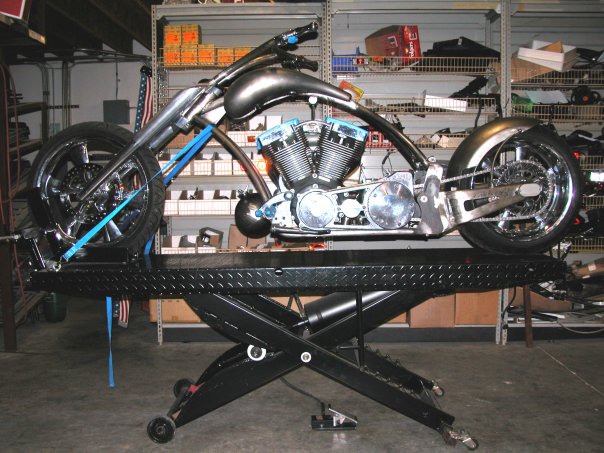
In the shadow of the roaring engines and the gleam of chrome that once defined the Teutul family’s empire, a quieter revolution was brewing. While Paul Teutul Sr. and Paul Teutul Jr. carved their legacies in steel and fire, Mikey Teutul found his rhythm in an unexpected symphony—one that pulsed not from a motorcycle’s exhaust but from the strings of a guitar. His journey from the chop shop to the recording studio is a testament to the idea that creativity, like a well-tuned engine, refuses to be confined to a single track.
The Spark That Lit the Fuse: From Wrenches to Riffs
Mikey Teutul’s transition from building motorcycles to crafting music wasn’t a sudden detour but a natural evolution of his restless spirit. The same hands that once wielded wrenches with precision now strummed chords with equal finesse. His early exposure to the raw energy of rock music, coupled with an innate knack for melody, created a bridge between two seemingly disparate worlds. Imagine the clang of metal in a workshop harmonizing with the strum of an electric guitar—this duality became the heartbeat of his artistic identity.
The garage, a place of grease and grit, became his sanctuary for sonic experimentation. While his family’s business thrived on the roar of engines, Mikey’s soul resonated with the hum of amps and the echo of feedback. This juxtaposition wasn’t a rebellion but a revelation—a realization that creativity, like a motorcycle’s journey, is a ride without a fixed destination.
The Band That Roared: Forming Sons of Anarchy
In 2007, Mikey Teutul co-founded Sons of Anarchy, a band that wasn’t just a musical project but a sonic manifesto. The name itself was a nod to the gritty, unapologetic ethos of their world—both in music and life. The band’s sound was a fusion of hard rock, punk, and blues, a cacophony that mirrored the chaos and passion of their upbringing. Mikey’s guitar work was the driving force, a relentless pulse that propelled their tracks forward with the same intensity as a chopper tearing down a highway.
What set Sons of Anarchy apart wasn’t just their pedigree but their authenticity. They weren’t a manufactured band; they were a family of musicians who shared a common language—one of rebellion, camaraderie, and unfiltered expression. Their lyrics, often raw and unpolished, resonated with fans who saw themselves in the band’s unfiltered honesty. Mikey’s voice, though not the lead singer’s, was a presence in every note, a whisper of the Teutul legacy echoing through every riff.
The Road Less Traveled: Touring and Live Performances
Touring with Sons of Anarchy was Mikey’s crucible—a journey that tested his endurance as much as his talent. The road, a familiar terrain for the Teutuls, became his stage. Each performance was a testament to his growth as a musician, a chance to prove that his artistry wasn’t a fleeting experiment but a lifelong pursuit. The crowds that gathered weren’t just fans of the band but devotees of the Teutul name, drawn to the spectacle of a motorcycle legend’s son shredding on stage.
Yet, for Mikey, the real magic lay in the intimate venues—the dive bars and small clubs where the connection between artist and audience was electric. These were the places where the raw, unfiltered essence of his music could thrive, where the hum of the crowd blended with the strum of his guitar to create a symphony of shared experience. It was here that Mikey found his true voice—not as a celebrity’s son, but as a musician in his own right.
The Solo Ascent: Mikey’s Foray into Independent Music
While Sons of Anarchy was his first love, Mikey’s solo career allowed him to explore the depths of his creativity without constraints. His debut solo album, Tangled Web, was a revelation—a tapestry of introspective lyrics and soaring melodies that showcased his evolution as an artist. The album’s title wasn’t just a metaphor; it was a reflection of Mikey’s journey—entangled in the past, yet always reaching for something new.
His solo work was a departure from the raw energy of his band days, delving into themes of love, loss, and self-discovery. The songs were more than just music; they were stories, each one a chapter in Mikey’s life. His voice, though not as polished as a seasoned crooner, carried a rawness that made his music feel personal, almost like a diary set to music. It was this vulnerability that endeared him to fans who saw their own struggles reflected in his lyrics.
The Unseen Gear: Behind the Scenes of Mikey’s Creative Process
Few have glimpsed the inner workings of Mikey Teutul’s creative process, but those who have describe it as a dance between chaos and control. His songwriting sessions were often spontaneous, fueled by bursts of inspiration that struck like lightning. He’d jot down lyrics on napkins, hum melodies in the shower, or strum chords in the dead of night—each idea a spark waiting to ignite.
His studio, a sanctuary of half-finished riffs and scribbled lyrics, was a testament to his dedication. It wasn’t a pristine, high-tech facility but a space that bore the marks of his relentless pursuit of perfection. The walls were adorned with posters of his musical heroes, a reminder of the influences that shaped his sound. Here, Mikey wasn’t just a musician; he was an alchemist, turning raw emotion into something tangible.
His approach to recording was equally unorthodox. He preferred live takes, capturing the energy of the moment rather than striving for technical perfection. This philosophy lent his music a sense of immediacy, a feeling that what you heard was the real deal—unfiltered and unapologetic.
The Legacy of a Rebel: Mikey’s Impact on Music and Culture
Mikey Teutul’s music career is more than a footnote in the Teutul family saga; it’s a testament to the power of reinvention. In an industry that often demands conformity, he carved out a space for himself that was uniquely his own. His music wasn’t just a hobby or a side project; it was a calling, a way to express the parts of himself that couldn’t be contained by the world of motorcycles.
His influence extends beyond his discography. He’s become a symbol of artistic freedom, a reminder that creativity isn’t bound by expectations or pedigree. For fans, he represents the idea that it’s never too late to chase a dream—or pick up a guitar and start playing. His journey from the chop shop to the stage is a story of passion, perseverance, and the courage to follow one’s heart, no matter where it leads.
The Road Ahead: What’s Next for Mikey Teutul?
The future of Mikey Teutul’s music career is as unpredictable as the man himself. Will he return to the studio for another solo album? Will Sons of Anarchy reunite for a tour or a new release? One thing is certain: Mikey’s creative spirit shows no signs of slowing down. He’s a man who thrives on the edge of uncertainty, where the next riff or melody could be just around the corner.
Whatever comes next, one thing is clear—Mikey Teutul’s music career is a journey without a final destination. It’s a ride, just like the ones he took on his motorcycles, filled with twists, turns, and the occasional burst of speed. And as long as there’s a guitar in his hands and a melody in his heart, the world will keep listening.