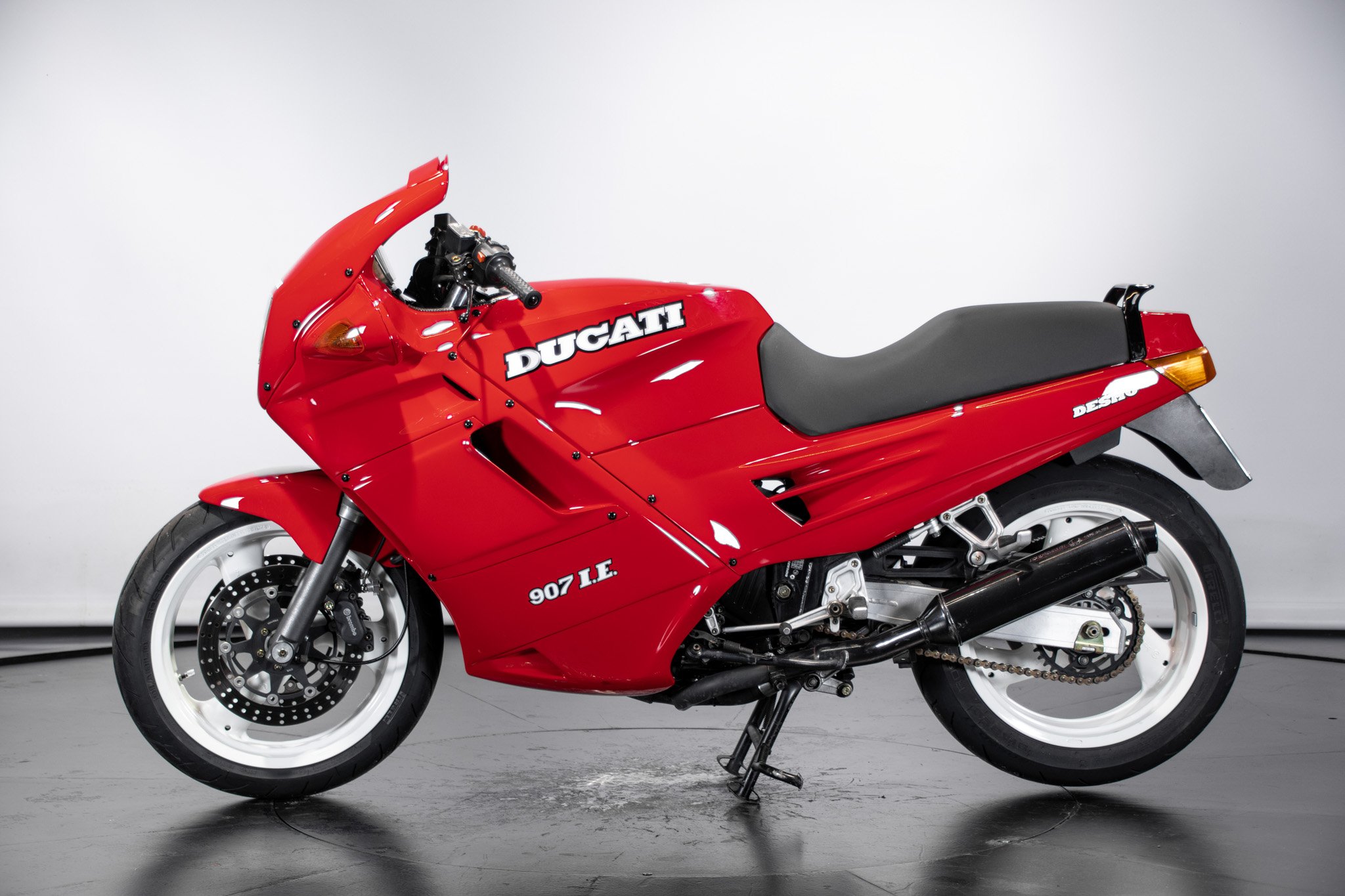
Amid the pantheon of Italian sportbikes, the 1991 Ducati 907ie stands as an enigmatic marvel—an often overlooked masterpiece that challenges preconceived notions about what a quintessential sport motorcycle should embody. Concealed beneath a modestly aggressive silhouette is a machine that bridges the chasm between raw performance and refined engineering, poised to recalibrate the admiration of enthusiasts and collectors alike. This is not merely a motorcycle; it is a statement—a nod to an era when innovation fused seamlessly with tradition, resulting in a ride that promises to redefine your understanding of Italian sportbikes.
The 1991 Ducati 907ie is often eclipsed by its more globally renowned siblings, yet its contributions to the sportbike lineage are both profound and distinctive. Crafted during a transitional period for Ducati, it embodies a marriage of old-world craftsmanship and emergent technology. At the heart of the 907ie lies its motor: a 904cc air-cooled, L-twin engine equipped with electronic fuel injection. This was a significant leap forward at the time, diverging from the carbureted norm and heralding enhanced throttle response, improved fuel efficiency, and heightened reliability.
Its engine is not just a workhorse; it’s an orchestra of precision engineering. The Desmodromic valve system, a hallmark of Ducati innovation, ensures clean and immediate valve closure without reliance on conventional springs. This results in higher redline capabilities and unrelenting power delivery. The 907ie produced approximately 86 horsepower—a figure that might seem modest today but, in the early ’90s, translated to formidable speed and nimbleness on winding roads and track alike. Paired with a six-speed gearbox, the bike offers a tactile and absorbing ride that rewards attention to detail and an appreciation for mechanical nuance.

Design-wise, the 1991 Ducati 907ie refuses to shout for attention, instead seducing with a subtle elegance that exemplifies Italian design philosophy. The frame, constructed from tubular steel trellis, balances rigidity with lightness, ensuring agile handling and opportunistic cornering prowess. The bodywork is minimalist yet purposeful—every curve and contour sculpted to optimize aerodynamics without sacrificing aesthetic appeal. The understated fairing, paired with a slim fuel tank and a single-seat arrangement, evokes a timeless aesthetic that preempts many modern sportbikes’ excessive flamboyance.
Suspension components reflect careful calibration, aimed at striking an equilibrium between comfort and precision. A telescopic front fork and monoshock rear, both adjustable, allow riders to tailor the ride to their preferences—whether carving through twisty mountain passes or gliding along urban avenues. The Brembo brakes, lauded for their stopping power, instill confidence even at high speeds, underscoring the bike’s commitment to safe yet exhilarating performance.
What truly sets the 907ie apart is its ability to simultaneously embody the paradox of being both approachable and thrilling. Unlike larger, more aggressive supersport bikes that command respect through sheer intimidation, the 907ie invites engagement through its balanced demeanor. Its moderate power delivery encourages mastery of riding technique rather than reliance on brute force, cultivating an intimate connection between rider and machine. This approachability belies the machine’s potential—once unconstrained, it reveals a spirited character that excites without overwhelming.
In context, the 1991 Ducati 907ie emerges as a transitional artifact—a bridge between the raw, carbureted sportbikes of the ’80s and the electronic sophistication that would dominate the ’90s and beyond. The adoption of electronic fuel injection was not simply a technical upgrade; it signified Ducati’s willingness to embrace innovation while maintaining heritage. As such, it exemplifies a moment where tradition and progress coalesced, a microcosm of Ducati’s broader evolution.
Collectibility and historical significance also contribute to the 907ie’s renewed allure. While it may not boast the instantaneous name recognition of models like the 916 or Monster series, its rarity and distinct place in Ducati’s chronology imbue it with a quiet prestige. Enthusiasts who discover the 907ie often find themselves captivated by its understated charm and mechanical sophistication. It becomes a testament to discerning taste in a world where flashy spectacle often overshadows substance.
Riding the 1991 Ducati 907ie delivers an experiential dichotomy: the visceral engagement of a thoroughly mechanical sportbike intertwined with the composure of a well-honed racer. Its relatively compact dimensions promote nimbleness, while its engine architecture provides smooth power delivery rarely found in contemporaneous machines. This fusion produces an elusive sensation—a dance of man and machine that enthralls on road and track alike.
Moreover, the 907ie’s legacy reverberates beyond its immediate specifications. It embodies the spirit of Italian engineering, where passion, art, and precision coexist. It serves as a reminder that not all legendary motorcycles shout their significance; some whisper, beckoning the curious to venture beyond the obvious. It challenges collectors and riders to reconsider what makes a sportbike remarkable: is it raw power or balance? Flashy aesthetics or subtlety? Mass appeal or unique character?
In retrospect, the 1991 Ducati 907ie invites a reevaluation of overlooked jewels—vehicles that may not dominate headlines or auction blocks but which nonetheless embody the quintessence of motorcycle artistry and engineering. It stands as a quiet sentinel in Ducati’s lineage, one that promises to shift perspectives for those willing to delve deeper.
Ultimately, the 1991 Ducati 907ie is more than a forgotten Italian sportbike; it is an emblem of refinement amid an era of rapid technological change. It beckons riders and aficionados to rediscover a machine that balances heart and mind, precision and soul. Revisiting this motorcycle reveals a story of evolution, passion, and enduring allure—one that deserves recognition and reverence in the ever-expanding narrative of two-wheeled excellence.