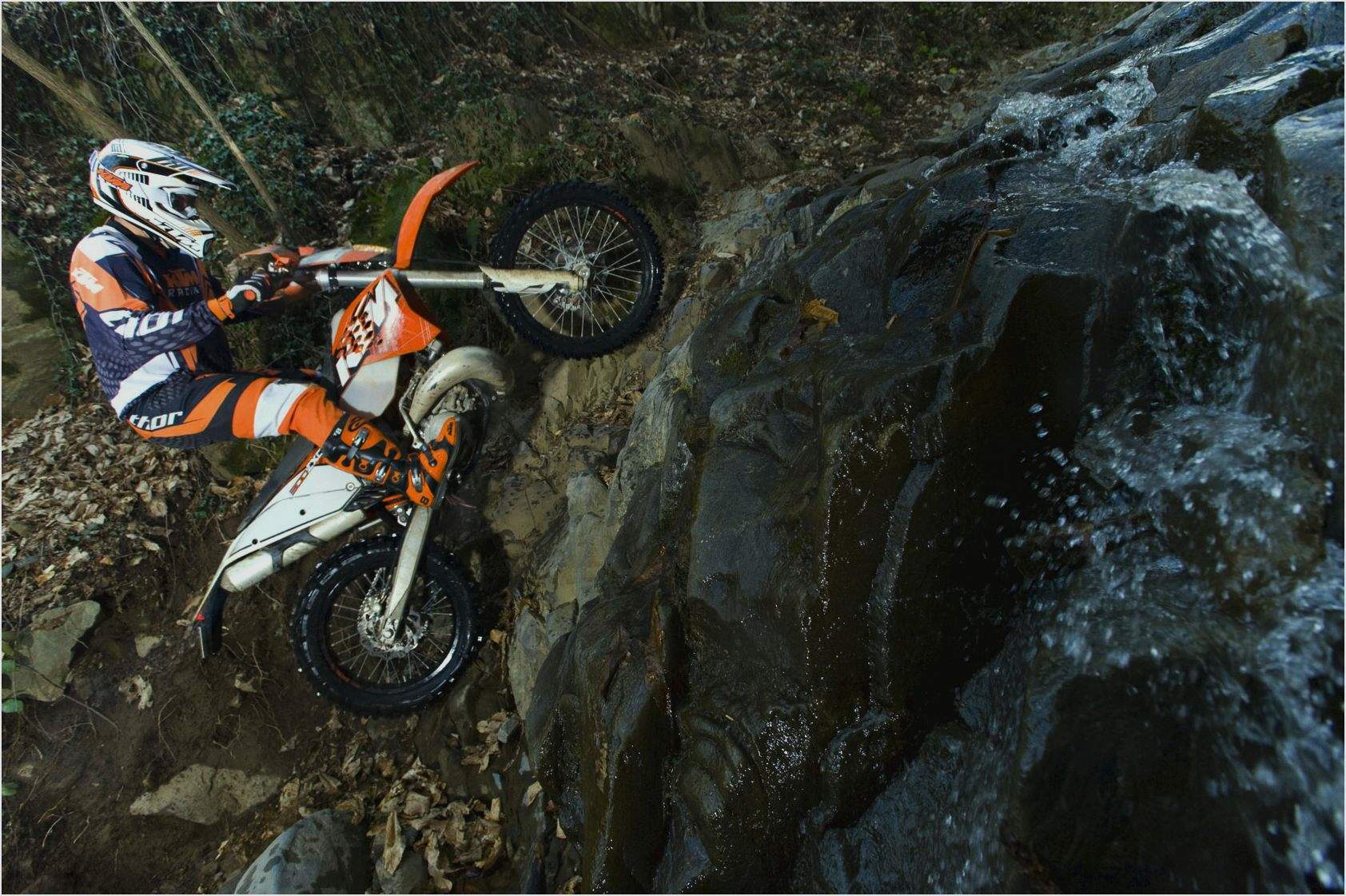
The 1991 KTM 300 EXC stands as a remarkable testament to the evolution of enduro motorcycles, a machine that has ignited the passions of off-road enthusiasts and professional riders alike. It’s an elusive synthesis of power, agility, and durability, engineered to conquer the most unforgiving terrains while maintaining a sense of precision and control that is rarely achieved in this category. Observers often remark on its raw, primal spirit—a quality that basks in the purity of two-stroke performance. Yet, beneath this obvious admiration lies a deeper fascination that stems from its innovative design philosophies and mechanical ingenuity.
The era of the early ’90s marked a pivotal point in enduro motorcycling. Manufacturers were chasing the delicate balance between robustness and competitive performance. The KTM 300 EXC emerged as a vanguard in this movement, manifesting a commitment to enhanced power delivery combined with user-friendly handling. Its stature as an “enduro beast” is not merely about brute strength; it’s about the harmonization of elements that make it a legend. The 1991 model serves as a classic case study for enthusiasts seeking to understand the subtle symbiosis of engineering and riding experience that redefined off-road motorcycling.
At the heart of the 1991 KTM 300 EXC lies its engine—a robust 293cc two-stroke, single-cylinder powerhouse that delivers a torque-rich performance ideal for tackling rugged landscapes. The engine’s configuration channels an exhilarating surge of power while remaining nimble enough to navigate treacherous trails. The two-stroke design, notorious for its potent power-to-weight ratio, ensures rapid throttle response and a throttle curve finely tuned for the varying demands of enduro riding. This mechanical heart is accentuated by a meticulously crafted exhaust system that not only optimizes power output but also contributes to the distinct auditory signature adored by enthusiasts.
One of the most compelling aspects of the 1991 KTM 300 EXC is its chassis design. From the outset, KTM prioritized a lightweight yet durable frame constructed primarily from high-grade steel tubing. This strategic choice provided exceptional torsional rigidity without compromising the bike’s weighing balance. Riders often note the palpable sense of connection they feel with the bike, an almost telepathic interplay between machine and rider that lends confidence even in the most technical sections of a course. The geometry was carefully calibrated to offer an agile handling experience, effortlessly slicing through tight corners with remarkable stability.
The suspension system exemplifies KTM’s dedication to performance-oriented engineering. Equipped with long-travel forks up front and a robust mono-shock rear suspension, the 300 EXC absorbs shocks and diminishes rider fatigue, making extended rides more manageable without sacrificing responsiveness. This allows riders to harness the bike’s full potential over rocks, roots, and jumps where lesser machines would falter. The suspension’s progressive damping characteristics underpin a ride quality that is both supple and composed—a testament to KTM’s relentless refinement during the period.
Another intriguing element of the 1991 model is its integrated approach to ergonomics. KTM engineered the seat, handlebars, and foot pegs to facilitate superior rider control and endurance. The narrow seat profile improves maneuverability when shifting weight, crucial in challenging terrain, while the high-mounted handlebars ensure a commanding riding posture conducive to both precision and stamina. Such deliberate ergonomic choices underscore the motorcycle’s affinity with its rider, transforming long hours in the saddle from a trial into an exhilarating adventure.
The fascination with the KTM 300 EXC also transcends technical merit. It embodies the ethos of enduro racing culture—resilience, adaptability, and a hunger for exploration. This machine became a symbol for riders who sought to push boundaries beyond paved roads and conventional limitations. The 1991 edition, in particular, resonates with a purist sensibility, a last bastion before the proliferation of fuel-injected, four-stroke dominance in the segment. Its analog charm invites riders to develop those intimate mechanical skills and instincts that contemporary machines with their electronic aids sometimes obscure.
This primal appeal is accentuated by the aesthetics of the bike. With a blend of bold KTM-orange accents and functional design cues, the 1991 300 EXC carries a sense of purposeful elegance. The minimal bodywork prioritizes weight reduction and practical accessibility, rendering a motorcycle that looks ready to sprint into a race or embark on an arduous backcountry expedition at a moment’s notice. Its silhouette conveys an unspoken promise of adventure, rekindling a longing in every observer for distant trails and testing terrains.
Furthermore, the 1991 KTM 300 EXC was a harbinger of technological advancements that would come to influence the enduro segment profoundly. Innovations in carburetor design, frame fabrication techniques, and suspension tuning introduced with this model signaled KTM’s foresight in engineering. These technologies elevated the performance benchmark, setting a new standard for competitors and enriching the landscape of off-road motorcycling.
In essence, the allure of the 1991 KTM 300 EXC is not solely encapsulated in its specifications or its raw output. It is embedded in an intricate tapestry woven from enduring craftsmanship, fearless innovation, and an intimate understanding of rider needs. Every twist of the throttle, every leap over an obstacle, and every muddy descent is an expression of the machine’s indomitable character. It calls to riders not just to ride, but to engage in a dialogue with the terrain, to master the elements with a trusted companion at their side.
To conclude, the 1991 KTM 300 EXC remains an enduro legend—a mechanical marvel that continues to captivate enthusiasts with its blend of fierce capability and rider-centric design. Its enduring legacy lies in its ability to marry brute force with finesse, offering an experience that transcends typical motorcycle riding. The fascination it inspires extends beyond nostalgic appreciation; it challenges riders to understand the profound interplay of engineering and instinct, making every journey aboard this enduro beast a saga wrought in grit and exhilaration.