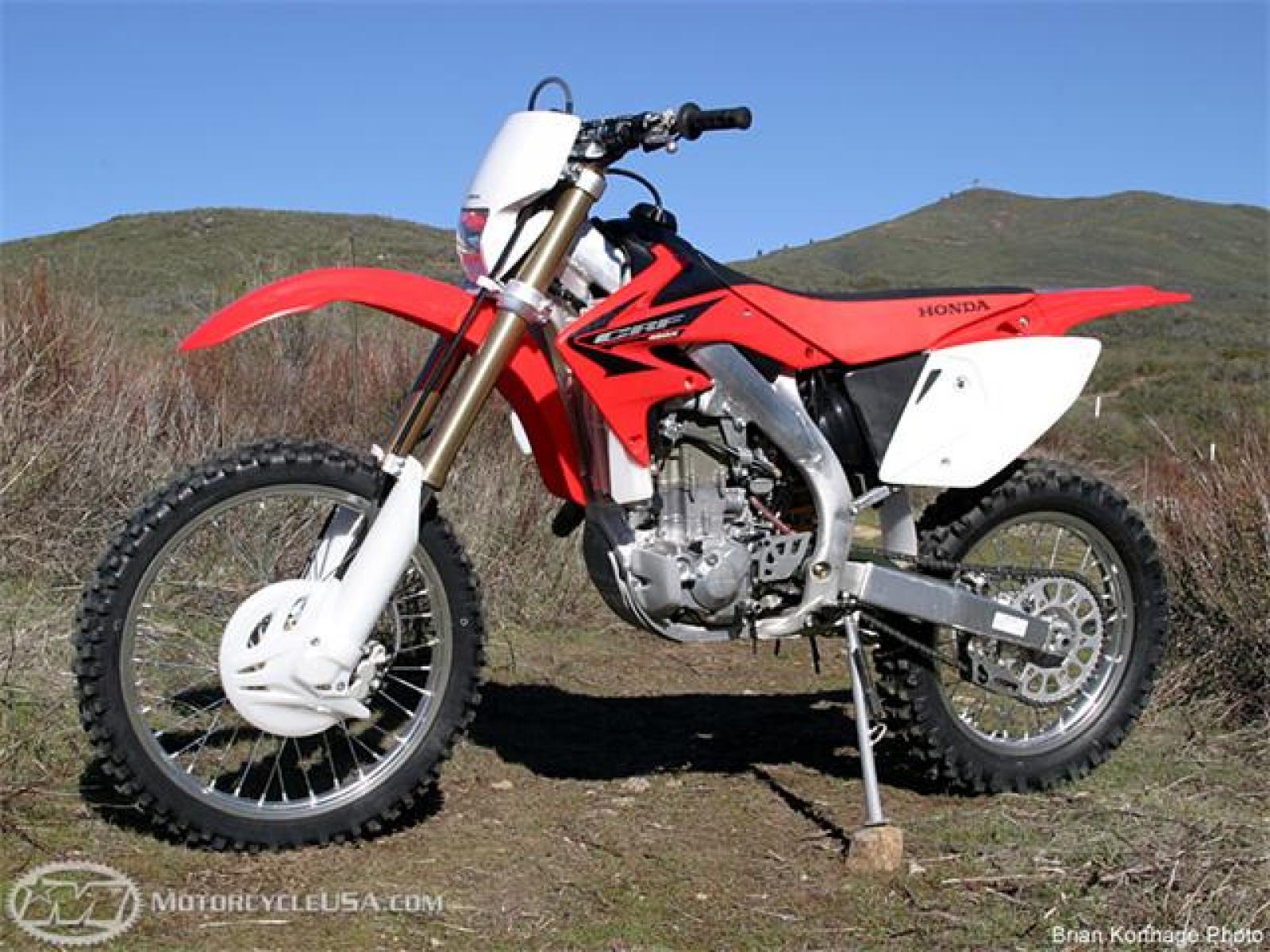
When exploring the realm of competitive off-road motorcycles, the 2005 Honda CRF450 and CRF450X stand as seminal models that forged their own distinct paths within the enthusiast community. These two machines, while born from the same lineage, cater to subtly divergent riding experiences. Each is expertly engineered to dominate rugged terrain, yet their core attributes and intended purposes delineate a fascinating comparison worthy of in-depth examination.
The 2005 Honda CRF450 is widely regarded as a quintessential motocross weapon. Designed with precision to excel in the highly demanding circuits of closed-course motocross racing, this machine epitomizes agility, power, and rapid-response handling. At its core lies a robust 449cc liquid-cooled, single-cylinder, four-stroke engine, primed to unleash high-performance acceleration with an aggressive power band. Its chassis geometry is meticulously tuned for nimbleness, allowing riders to execute sharp turns and maintain control through tight, technical sections with precision.
Conversely, the 2005 CRF450X is Honda’s answer to the growing demand for a more versatile off-road contender—a bike geared towards enduro racing, trail riding, and desert excursions. It shares the foundational 449cc engine architecture with its motocross counterpart but diverges significantly in tuning and configuration to optimize low-end torque and broad power delivery rather than sheer top-end speed. This enables enhanced rideability over unpredictable landscapes, such as rocky inclines, deep sand, and muddy trails. The CRF450X enjoys heightened ground clearance and a longer suspension travel, fundamental for absorbing brutal off-road impacts that are commonplace beyond the circuit.
One of the critical distinctions lies in the suspension systems employed on these motorcycles. The CRF450 incorporates Showa A-kit components configured for responsiveness and stiffness suitable to sprint races where rapid feedback is essential. Its front forks and rear shock are calibrated to withstand the incessant pounding of motocross tracks while maintaining rider stability during jumps and hard landings. Meanwhile, the CRF450X trades some of that stiffness for suppleness. Its suspension setup offers an extended wheelbase and softer damping rates, essential for absorbing obstacles across prolonged trail rides or desert races. This flexibility extends rider endurance and comfort, allowing the CRF450X to maintain control in drastically variable terrain.
In terms of frame and weight distribution, both motorcycles utilize an aluminum perimeter frame that balances rigidity and lightness. However, the CRF450X integrates specific reinforcements and adjustments to accommodate auxiliary components such as a larger fuel tank — a significant advantage for long-distance ventures where frequent refueling is impractical. The increased fuel capacity also reflects the model’s off-road endurance orientation. The CRF450, optimized for the track, features a smaller tank, emphasizing minimal weight and maximum maneuverability over extended fuel range.
Ergonomics also reveal disparities aligning with the respective bikes’ intended uses. The CRF450 promotes a forward-leaning, aggressive posture designed to maximize rider input and feedback during short bursts of intense riding. Its seat and handlebar placement encourage a harnessing of the bike’s vibrancy during rapid acceleration and cornering. The CRF450X, meanwhile, adopts a more neutral stance, allowing greater control and comfort over hours of varied riding conditions. Its handlebar width and footpeg positioning offer a commanding presence without sacrificing rider fatigue tolerance.
The braking systems on both bikes contribute significantly to their performance profiles. The CRF450 features high-performance disc brakes with robust stopping power essential for rapid deceleration after jumps or high-speed maneuvers on the racecourse. The CRF450X maintains comparable braking components but is tuned for modulation and consistency during varied terrain where abrupt stops can be crucial to avoid hazards.
Technological nuances extend to the transmission as well. Both motorcycles incorporate a five-speed gearbox, but the CRF450X’s gear ratios are tailored to optimize torque delivery in low-speed trail conditions and provide smoother power transitions on uneven surfaces. This design choice enhances rider control in unpredictable terrain while retaining sufficient versatility for moderate high-speed runs. The CRF450 favors tighter ratios that exploit the engine’s high-revving character to sustain momentum and acceleration on closed circuits.
Additionally, the 2005 CRF450X includes subtle enhancements that increase its durability in extended cross-country use. Components such as reinforced wheel hubs, heavy-duty radiator guards, and an electric starter accommodate the rigors of long rides and minimize the impact of environmental elements. These elements underscore Honda’s commitment to crafting a motorcycle that not only performs but endures. The CRF450’s lighter weight and stripped-down approach reflect its specialization in competitive motocross, focusing purely on performance without the ancillary features needed for backcountry resilience.
The sound and feel of these machines further illustrate their underlying philosophies. The CRF450 produces a sharp, high-pitched exhaust note echoing its high-revving, aggressive engine character. The rider experiences a palpable connection to the throttle, expecting immediate response at every twist of the wrist. In contrast, the CRF450X emits a deeper, more muted timbre, indicative of its torquey, controlled power delivery optimized for varying speeds and surfaces.
From a rider’s perspective, the decision between the 2005 CRF450 and CRF450X ultimately revolves around intended use. Those seeking a motorcycle tailored for maximum performance in motocross settings—with a focus on velocity, cornering precision, and explosive power—will find the CRF450 to be an unparalleled choice. Conversely, adventurers and off-road racers venturing across deserts, trails, and unpredictable routes will benefit from the CRF450X’s torque-rich engine, suspension compliance, and long-range capabilities.
Both models symbolize Honda’s mastery in balancing power, durability, and rider experience, yet each occupies a niche that underscores the diverse needs within the off-road motorcycling world. Whether chasing lap records on the track or embarking on arduous multi-hour trail rides, these motorcycles demonstrate how subtle engineering choices profoundly influence handling and performance.
In conclusion, the 2005 Honda CRF450 and CRF450X each epitomize distinct philosophies within off-road motorcycling. Their differences extend beyond superficial aesthetics, forming a comprehensive suite of attributes tuned to excel in particular environments. An appreciation of these nuanced distinctions provides deeper insight for discerning riders seeking to select a machine aligned with their riding style and terrain demands. Within the legacy of Honda’s CRF line, these two motorcycles continue to represent the pinnacle of off-road engineering, adapting classical performance principles to meet the variegated challenges of the dirt domain.